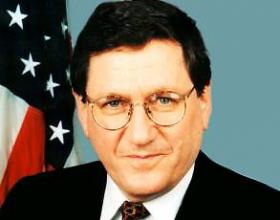
In September 2009, Ambassador Richard Holbrooke sat down for an interview with PBS for a Frontline documentary titled “Obama’s War.” Holbrooke discussed Afghanistan, Pakistan, and the Obama administration’s approach to diplomacy in the region. His answers, viewed in hindsight, reveal just how much America’s diplomatic efforts in Afghanistan have been undermined since last year. In particular, the announced July 2011 timetable for beginning troop withdrawals has clearly hampered America’s diplomacy in the region – especially when it comes to Pakistan.
Holbrooke was specifically asked about Jalaluddin Haqqani, the longtime compatriot of the Taliban and al Qaeda who, along with his son Siraj, is responsible for some of the most deadly attacks in Afghanistan. The Haqqanis’ headquarters is in northern Pakistan and they are major players in the Afghan insurgency.
“Is Pakistan onboard with going after Haqqani?” Frontline’s Martin Smith asked.
“Yes,” Holbrooke replied.
Smith followed up: “What evidence is there of that?”
“Just let me leave it at that,” Holbrooke said, in an obvious dodge of the question.
Smith pressed: “We know that they’ve gone after those who are threatening their state. But yet there doesn’t seem to be convincing evidence that they’re willing to go after the Haqqani network or Mullah Omar and the Quetta shura.”
“They are quite clear in their own minds that Haqqani poses a threat to both Afghanistan and Pakistan,” Holbrooke insisted.
As the events of the past few weeks have demonstrated, the reality is quite the opposite. The Pakistani military and intelligence establishment continue to view the Haqqani network, one of the three principal insurgency groups operating in Afghanistan, as a valuable asset. Holbrooke simply misjudged our duplicitous Pakistani “ally.”
On June 24, the New York Times reported, based on interviews with Pakistani and Afghan officials, that “Pakistan is exploiting the troubled United States military effort in Afghanistan to drive home a political settlement with Afghanistan that would give Pakistan important influence there but is likely to undermine United States interests.”
The Times continued:
In addition, Afghan officials say, the Pakistanis are pushing various other proxies, with [Pakistani Army Chief] General Kayani personally offering to broker a deal with the Taliban leadership.
Instead of “going after” the Haqqanis in northern Pakistan, the Pakistanis are trying to broker a “power-sharing arrangement” that includes them in the Afghan government. There are even some unconfirmed reports that Afghan President Hamid Karzai has met with Siraj Haqqani in a meeting brokered by senior Pakistani officials. The reported goal was to reach some level of rapprochement. That may be true, but it is certainly not altogether implausible, as the Pakistanis are clearly pushing for such a deal.
The idea that the Haqqanis, who have been proxies of Pakistan’s Inter-Services Intelligence (ISI) agency for decades, could be viable political partners in Afghanistan is absurd on its face. To recount the details of their dossier, which is thick with connections to al Qaeda’s senior leadership as well as the ISI, would require much more space.
But it is not even a controversial point. Consider Holbrooke’s own words from last year, when he explained to Frontline why it is that American forces are fighting the Taliban in Afghanistan.
The Times followed up with Holbrooke earlier this month. Here is how the Gray Lady summarized his response to reports of Pakistan’s recent attempts at deal making:
It is hard to imagine. And Holbrooke certainly knows that this is just the latest example of Pakistani duplicity – or outright malevolence.
The central problem here, besides Pakistan’s ongoing sponsorship of terrorist organizations like the Haqqani network, is the July 2011 timetable. It adversely affects America’s military and diplomatic efforts.
As the Times’s June 24 account and a follow up report on June 25 note, Pakistan senses American weakness in Afghanistan. One Pakistani official said America has “a lack of fire in the belly.” Other Pakistani officials referred specifically to the July 2011 timetable. “The American timetable for getting out makes it easier for Pakistan to play a more visible role,” said Pakistani Army spokesman Maj. Gen. Athar Abbas.
What Abbas means is, the Pakistanis now think they are free to propose “power-sharing arrangements” with notorious terrorists. And Karzai, with encouragement from the Pakistanis, is hearing out – to quote Holdbrooke – such “hard to imagine” plans.
President Obama should rescind the July 2011 timetable as soon as possible. It is clear that the Pakistanis think they have been given the green light to broker political deals for al Qaeda and Taliban-affiliated terrorists.
Just last year, America’s top diplomat in the region thought the Pakistanis were hunting them down.
