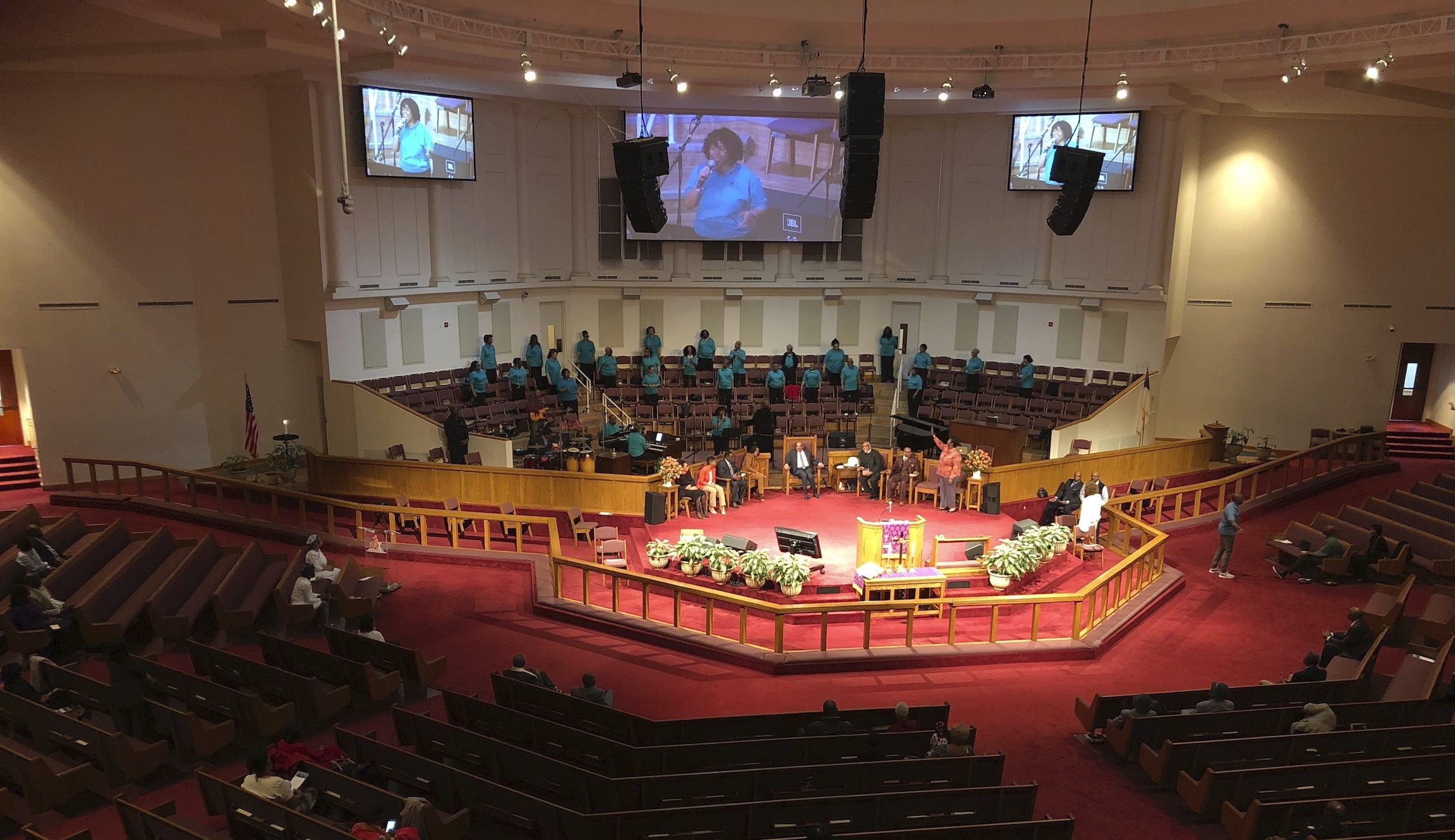
A 2 1/2 hour choir rehearsal in early March was deemed the cause of a fatal coronavirus outbreak in one church in Washington state.
Sixty members of the Skagit Valley Chorale gathered together in Mount Vernon Presbyterian Church for their standard rehearsal on March 10. The group was aware of a few cases of coronavirus in the state, including the nation’s first COVID-19 death on Feb. 29. Still, they agreed to meet.
Adam Burdick, the choir’s conductor, said in an email that the rehearsal could lift some of the “stress and strain of concerns about the virus.”
Three weeks later, 45 members of the choir had fallen ill from the coronavirus, three were hospitalized, and two had died. Jamie Lloyd-Smith, a UCLA infectious disease researcher, told the Los Angeles Times that the rehearsal was a “superspreading event.” Lloyd-Smith said the choir practice could demonstrate the ability of the coronavirus to spread via particles in the air.
“One could imagine that really trying to project your voice would also project more droplets and aerosols,” Lloyd-Smith explained.
Burdick noted the choir only had about half of its 121 members attend that rehearsal in March and that the group tried to spread out, use hand sanitizer, and refrained from hugs and handshakes.
“It seemed like a normal rehearsal, except that choirs are huggy places,” Burdick said. “We were making music and trying to keep a certain distance between each other.”
None of the members who appeared that day had a cough or sneeze, according to eight members of the group who were interviewed. The experience supports a study from the New England Journal of Medicine that found droplets containing the illness could survive in the air for up to three hours in ideal conditions and 30 minutes in a standard environment.
The ability of the coronavirus to spread as an aerosol has been downplayed by the World Health Organization, which said larger “respiratory droplets” can spread through coughs and sneezes, which then quickly drop to surfaces in the immediate environment. Dr. Anthony Fauci, the director of the National Institute of Allergy and Infectious Diseases, recently said aerosol spread cannot be ruled out.
