

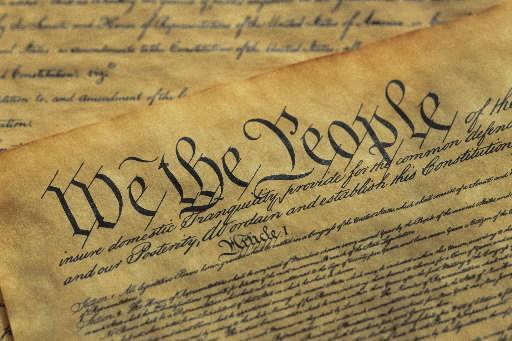
Tea partiers and those sympathetic to the tea party movement like to call themselves constitutional conservatives, and for good reason. The tea party movement built on Americans’ increasing interest in and respect for the Founding Fathers—apparent in the bestseller status of many of fine books written about them, by academic and non-academic historians alike—and have directed attention back to the words of our founding documents, the Declaration of Independence and the Constitution. One result is that the Supreme Court is now seriously considering whether a major piece of economic legislation, Obamacare, is constitutional, the first such case in more than seventy years.
But constitutional conservatives need to keep in mind that the Constitution places limits on them as well as others. The conservative House Republicans who rejected (or forced Speaker John Boehner to reject) the Senate’s patchwork compromise on the payroll tax extension bill had good policy reasons to do so, but that turned out to be terrible politics. These conservatives have been frustrated that despite their historic victory in the November 2010 elections, they have not been able to achieve many of their policy goals.
Recommended Stories


They have this in common with those commentators and members of the public bemoaning political gridlock: they ignore the fact that conservative policy shortfalls and political gridlock are a result of the Constitution. The Constitution does not allow you to control government by winning just one election. In other nations you can do so: the British Labour party won the 1945 election and promptly nationalized industries and installed a welfare state. The United States Constitution, in contrast, has staggered elections. We have a House of Representatives 100% of whose members were elected in a heavily Republican year, 2010. We have a president elected in a heavily Democratic year, 2008. We have a Senate two-thirds of whose members were elected in heavily Democratic years, 2006 and 2008, and one-third of whose members were elected in a heavily Republican year, 2010.
Under our Constitution, you usually have to win more than one election to make enduring changes in public policy. Democrats were able to make some major changes in policy after winning historic majorities in 2006 and 2008 (Democrats won their highest percentages of the vote for House of Representatives in the 36 non-Southern states in history in those elections). Even so, they were unable to pass some major bills, including the unions’ card check bill and a cap and trade bill. Republicans now want to make major changes in policy, including repeal of Obamacare, sharp cutbacks in federal spending and long-term fixes for entitlements programs. They have made some headway in Congress, but not as much as they would like.
In order to achieve the policy results they seek, Republicans need to win in 2012 by proportions roughly comparable to their margins in 2010. The House Republicans elected in 2010 should not be dispirited by its failure to achieve many of their goals. What they are presenting is not the final version of a play, but an audition. In those circumstances it is foolish to engage in maneuvers, like the rejection of the Senate payroll tax cut compromise, which while justifiable in policy terms make no sense politically. Avoiding such fiascos is not a betrayal of constitutional principle. It is acting in the spirit of the Constitution, which requires continued affirmation from the voters before major policy changes can be made.
