

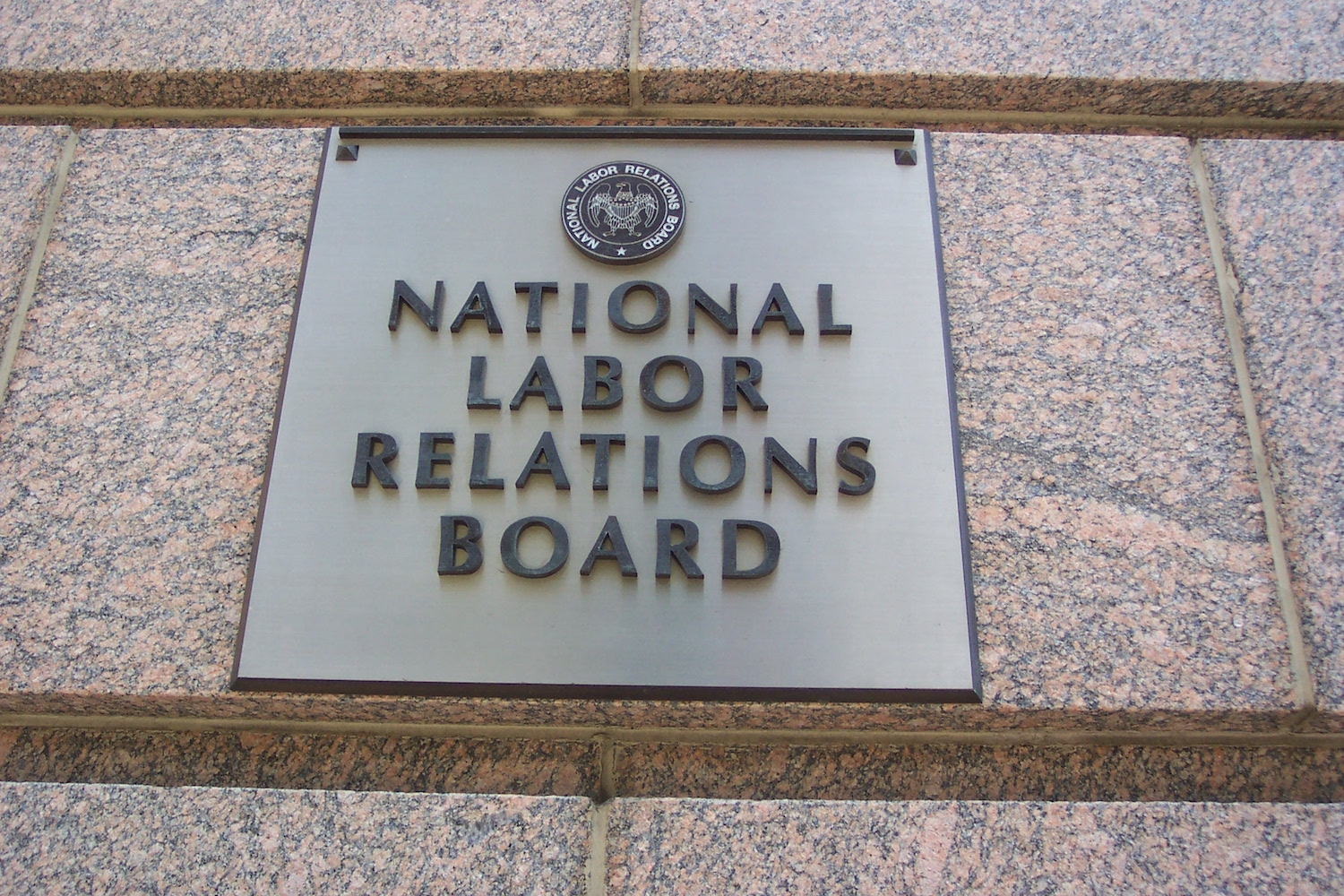
A who’s who of conservative policy groups urged Congress Tuesday to back legislation to rein in the National Labor Relations Board, the federal government’s top labor law enforcement agency.
The groups argue that the agency’s expansion of the “joint employer” doctrine, which vastly expanded corporate legal liability, is a gross overreach that needs to be rolled back.
Recommended Stories



Joint employer refers to when one business can be held legally liable for workplace law violations by another business. The groups urged lawmakers to back legislation by Rep. Bradley Byrne, R-Ala., dubbed the Save Local Business Act, which would prohibit the NLRB from using an expanded interpretation of the doctrine it adopted in 2015. That expansion changed the standard for liability from “direct control” of another business’ workforce to the much vaguer “indirect control.”
The legislation has 80 co-sponsors, including three Democrats. It is scheduled to be marked up Wednesday by the House Education and the Workforce Committee
“A policy that makes businesses liable for the practices of their contractors and will cause companies to make changes that leave people worse off, such as ending those relationships with smaller businesses. That means fewer job opportunities, fewer opportunities for entrepreneurs, and fewer chances for American businesses to grow and create jobs,” the groups wrote in an open letter to Congress.
The groups warned in the letter that companies that franchise their brands would be forced to dramatically scale those activities back to limit their exposure to potential lawsuits. “Research from the American Action Forum suggests failing to revert to the ‘direct and immediate’ control standard could inflict devastating impact on the economy. They estimated that the NLRB’s new joint employer standard could result in 1.7 million fewer jobs,” the groups warned.
Signers of the letter include the leaders of Americans for Tax Reform, Americans for Prosperity, the Competitive Enterprise Institute, Heritage Action, the American Legislative Exchange Council’s advocacy arm ALEC Action, and the National Taxpayers Union.
