

I‘m a dodo bird. Or maybe a passenger pigeon. As a corn and soybean farmer, a chemical spraying, fertilizer spreading, genetically modified-seed planter, I’m as passé as a phone booth. I may be walking around, but I’m actually dead. I’m a zombie farmer.
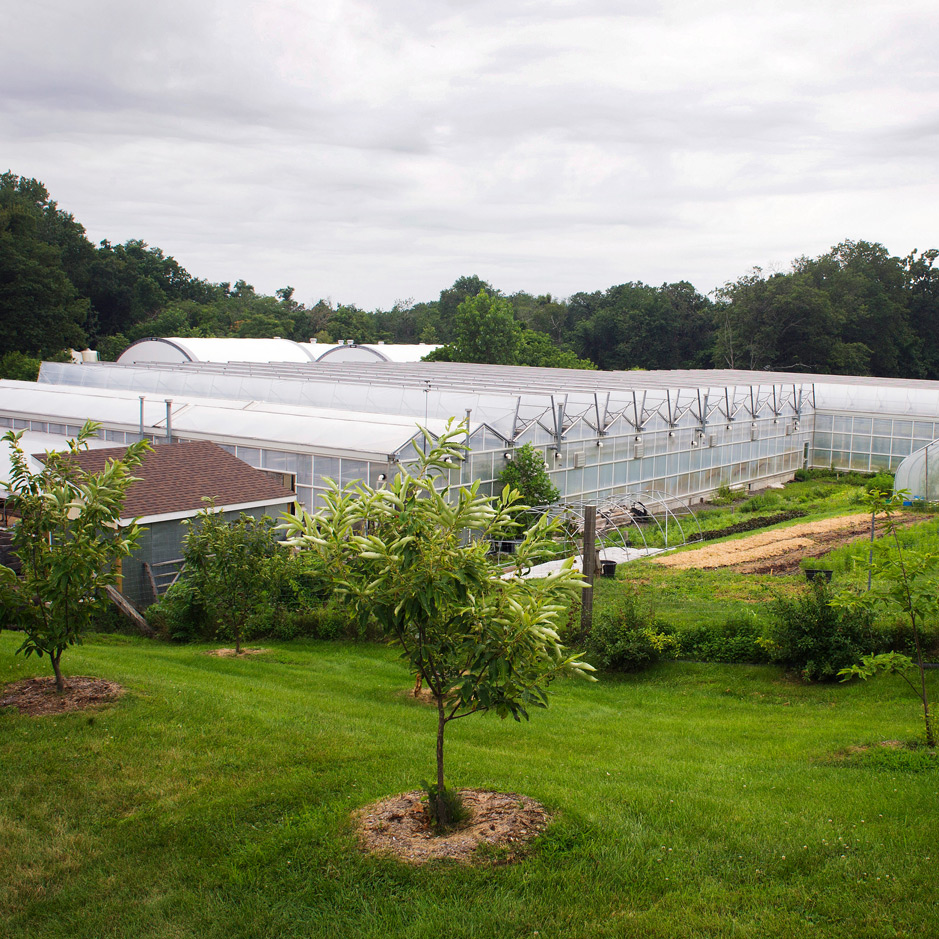
I came to this conclusion after spending a couple of days at the Food for Tomorrow conference last November, held at the Stone Barns Center for Food and Agriculture, a farm, restaurant, and conference center a few miles north of New York City. Stone Barns is surrounded by a “working” farm, a self-described showplace for the “sustainable agriculture” that more than one speaker at the gathering referred to in reverential tones. The farm was built by the Rockefeller family and is now a sort of Potemkin village with geese. The first and most important rule of sustainable farming is to be sustained by one of the world’s largest charitable foundations.
Stay informed.Stay ahead.
Join Washington Examiner for unlimited access to the news, analysis, and commentary that matter most.
Already a member? Log in
The New York Times was the lead sponsor of Food for Tomorrow. If the speakers—Times food writer Mark Bittman, food theorist and journalism professor Michael Pollan, professor of nutrition, food studies, and public health Marion Nestle, organic farmer and food philosopher Fred Kirschenmann, et al.—are correct, the kind of high-yield farming that I do can’t possibly last. Although the speakers and those in attendance devoutly believe that Genus Farmer, Species Industrial has had its day, they presumably weren’t calling for farmercide. They’re confident I’m already obsolete. I’m a Kodak Instamatic in a GoPro age.
The last time I was in New York City, I was on a panel where I was accused of raping the soil. In an op-ed in advance of Food for Tomorrow, Bittman and his coauthors accused the American “food system” of causing hundreds of thousands of annual deaths. Bittman kicked off the conference with a “declaration of war”—his term, not mine. Rape, murder, war: All in a day’s work if you’re an industrial farmer. I’d thought the digestive elite in attendance (at $1,400 a head) might find it interesting to visit with an actual farmer, but I was sorely mistaken. After three conversations ended when fellow attendees told me to shut up, I just listened.
I listened to one very nice man who runs a large farm in Europe. He practices biodynamic farming, popularized by German mystic Rudolf Steiner, which among other practices buries zinc in a cow horn to gather cosmic forces and improve crop yields. This practice, strangely enough, never came up in any of my plant science classes at the University of Missouri.
I listened to Bittman explain that industrial farming “pollutes, sickens, exploits, and robs.” He’s also got a problem with the term “conventional farming.” The only truly conventional farmers are “peasant farmers,” who, according to him, produce 70 percent of the world’s food with just 30 percent of the resources used in agriculture. Bittman is only considering off-farm inputs here, not the land and labor of those conventional farmers. His peasant farmers are certainly altruistic, working their fingers to the bone for dollars a day. That’s not a bargain U.S. farmers are likely to appreciate, but what do the opinions, labor, and lives of actual American farmers matter, since we are merely tools of Monsanto and other corporate interests?
The hell with it. I’m an industrial farmer, proud to be one, and have no desire to return to my family’s peasant roots, subsistence farming being wildly overrated by people who’ve never actually spent a day swinging a hoe or pulling weeds by hand.
One presenter, a young man of about 30, was there to plug his new investment fund. He’s raised $50 million to start new farms that will raise food sustainably. He’s recruited a stable of experts in all things agricultural to be on call to help the farmers doing the actual work. He promises to triple their returns over those of industrial agriculture and already has plans for more investment funds, spreading the wealth around the country.
Economic history is full of disruptive actors, entrepreneurs who totally change an industry from the outside, overthrowing entrenched regimes seemingly overnight. So anything is possible.
On the other hand, the Agricultural Extension Service was established by Congress almost exactly 100 years ago, and for a century it has collected the latest research from leading agricultural experts and disseminated it to farmers, courtesy of the American taxpayer. There are few secrets involved in the raising of food and very little proprietary knowledge, outside the laboratories of companies inventing the technologies that our hedge fund promoter will avoid like the plague in his quest for sustainability. So, unless current farmers are antiprofit, one must ponder why they aren’t already farming sustainably and reaping triple their returns.
It’s pretty strange, when you think about it. Bittman comes by his fame from trading recipes. Pollan teaches journalism. Most of the other speakers had little background in actually growing food. As I tried to engage the attendees in conversation, I was reminded again and again of the contempt the self-proclaimed leaders of the food movement have for industrial farmers. This disdain is counterproductive and shortsighted. The average farmer is 58. He’s been farming for decades. He has knowledge both deep and wide of the land he farms, the animals he raises, and the climate in his small part of the world. Not only that, but he and his kind own or control most of our farmland, and they’re making the decisions about what happens to that land. If your goal is to change agriculture from the ground up, it might be good to include the people who own the ground. Does our experience, the knowledge hard won through drought, flood, and pestilence, count for nothing?
Recently, the New York Times announced another 100 layoffs. The New Republic has essentially committed public suicide. Rolling Stone is enduring a rough patch. Subscription and advertising revenues are crashing all across journalism.
Perhaps those of us in agriculture could help out. Maybe convene a conference on the future of journalism? We could ask a few nutrition professors, a biochemist or two, maybe a plant breeder, some cattle feeders, a pig farmer, and, as our token journalist, the guy who gives the cattle markets four times a day on the radio. Our conference could call journalists names, damn everything they’ve done for the past 50 years as corrosive of the health of our culture, and recommend that the New York Times go back to using typewriters in a recreated newsroom from The Front Page.
It might be hard to sell tickets for $1,400 apiece to that event. I imagine the sponsors would be ridiculed. I sincerely doubt that any leading newspapers would send reporters out to Omaha or Des Moines or Kansas City to cover it. A confab like that, composed of people profoundly uninformed about the topic at hand, would not be seen as having anything constructive to contribute.
Well, to this industrial farmer, it was clear that the goal of the Food for Tomorrow conference was not so much improving agriculture as it was replacing revenues that have evaporated from conventional journalism with ticket and sponsor revenue from a two-day ritual sacrifice of today’s agriculture.
Blake Hurst is a farmer in Missouri.
