

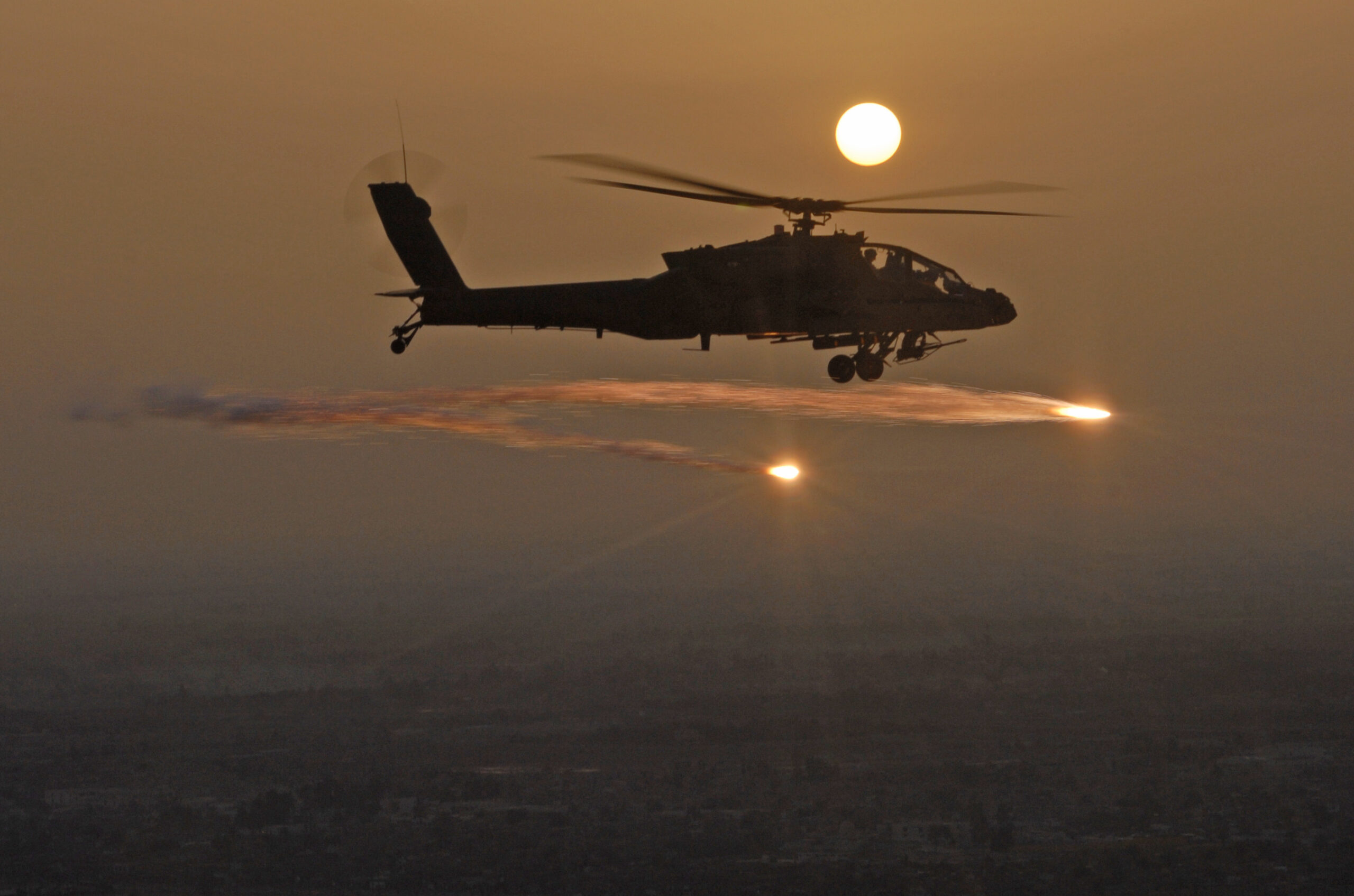
U.S. Apache attack helicopters, one of the U.S. military’s most lethal ground attack aircraft, have joined the fight to liberate Mosul, the Pentagon announced Monday.
“I can confirm that Apaches have been used with significant effect,” spokesman Peter Cook told reporters at the Pentagon.
Recommended Stories


“In consultation between our commanders and the Iraqis, we anticipate that this nimble and precise capability will continue to enable Iraqi progress in what we expect will be tough fighting to come.”
Cook said it’s not the first time the Apaches have been used in Iraq, but he said it’s the first since the Mosul offensive began in earnest three weeks ago.
In previous Iraq liberation operations in Ramadi and Tikrit, the U.S. offered air support from the Apaches, which are based in Irbil, but the Iraqi government declined the offer.
In this case, Cook said the Apaches are being used in standoff role, firing their Hellfire missiles at Islamic State targets, while not flying directly over the city or conducting dangerous low-level direct engagements with enemy forces.
“My understand[ing] is there’s been particular targets [that] have included [vehicle-borne improvised explosive devices] and specific obstacles and impediments that we’ve seen ISIL put forward in Mosul,” Cook said.
“The Apaches have demonstrated a capability, with very precise targeting, to make a difference there, again, operating in a standoff position; they’re able to do that from some distance back.”
The Boeing Apache is the U.S. Army’s main close-air support platform, which was first flown in 1975, and is now due for an upgrade. The Army is weighing whether to remanufacture older D models to E models or buy brand new aircraft.
Either way, the Army hopes to end up with almost 700 AH-64E Apaches, equipped with better sensors, radars and helmet interface.
