That Virginia Republican Loyalty Oath

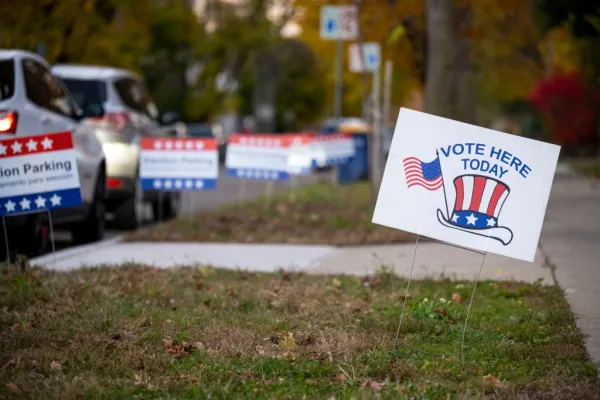
There’s a ruckus in the blogosphere over the plan of the Virginia Republican party to require voters in its primary to sign a statement saying they ‘intend’ to support the party’s presidential nominee in 2008. Tracy Mehan of the American Spectator writes:

What is pretty clear is that the SBE [State Board of Elections] is going to lose the inevitable lawsuit on this matter, and it should. This oath is an unconstitutional infringement on any GOP voter’s right to vote given that it extracts a promise to vote in the general election for candidates unknown and unknowable as of the primary election day. Even if the oath is construed to require simply “loyalty,” rather than an actual vote, it is an affront to private thought and conscience. Moreover, it probably violates the voter’s First Amendment rights for a host of reasons. But try this one on for size: suppose a Catholic Republican, i.e., me, has to face the choice of voting for the former Mayor of New York City or the Senator from the State of New York. Given that both candidates have, well, let’s just say problematic positions on the right to life and the integrity of the family, the moral imperatives may demand writing in another worthy candidate for president.

At the Corner, David Freddoso calls it ‘deeply troubling’ and ‘totally absurd.’ But this isn’t the first time an oath has been required:

In 2000, Republicans asked state election officials whether they could require voters to sign an oath that they would support “all of the Republican Party’s nominees in the next election.” The State Board of Elections rejected that pledge but did allow the party to require GOP primary voters to sign a form stating they would not also participate in the Democrats’ nominating contest, which was held on a separate date. Virginia law now permits either party to request that primary voters state their intention to support the eventual nominee in the general election.

So in 2000 the GOP was not allowed to require that primary voters pledge to support the full Republican slate, but was permitted to require that primary voters not also vote in the Democratic primary. In 2008, the pledge will require voters to state their intent to vote for the Republican nominee. The Post article seems to imply that the legislature changed the law after 2000 to permit the stronger oath, but I can’t confirm that. (The relevant portion of the Virginia code is here, for those who may be interested.) There are plenty of states that have open primaries and there don’t seem to be all that many instances where opposing partisans cross over in sufficient number to influence the outcome. Despite extremely low turnout in the Jim Webb-Harris Miller Democratic Senate primary of 2006, it doesn’t seem that Republicans influenced the outcome in any way. Why is the Virginia Republican party making itself up as an object of ridicule over a pledge that’s essentially meaningless anyway? In a state that does not allow registration by party, and which mandates open primaries, it seems that only the honor system can prevent voters from crossing lines to participate in the opposition primary. But if there’s no apparent problem, why fight it?

Related Content