
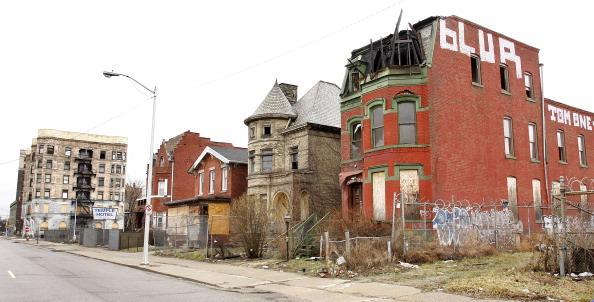
Editors note: Michael Barone wrote the following op-ed in the Wall Street Journal. Excerpt below:
To understand the political economy of the Midwest, it helps to put it in historic perspective. Originally the Midwest’s economy was built on its farms, then later on its factories. The long farm-to-factory migration lasted from roughly 1890 to 1970. At the end of that period, when I was working on the first edition of “The Almanac of American Politics,” it seemed there were two models for the U.S. future. One was the Michigan model, which prevailed in the industrial Midwest and the factory towns of the Great Plains. The other was the Texas model, which prevailed in most of the South and Southwest.
Real journalism.Trusted by millions.
Unlimited access to in-depth reporting, expert analysis, and the stories that shape our country.
Already a member? Log in