
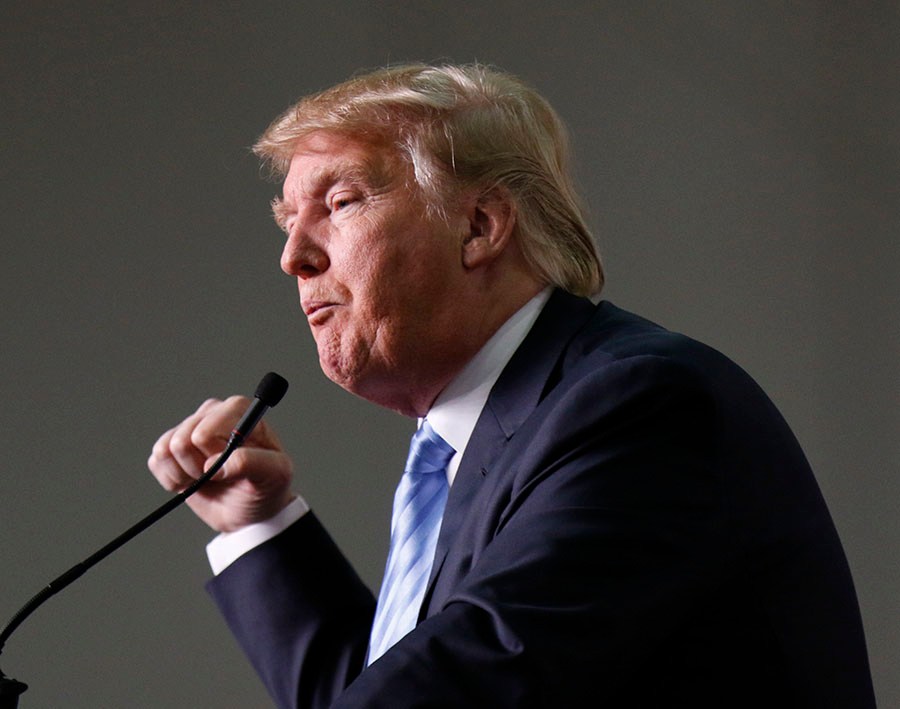
Donald Trump is preparing to win a contested convention, fielding a team of veteran Republican operatives to woo delegates and influence the process.
Overseeing strategy for the New York celebrity businessman is Ed Brookover, a top advisor to Ben Carson until the retired pediatric neurosurgeon ended his presidential campaign and endorsed Trump. Brookover told the Washington Examiner this week that his immediate concerns are electing loyal Trump delegates to the Cleveland convention and securing the support of free agent delegates that could tip the scales if the nomination is contested on the convention floor.
Recommended Stories
“I think we’re going to get past 1,237,” Brookover said, referring to the number of delegates required to clinch the nomination. “I’m hoping that this is nothing to worry about. ”
Party rules governing the nomination process, many of which will won’t be finalized until the convention rules committee meets just prior to the convention itself, mandate that most convention delegates vote for the candidate that won the primary or caucus in the state they represent, on the first ballot on the convention floor. If the winner does not receive 1,237 votes, most delegates are free to vote for whichever candidate they choose on subsequent ballots.
That’s why Trump, and presumably the Cruz and Kasich campaigns, is focused on the ongoing delegate elections in the states, and devoting resources toward trying to elect delegates that would be loyal to him through several ballots. It’s possible that more than 200 delegates could arrive in Cleveland uncommitted, even on the first ballot, and Brookover said that securing their support is a top priority.
The Trump campaign’s approach to wooing unaligned delegates is multifold. It could take the form of peer-to-peer contact in the states, calls from senior Trump campaign staff, or even direct communication from the candidate, a real estate mogul and reality television star. The lobbying is expected to be intense, and regulations that govern the process are vague and could vary from state to state.
For instance, it might be permissible for Trump, a billionaire who flies around on his own 757 airplane, to use his wealth in some fashion to shower attention on delegates whose support he wants. In interviews with a few unbound delegates, two confirmed to the Examiner that they have already received calls from at least one of the remaining three candidates in the GOP race.
“I hear from all the campaigns but I can’t disclose details of private conversations,” said John Yob, a longtime Republican consultant from Michigan who is now an uncommitted delegate representing the U.S. Virgin Islands, where he moved last year.
In a contested convention, Trump could face Sen. Ted Cruz of Texas or Gov. John Kasich of Ohio. Neither the Cruz nor Kasich campaigns responded to requests for comment on their delegate strategies.
Trump, the clear frontrunner, leads the delegate hunt with 678, followed by Cruz, with 413, and Kasich, with 143. Sen. Marco Rubio of Florida, who suspended his campaign on Tuesday, garnered 168. Most of those are now unbound and free to commit to one of the remaining candidates. Trump has downplayed suggestions that he won’t wrap up the nomination ahead of the convention, while attempting to undermine the legitimacy of a contested convention.
But even as Trump argues that the Republican National Committee should essentially bend the rules and nominate him even if he only wins a plurality of 2,472 convention delegates, he is taking the process seriously. For instance, his campaign manager, Corey Lewandowski, is a New Hampshire delegate.
Brookover is leading a team that includes Carson campaign alumni Barry Bennett and Brian Jack; and Republican operatives Stuart Jolly; Alan Cobb, who was already on board and handling ballot access work for Trump; and attorney Jesse R. Binnall, who, according to the press release announcing his hire, is a professional parliamentarian.
“When I came in and started kicking the tires, the state directors were on top of trying to place Trump supporters in every delegate slot,” Brookover said. “It wasn’t like I came in and we had missed the boat.”
Brookover’s first convention experience came in 1976, which happens to be the last time the nomination fell to the delegates to decide in a floor vote.