

FORT ARMSTRONG, Pennsylvania — If all was right with the world, the winding road pitching back and forth alongside the Allegheny River tributary to Crooked Creek Horse Park would be jammed up with horse trailers and campers hitched to the back of their vehicles as everyone grew excited for the next few hours or days attending the annual Fort Armstrong Championship Rodeo. In normal times, the wait was never as long as feared, especially if you stopped at Speedy’s Tasty Treats stand at the corner of Houston and Main Street, located on the only road in. Its homemade ice cream is the stuff dreams are made of.
So is the sizzling electricity of rodeo anticipation.
Recommended Stories


This weekend, there are only a handful of people there, almost all families, with campers and RVs parked around the shaded trees. The parking lot is empty with the exception of a couple dozen vehicles, mostly pickup trucks and Fain’s Sweet Treats — the lone brightly decorated food truck, garnished with plenty of eye-catching signs boasting of their funnel cakes, elephant ears, and deep-fried Oreos. The owner says the business is just trying to make a buck, if that, from the family members there to see the riders compete. “It’s been a rough year,” she admits.
Tonight isn’t a rodeo, per se: There are no bulls snorting in the pens, no cowboys sitting along the fences waiting for their turn, no music to liven up the (absent) crowd, and no pageantry of the flag girls who traditionally swiftly ride into the arena bearing a flag in one arm, reins in the other.
And there is no rodeo clown, the vaudevillian throwback of another era who always finds a way to nudge a belly laugh even out of the stodgiest of guests.
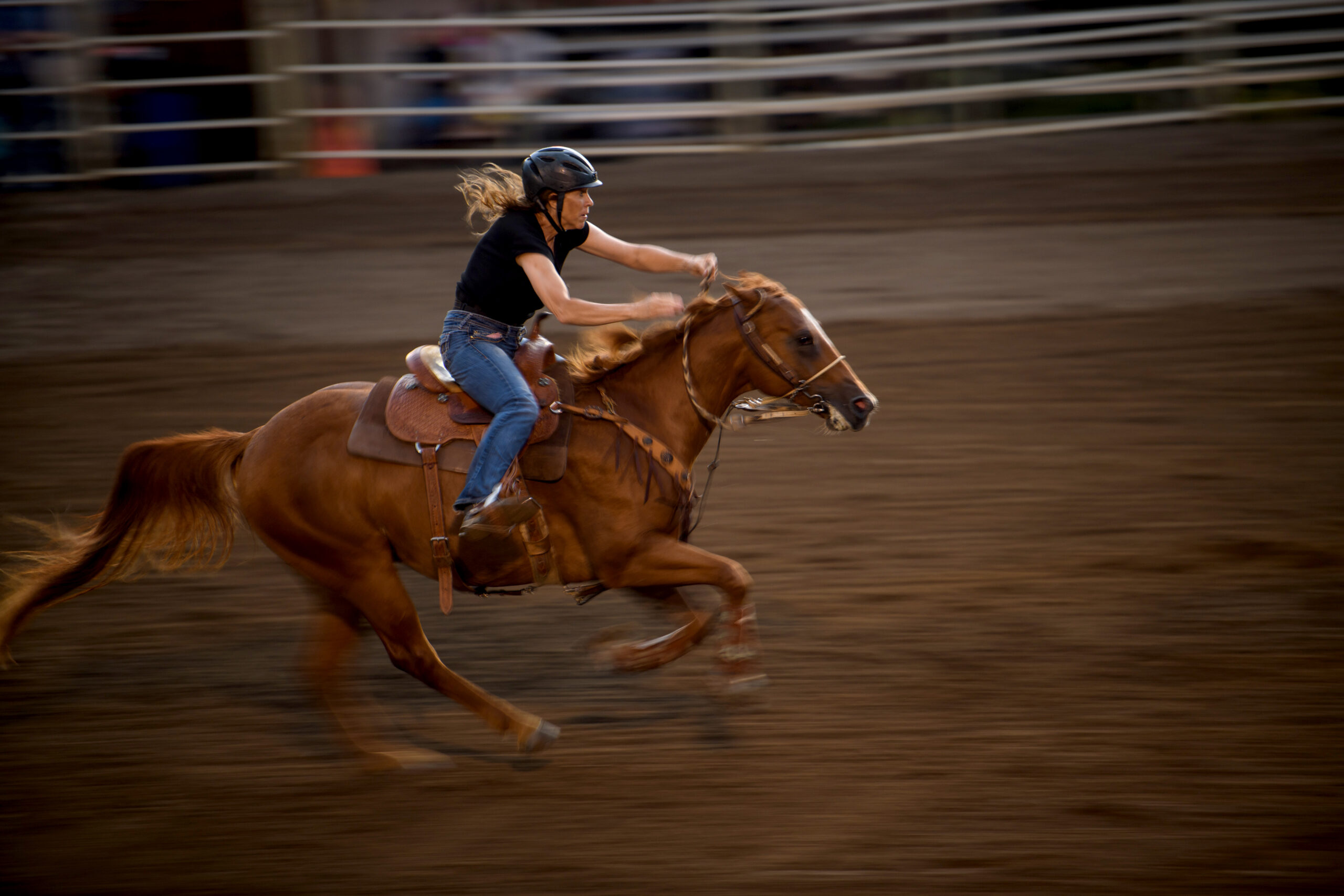
But there are scores of women young and old, seasoned and first-timers, all there to compete in the barrel races, a rodeo competition designed for women that dates back to a 1948 meeting of Texas ranch women who wanted to participate in the male-dominated hurly-burly sport of rodeo and add a touch of glamour with a sequin or two.
By the time they left their hotel in 1948, they boasted 74 members and had created the Girls Rodeo Association — the very first professional sports association created solely for women by women.
Seventy-two years later, they have a new name (Women’s Professional Rodeo Association), well over 3,000 members, lots of glamour, and opportunities for women to show their skills and win good money in the timed events of barrel racing, team roping, breakaway roping, and tie-down roping.
Nine-year-old Kaylee Page says she has been riding horses since she was 9 months old, something that her mother Charli confirms, with a broad smile and a shrug of her shoulders. “She’s been barrel racing since she’s been little on her mini pony,” says Charli, who herself has been riding since she was a young girl.
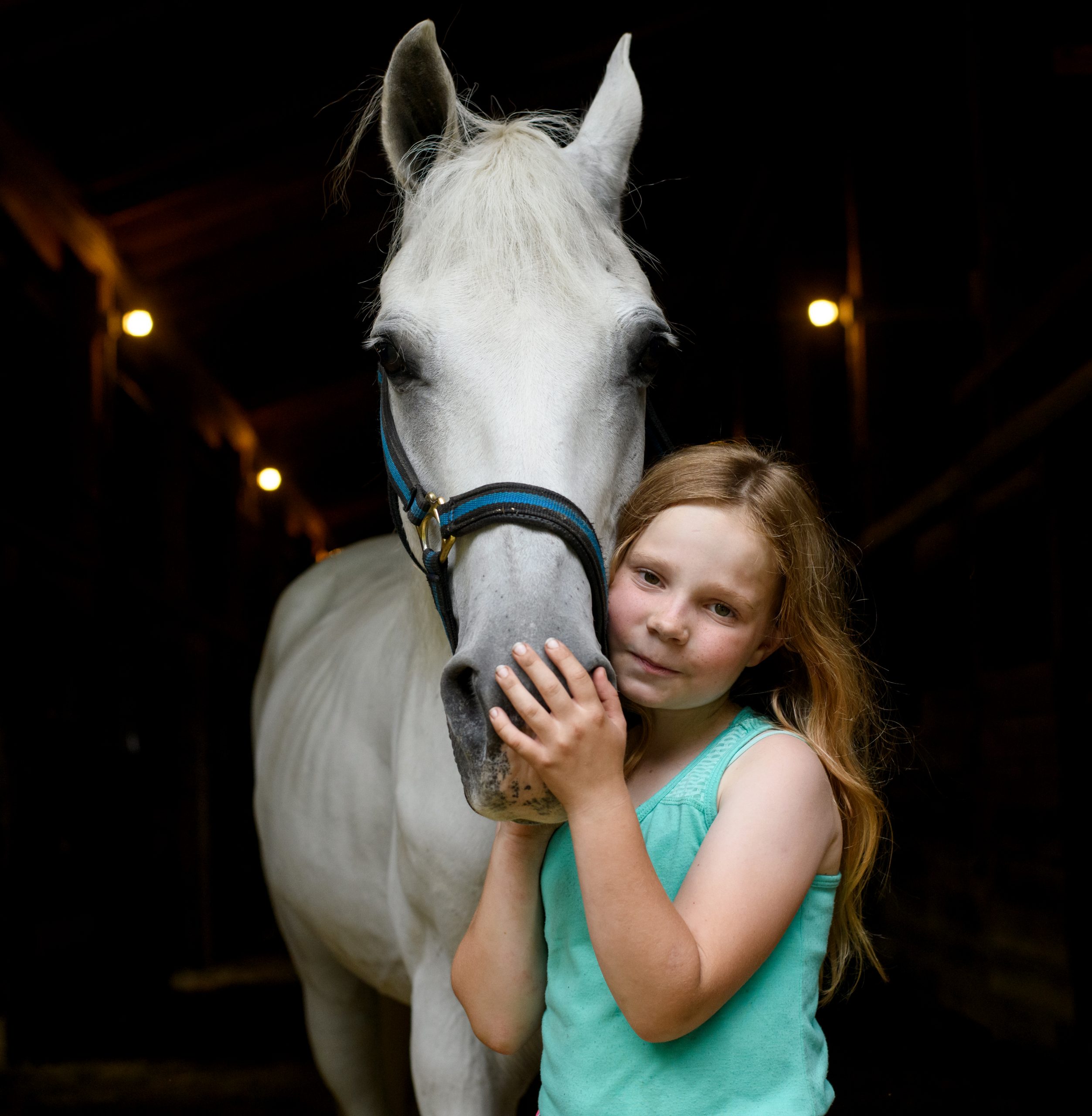
The Clarion County girl says her goal is to do her best in everything she participates in, and that means practice: “Lots and lots of practice. But I love it because it is fun, and I sharpen my skills, and it beats sitting in front of an iPad like everyone else,” she says with more maturity and wisdom than most children her age possess.
Kaylee is petite, with long sandy blond hair that falls down the middle of her back. She is wearing a turquoise tank top, oversized shorts, and a pair of cowboy boots. Naturally, they are red, white, and blue.
She grooms Monty ahead of her barrel ride. Asked if she feels bummed no one is in the stands to watch her ride the tricky pattern with as much speed as possible, she just shrugs her shoulders and smiles. “That doesn’t matter to me. All that matters is that we’re having fun.”
Melissa “Missy” Paul is the polar opposite of Kaylee. She didn’t start riding at nine months, it wasn’t part of a generational family tradition, and she didn’t grow up on a farm. She is 45 years old, lives in the old steel town of Monongahela, Pennsylvania, has a grueling day job as a nurse, and is the mother of two college-aged daughters who also love to barrel race.
Oh, and she has only done this twice before.
“Both of my daughters took lessons professionally for a while, and I was just the mom and kind of hung back and did the show mom thing. When she went into high school is when I decided to really start to learn to ride,” she said.
That was four years ago, and she admits her barrel rides still aren’t that good. “But I learned how to do it, and I learned how riding makes the rest of my life better, calmer, more focused. It’s huge stress relief. Just being able to go to the barn. Whenever you ride, you have to focus on the horse, so everything else just goes away.”
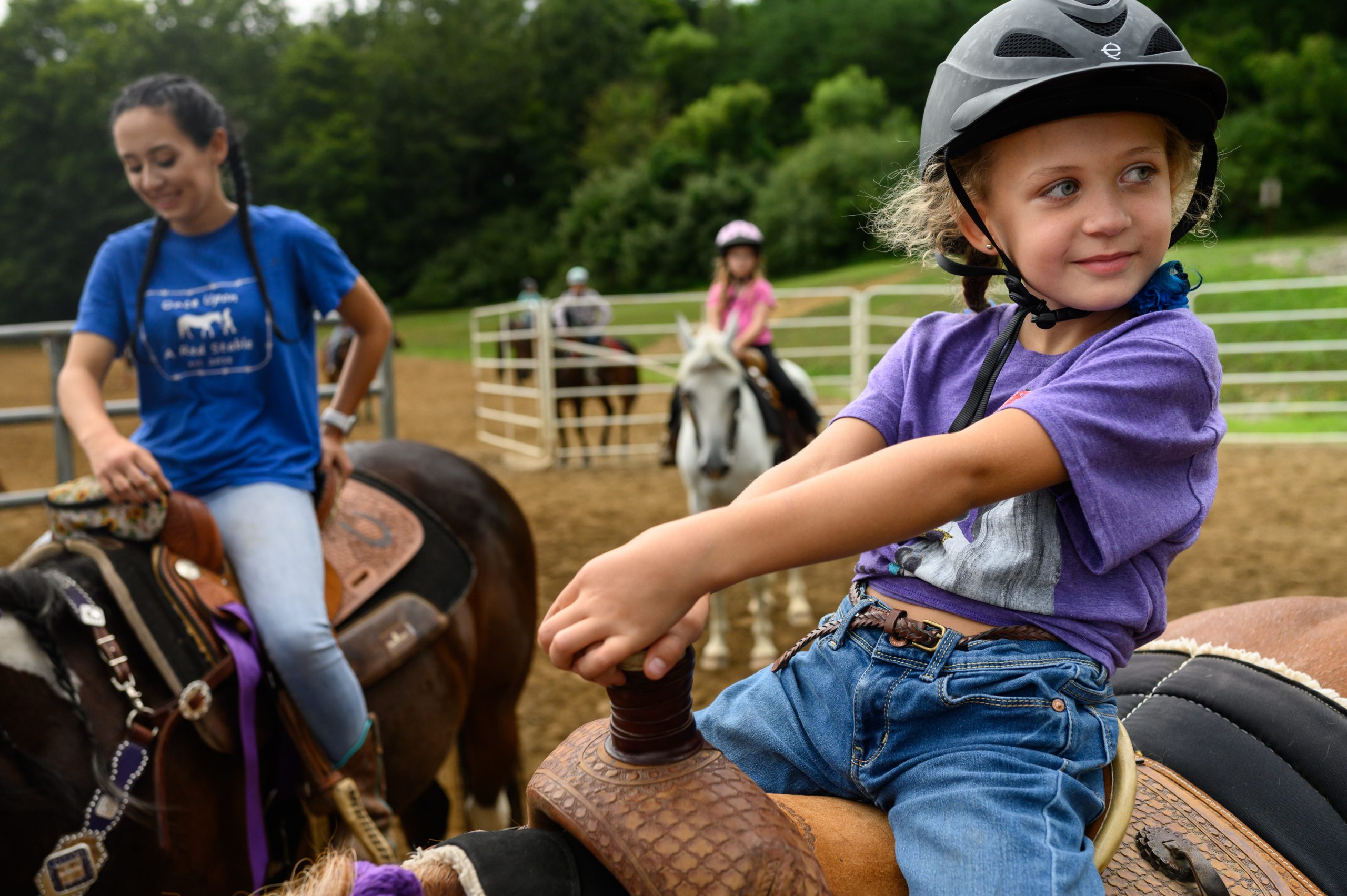
Ashlee Lynn is the perfect image of a cowgirl riding wild on the ranch. She has sparkling blue eyes, her deep waist-length hair is pulled into two braids, and when she effortlessly hops onto the horse, she seems to be one with the steed.
Age 20, she is with her seven-year-old sister Jenna. Her expertise and years of practice show as she glides through the cloverleaf pattern on her horse, clocking the fastest time of the night, at least for the time being.
When the Girls Rodeo Association began in 1948, they only approved of 60 contests that members could participate in. Total payouts were $29,000. Today, there are over 1,500 events, and payouts top $5 million annually.
On the Women’s Professional Rodeo Association website, the grim COVID-19 cancellations all summer have begun to be listed as planned come late fall and throughout the winter.
But today, the stands are empty except for a couple of family members who are spread hundreds of feet apart from each other. There are no live bands, no kids inevitably stepping into a warm pile from a passing horse. But there are about three dozen or so women who are waiting for their name to be called for their turn at the barrel race.
A lot of events promoted on social media to encourage women to connect with other women seem so contrived and forced in sharp contrast to what happens in real life between real women who need each other’s back or just want it. But here, the women don’t have iPhones in their hands or in their pockets. Poses on their horses are rare because there are no ‘grams are being taken, nor any hashtags created.
These aren’t influencers; these are achievers.
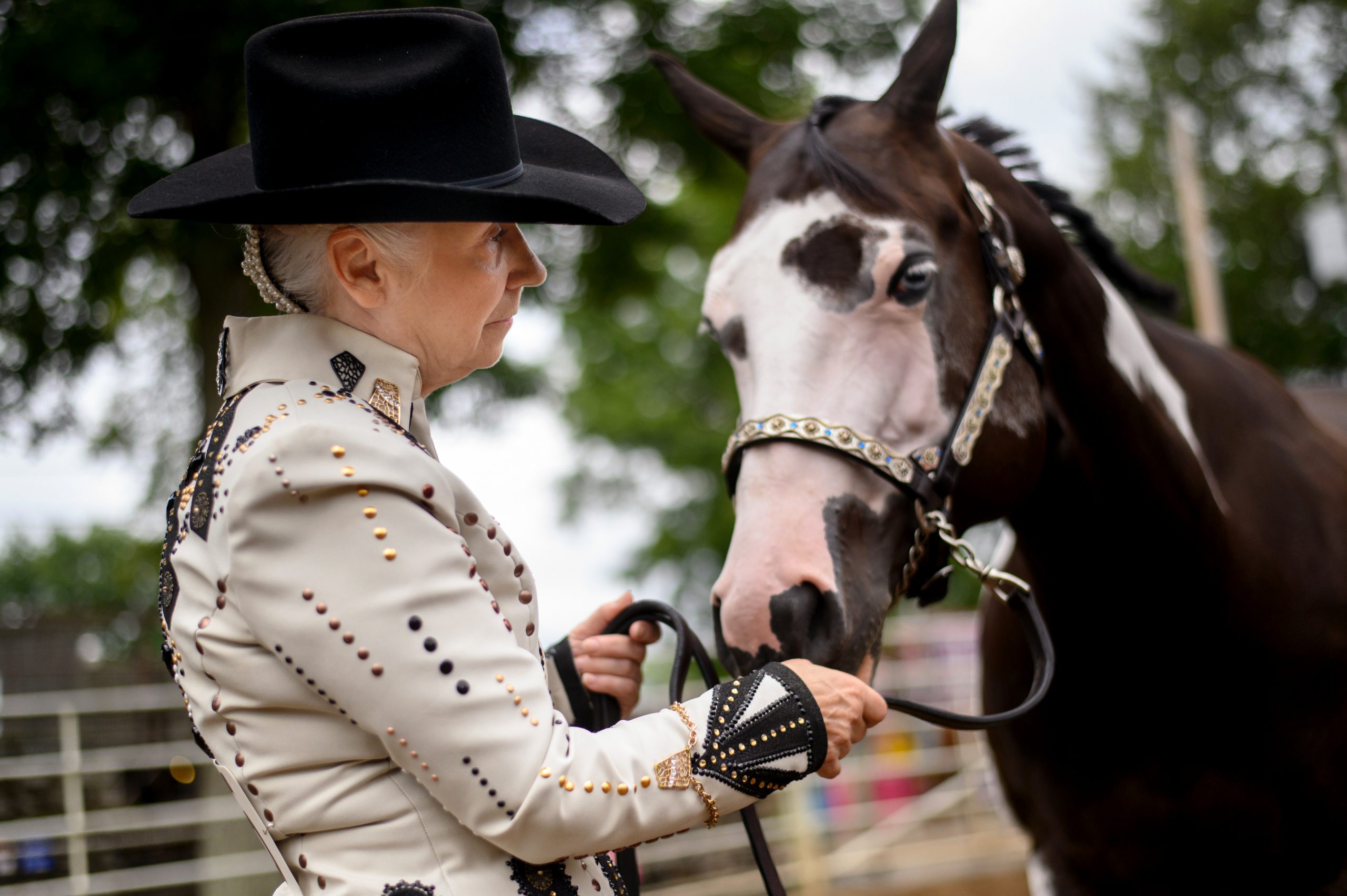
They are helping each other by giving each other pointers before their turn comes, when they will take to the gate as the announcer calls their name and starts the clock. No matter if they are 9 years old or 45 years old, they are all there to get better.
And as Kaylee says, “Have fun.”
