

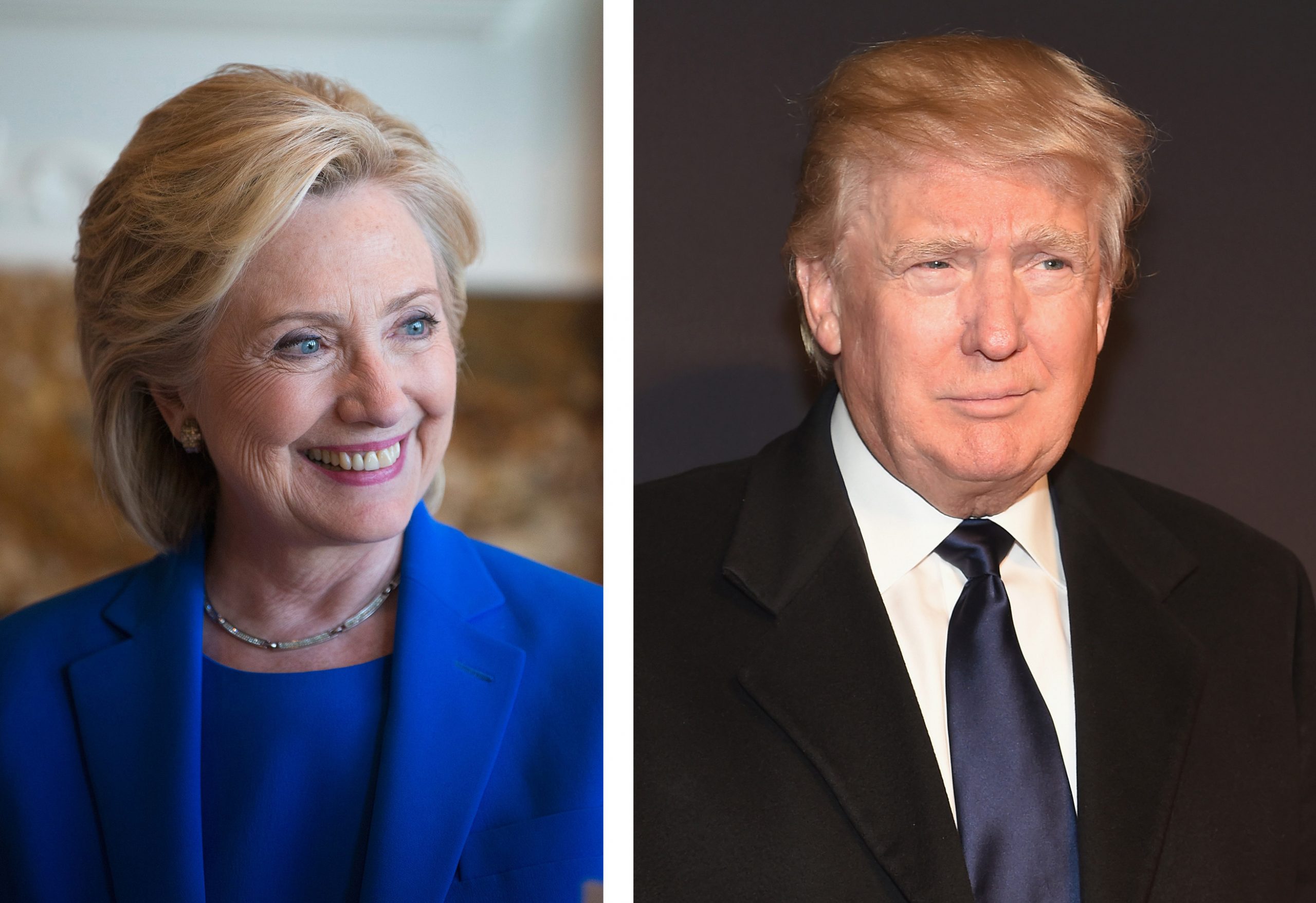
Tuesday was supposed to be a good night for Hillary Clinton, with lots of delegates racked up for the Democratic front-runner. Although Clinton did earn more delegates than Bernie Sanders, his historic upset in Michigan slowed her delegate growth. Clinton still has a large delegate lead, but this campaign is not turning out to be the easy romp many thought it would be for her.
It’s been commonly assumed that Clinton would clinch the Democratic nomination early on, but the campaign is dragging on for longer than most expected. Meanwhile, Donald Trump gained more delegates than any other Republican candidate on Tuesday, marching closer to the nomination.
Recommended Stories


This raises the question: assuming the current front-runners end up as their party’s nominee, who clinches their nomination first? Here are a few scenarios:
Front-runners win all remaining delegates
This certainly won’t happen, but let’s pretend Clinton and Trump win every available delegate from now until they clinch the nomination. Who’d reach the necessary majority first?
Clinton. She would clinch the Democratic nomination on April 19, the date of the New York primaries. Trump would be one week behind, clinching on April 26, when five states hold GOP primaries.
It’s actually possible Clinton could clinch even sooner than that, if she gets more unpledged superdelegates to choose her. Almost a third of the 712 Democratic superdelegates haven’t declared a candidate preference yet.
Front-runners keep winning delegates at current rate
Right now, Clinton has won 58 percent of the delegates that have been distributed so far, excluding superdelegates. Trump has won 45 percent of the GOP delegates distributed so far. If they won those same percentages of delegates for the rest of the primary contests, who would clinch first?
Again, that would be Clinton. If she wins 58 percent of the delegates in the remaining primaries (rounded to whole numbers), she would clinch on June 5, the day of Puerto Rico’s Democratic Caucuses, with exactly 2,382 delegates. Again, even if this happened, Clinton would probably win earlier if she expanded her support among superdelegates.
At his current rate of acquiring delegates, Trump would actually never clinch half of the GOP delegates, and would have to win the nomination at a contested convention in July. He’d finish 170 delegates short of clinching the nomination outright. If any of the other Republican candidates were to drop out soon, it would probably be easier for Trump to clinch before the convention, at least by this arbitrary measure.
My Best Prediction
Rather than form predictions based on arbitrary rules, here’s my personal prediction based on polling data, betting markets, where candidates have won so far and my gut feeling. My level of confidence in these predictions is pretty low, so don’t hold me to them (I’ll be the first to admit my predictions aren’t always successful).
Clinton clinches on April 26, when Maryland, Connecticut, Delaware, Pennsylvania and Rhode Island vote. Trump never manages to clinch, but does enter the GOP convention with the most delegates, and then who knows what happens?
Of course, Sanders might give up and drop out. There’s a small chance Clinton gets indicted. Unsavory news might come out about any of the GOP candidates. Maybe super PAC spending actually hurts Trump. More than a week or two from any given primary, who knows what will happen? This race has been anything but predictable.
If you’re interested in more scenarios, my colleague Philip Klein has run plenty of numbers too. He says Trump will have to wait until June to clinch the nomination “no matter what.” He also ran the numbers on various scenarios for the big March 15 primaries.
Jason Russell is a commentary writer for the Washington Examiner.
