

Louisiana voters vote Oct. 12 to elect a governor and other state officers, but for once, almost nobody sees national implications in the campaign. Good. It’s a salutary development when state races are decided on state issues, for state reasons, without the chattering classes trying to nationalize them.
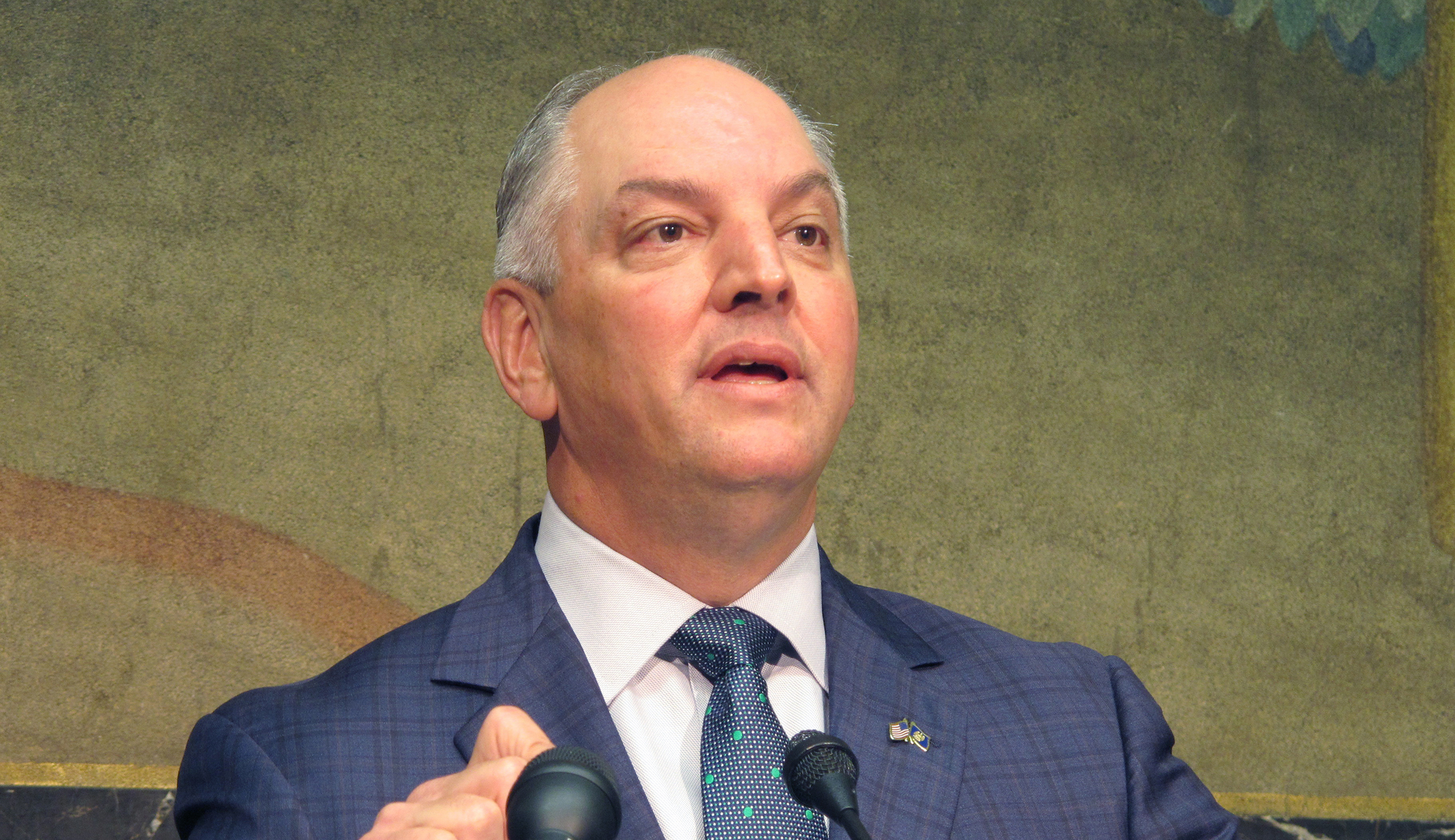
The incumbent governor, John Bel Edwards, is a rarity these days: a Democratic governor in a Deep South state. With polling approval ratings slightly over 50%, he is a heavy, but not overwhelming, favorite in a multi-candidate race featuring two major, but rather nondescript, Republican challengers. In Louisiana’s system, all candidates, regardless of party, run on one ballot. If a candidate receives a simple majority of the vote, he wins outright; if nobody gets more than 50%, the top two finishers, regardless of party, compete in a general-election runoff.
Recommended Stories


Edwards is roughly center-left on most economic issues, and largely conservative on cultural issues such as abortion and guns. Unlike most successful Louisiana politicians for the bulk of the 20th century, Edwards’ persona is decidedly not flamboyant but instead is studiously businesslike.
The state media almost universally credits him, too extravagantly, for building a state budget surplus of some $500 million after inheriting what some claim was a de facto $2 billion deficit from the low-tax conservative, Bobby Jindal. He did it largely by pushing through a one-penny hike in the already-regressive state sales tax in 2016, partially renewed in 2018 as 45/100ths of a cent. He also took advantage of a quirk in former U.S. House Speaker Paul Ryan’s federal tax cut: As Louisiana taxpayers’ federal levies dropped, so did the deduction for those federal taxes that they traditionally took on their state income taxes. Edwards reaped $300 million annually from that harvest.
But Edwards is no fiscal conservative: State spending rose significantly both for Medicaid expansion and in the rest of the state’s general fund. The state’s conservative think tank, the Pelican Institute, reports that Medicaid expansion has been plagued by waste and fraud, but polls show it has been popular.
Edwards’ left-most tendencies come via his deep alliance with plaintiffs lawyers, including those trying to dun oil companies for wetlands losses for which they are only partially responsible. The plaintiffs’ bar has spent hundreds of thousands of dollars backing his campaign. Likewise, the National Education Association, in apparent expectation that Edwards will chip away at Louisiana’s famously successful system of charter schools and school vouchers, just dumped $300,000 into the pro-Edwards Gumbo PAC.
In the multi-person filed, Edwards consistently polls in the mid-40s, with Republican U.S. Rep. Ralph Abraham and GOP businessman Eddie Rispone both in the low-ish 20s. Both Republicans have been pounding, with only mild success, at the fact that Louisiana hasn’t enjoyed the same economic growth as the rest of the nation. The state actually has 3,500 fewer workers now than when Edwards took office, with its unemployment rate dropping only because some 44,000 people have exited the state or otherwise left the workforce.
Rispone also is pushing for a state constitutional convention. The state charter has been amended 198 times since the last such convention in 1973, and many conservatives think the whole thing should be reworked.
Up until a few weeks ago, most pundits thought Edwards had a real chance to win Saturday’s election without a runoff. A sexual harassment scandal involving his former deputy chief of staff, though, seems to be eroding his support at the margins. My sources doubt Edwards will achieve a clean majority. If he falls all the way below 45%, he would be seen as clearly vulnerable to consolidated Republican support in the runoff. This is, after all, still a conservative state.
If Edwards wins, though, it won’t be a bellwether of liberal ascendancy: National Democrats will never really celebrate such an openly pro-life, pro-gun governor. If he loses, national Republicans can’t gloat, because Louisiana is a state they should win easily anyway. Louisiana can govern Louisiana without broader meaning for the U.S. political universe. It’s their own political jambalaya, and you can’t Trump that.
