Lawmakers late Tuesday introduced a $1.1 trillion spending package that funds nearly all of the government through fiscal 2015.
The package, introduced by the House Appropriations Committee after hours of closed-door negotiations, is made up of two bills. One measure would fund most of the government through September 2015, while a second bill would pay for the Department of Homeland Security until Feb. 27.
The hybrid plan aims to mollify GOP conservatives who want Congress to defund President Obama’s recent deportation initiative when Republicans assume control of both chambers in 2015.
Conservatives pushed the GOP leadership in both the House and Senate to embrace a spending proposal that would block Obama’s Nov. 20 executive action to curb deportations and permit millions now living here illegally to obtain work permits and become eligible for some federal benefits.
But top Republicans are eager to avoid the specter of a spending fight that could lead to a government shutdown, and Democrats pledged to oppose any legislation that tried to block Obama’s deportation directive.
“This bill will allow us to fulfill our Constitutional duty to responsibly fund the federal government and avoid a shutdown,” House Appropriations Committee Chairman Hal Rogers, R-Ky., said.
Most Republicans appear willing to accept the plan, although there are potentially dozens who will vote against it.
“It’s the best we could do without the optics of a government shutdown,” Rep. Phil Gingrey, R-Ga., said. “That’s the thing, obviously, leadership is most concerned with in both chambers. And let’s face it, Republicans get blamed every time.”
House Republicans plan to discuss the bills in a private meeting Wednesday morning.
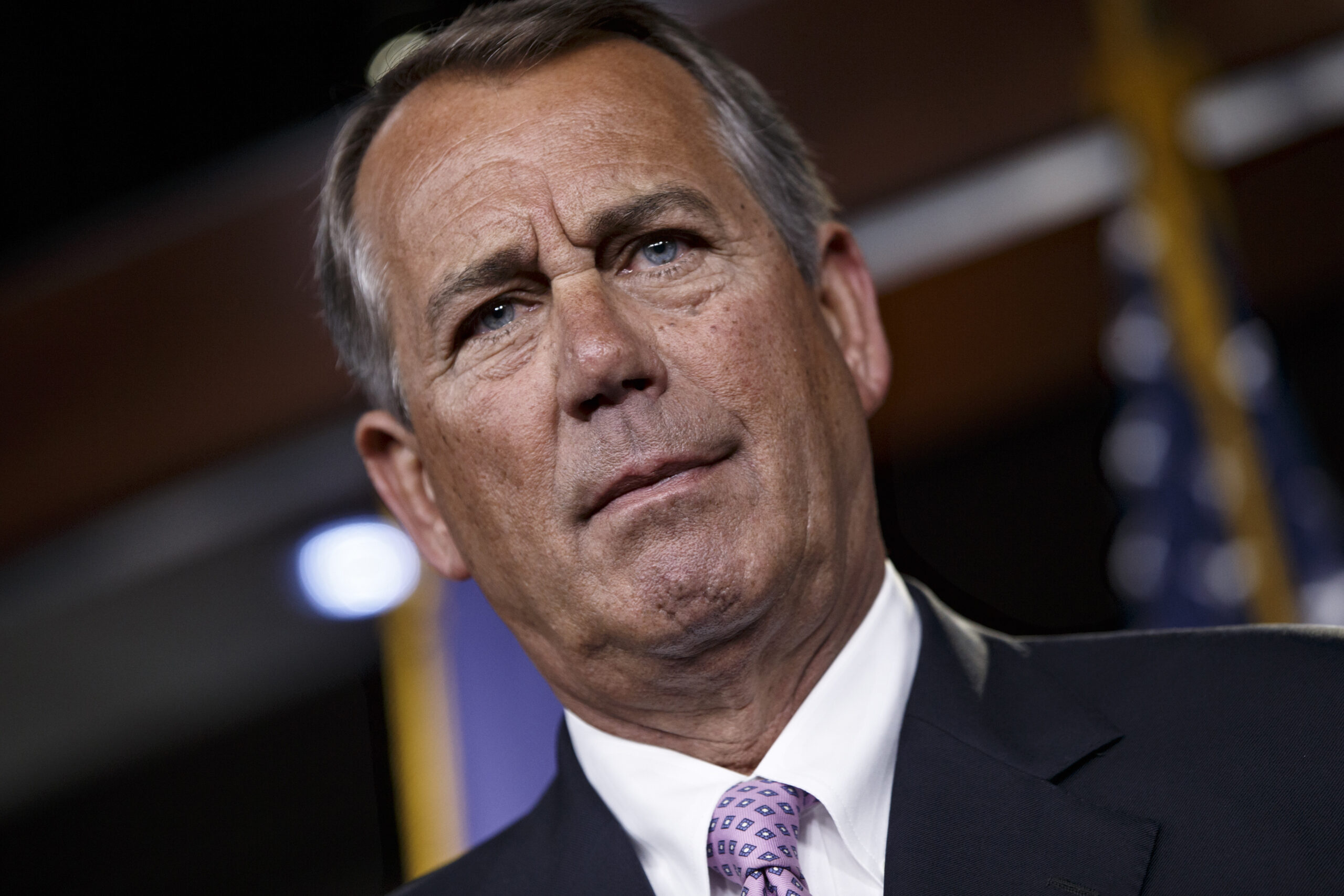
House Speaker John Boehner is likely to hear complaints from some GOP lawmakers who feel the legislation, which totals more than 1,600 pages, is being rushed to the floor.
But lawmakers have no time to spare.
A stopgap government funding bill expires Thursday, the same day the House plans to hold a vote on the spending legislation.
The bill complies with the spending caps set in the 2013 bipartisan budget agreement, setting defense spending at $521 billion and domestic spending at $492 billion.
The legislation also contains an additional $64 billion to help U.S. and allied troops in the Middle East battle Islamic State terrorists and to assist European countries confronting “Russian aggression.”
Lawmakers also tacked on $2.72 billion in emergency funding to help stop the spread of the Ebola virus in West African nations.
House Democrats are not promising to back the legislation, but since the deal was negotiated with Senate Democrats, it’s likely the proposal will pass the House.
“Until we review the final language, we cannot make a determination about whether House Democrats can support this legislation, but I am hopeful,” House Minority Leader Nancy Pelosi, D-Calif., said.
Democratic support could be critical if enough conservative Republicans refuse to back the proposal for not defunding Obama’s executive action on deportations.
“I think the constitutional issue on the president’s executive order has a lot of members concerned,” said Rep. Joe Barton, R-Texas, who plans to vote against the measure.
Democrats have threatened to withhold support for the measure if it is riddled policy “riders.”
The bill includes some policy provisions, although they are not likely to generate enough Democratic opposition to scuttle the bill.
Among them is a measure that would block the District of Columbia from implementing a recently-passed referendum legalizing recreational use of marijuana. The language does not interfere with the city’s decriminalization of medical marijuana the D.C. Council approved in the summer.
