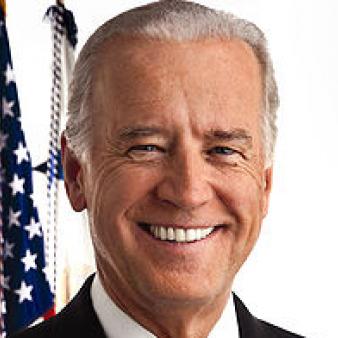
By the time you read this, it is possible that Vice President Joe Biden will have announced his candidacy for the presidency. Or not.
It has been two-and-a-half long months since Biden told the New York Times columnist Maureen Dowd the story of his son Beau’s deathbed plea to run—“The White House should not revert to the Clintons,” he told his father in Dowd’s version, “and … the country would be better off with Biden values”—but the vice president has yet to make up his mind.
Whether any such conversation took place, as related in the Dowd version, and whatever “Biden values” might mean, it seems evident at this juncture that the impetus to run, for Joe Biden, is in conflict with his sense of political pragmatism. He knows that the path to the Democratic nomination contains some formidable obstacles, human and otherwise; and he knows that, in the modern political era, it is very late in the day to be assembling a credible campaign. Only four months from now the first primary votes will be cast.
Still, as Republicans can attest this season, politics is full of surprises, and Biden has heard few discouraging words since August. Democrats are properly worried about the campaign skills of Hillary Clinton and the appeal of Bernie Sanders to independent voters. Theoretically, at least, Barack Obama’s vice president, especially in concert with a left-wing hero such as Elizabeth Warren, could be a formidable standard bearer.
Or not. According to the polls, Biden seems to be personally popular with Democrats. But he has also run—indeed, run twice in the past three decades—for his party’s presidential nod, and both campaigns ended disastrously. Still, Biden is routinely praised by all sides for his “authenticity,” which is one way of describing his lifelong tendency to say what he thinks without prior reflection. And last month, another Times columnist, David Brooks, saw Biden on a late-night television talk show and detected “the golden heart that everybody knows is at the core of the man.”
Of course, it is entirely possible that a golden heart beats in the breast of Joe Biden, but there is considerable evidence that his brain is composed of some other substance. He crashed and burned as a presidential candidate in 1987 because he had been delivering speeches—plagiarized from the British Labour politician Neil Kinnock—about his family background and personal history. And in the great 2008 confrontation between Barack Obama and Hillary Clinton, Biden’s campaign barely registered. In 36 years in the U.S. Senate, he accumulated considerable seniority but acquired a reputation as a bumptious lightweight.
All of which is to say that if, in fact, 2016 turns out to be the 72-year-old Biden’s year, he had better make haste. The Democratic party retains some instructive folk memories of its Hamlet personages—Adlai Stevenson (1952), Mario Cuomo (1992)—and the Republican Party offers a case study in waiting too long.
In 1967-68, New York’s governor Nelson Rockefeller was pleased to note publicly that polls showed him to be the most formidable GOP candidate against any Democrat, and that he might well run; but he chose, instead, to support Michigan’s governor George Romney (Mitt’s father) against Richard Nixon. Yet even when Romney faltered and withdrew from the race (February 1968), and Republicans pleaded with Rocky to jump in and declare his candidacy, he refused to do so. Until, that is, the very eve of the Republican convention, by which time the contest was long since settled.
In the half-century since, the timetable for presidential campaigns has shrunk and lengthened in equal measure. And as another Shakespearean player (Macbeth) once memorably said, “If it were done when ‘tis done, then ‘twere well it were done quickly.”
