

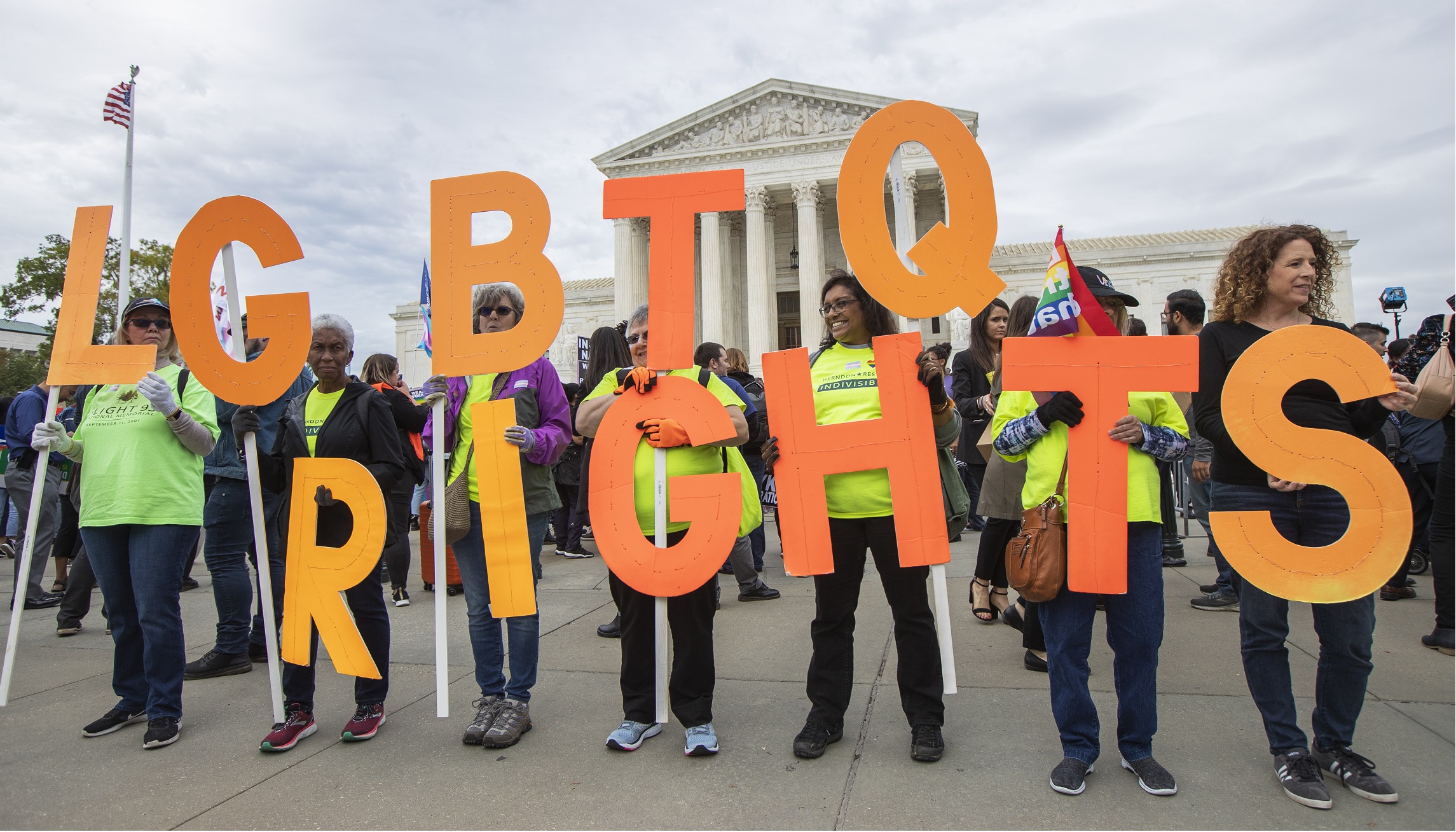
Level-headed voices on both sides of the debate over religious freedom and gay and transgender rights have always acknowledged that we have to draw the line somewhere between opposite extremes. We can’t have zero civil rights protections for gay or transgender people, nor should we enact such expansive protections that a female waxer could be forced to wax a transgender person’s testicles against their will. The fight over where to draw this line has bitterly divided the public.
Yet with Wednesday’s landmark decision in Our Lady of Guadalupe School v. Morrissey-Berru, the Supreme Court has established a fair balance. At least, when it comes to employment protections and the autonomy of private religious schools.
Recommended Stories


The court earlier this year ruled in another case that federal anti-discrimination employment protections apply to gay and transgender Americans. Now, in a 7-2 decision, it finds that private religious schools are exempted from anti-discrimination laws for employee positions that involve important religious functions.
#SCOTUS rules 7-2 that employment discrimination suits by teachers fired by Catholic elementary schools are barred by “ministerial exception”
— SCOTUSblog (@SCOTUSblog) July 8, 2020
Here’s a basic breakdown of the facts from Guadalupe.
Agnes Deirdre Morrissey-Berru taught at Our Lady of Guadalupe School and later sued the school for employment discrimination. However, the school claimed that Morrissey-Berru’s position was exempt from anti-discrimination laws under previously established exceptions because her role involved teaching religion and praying with students and her job performance was measured in part on religion-based metrics. This dispute, paired with another similar case, made its way through the legal system all the way up to the Supreme Court.
In Wednesday’s ruling, Justice Samuel Alito authored the opinion ruling in favor of the religious schools. He was joined by the court’s four other conservative-leaning justices and, interestingly, by two liberal-leaning justices, Stephen Breyer and Elena Kagan. Expanding the previously established “ministerial exception,” the Supreme Court found that this exception applies not just to literal ministers, but also employees such as these teachers whose jobs involve religious duties.
“Among other things, the Religion Clauses [of the Constitution] protect the right of churches and other religious institutions to decide matters ‘of faith and doctrine’ without government intrusion,” wrote Alito. “State interference in that sphere would obviously violate the free exercise of religion, and any attempt by government to dictate or even to influence such matters would constitute one of the central attributes of an establishment of religion. The First Amendment outlaws such intrusion.”
“This does not mean that religious institutions enjoy a general immunity from secular laws, but it does protect their autonomy with respect to internal management decisions that are essential to the institution’s central mission,” the justice continued. “And a component of this autonomy is the selection of the individuals who play certain key roles.”
This decision sets the stage for the right balance between gay and transgender rights and religious autonomy to emerge.
Most people, including most Republicans, believe that gay and transgender people should be protected under anti-discrimination laws. The immorality of firing someone from a grocery store for who they love or evicting someone from an apartment over their gender identity is obvious and self-evident. However, conservatives and other religious liberty advocates rightly insist there must be limits to these protections in order to protect religious freedom and respect the First Amendment.
It’s easy to see why many believe a private Catholic school should not be forced through anti-discrimination law to employ in a religious role someone like me, who, as an openly gay man, flouts Catholic teaching on homosexuality. The standards the Supreme Court just laid out in Guadalupe would give private religious schools appropriate leeway to discriminate in religious hiring yet still not allow them to discriminate in secular positions such as janitors. Such religion-based exemptions in no way undermine the ability to apply robust anti-discrimination protections to secular businesses.
Nonetheless, many left-wing critics immediately bashed the decision:
Nobody deserves to be discriminated against in the workplace. Today’s ruling means religious institutions who wish to fire or refuse to hire school teachers or other staff based on age, race, sexual orientation, or other discriminatory factors now have legal cover for doing so.
— American Progress (@amprog) July 8, 2020
TL;DR of SCOTUS today is civil rights protections of all kinds are on the road to being eviscerated through religious exemptions. Next term it will be worse. Today was bad but not as bad as it could be.
— Chase Strangio (@chasestrangio) July 8, 2020
But outrage over the Supreme Court’s decision is woefully misplaced. To maintain our pluralist society and coexist in peace, gay and transgender people and religious citizens alike should be willing to live with this eminently reasonable compromise.
Brad Polumbo (@Brad_Polumbo) is a freelance journalist and Washington Examiner contributor.
