

Should former President Donald Trump return to the White House in 2025, he’ll have plenty of targets to whom he can issue pardons over the Jan. 6 riot since all crimes are charged federally in Washington.
Trump is mulling a 2024 White House bid after losing to former President Joe Biden in 2020. Trump is also floating his desire to pardon people charged in connection to the Capitol riot were he to win a future election bid. It’s a possibility that is agitating both Democrats and some top Republican lawmakers — due in no small part to what legal experts say is the president’s absolute right to do so.
Recommended Stories



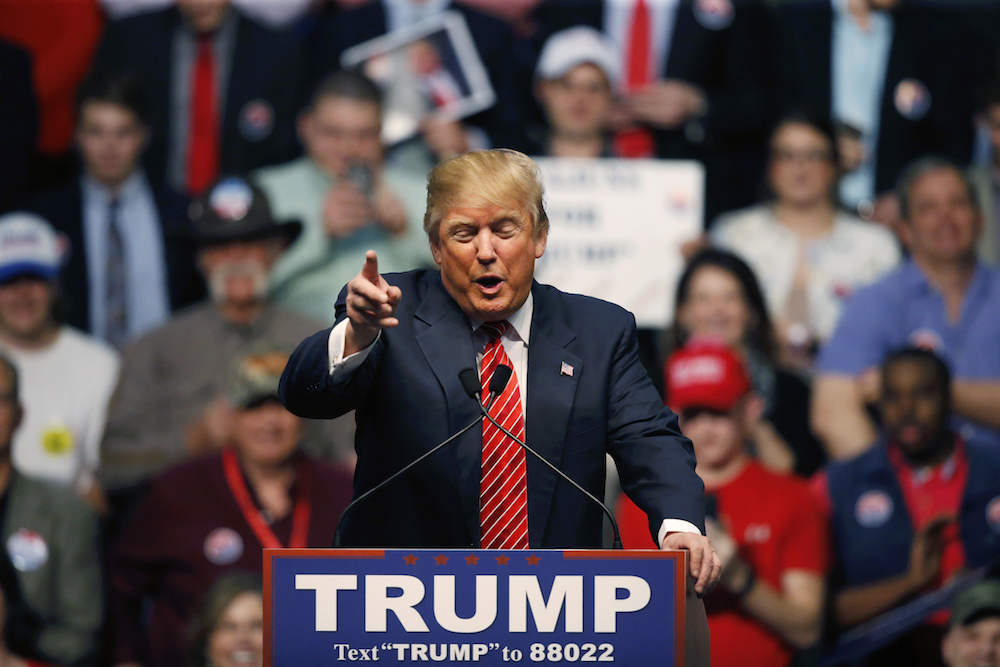
During a rally in Texas on Saturday, Trump said that if he were to run and become president again, he would make sure the people charged in connection to the Jan. 6 riot at the Capitol were treated “fairly.”
“If it requires pardons, we will give them pardons because they are being treated so unfairly,” Trump said about the 13-month-old episode, when his supporters stormed the Capitol in a bid to stop Congress from certifying Electoral College results that made Biden the next president.
Trump’s comments were later rebuked by the former president’s fellow Republicans, including Sens. Lindsey Graham of South Carolina and Mitch McConnell of Kentucky, cautioning against the idea.
Federal prosecutors have issued various charges to more than 700 people in over 45 states who participated in the riot at the Capitol amid Trump’s speech calling for then-Vice President Mike Pence to overturn the results of the 2020 election. So far, 87 people have been convicted of charges stemming from the riot, with the majority representing low-level offenses.
TRUMP DUBS LINDSEY GRAHAM ‘RINO’ FOR CALLING JAN. 6 PARDON SUGGESTION ‘INAPPROPRIATE’
But even those charges, which would normally be handled as local prosecutions, are federal since Washington, D.C., is not a state. That would give a Trump in his second term the chance to pardon hundreds of Jan. 6 participants, if he so chose.
Jail and prison time for convicted offenders has been relatively limited for rioters who were given stringent felony charges, as only 38 out of the 87 convictions have resulted in prison time, and only eight of the convicted cases relate to felony charges so far. Those incarcerated on misdemeanor charges have been sentenced to as many as 14 days up to six months.
The longest felony-related prison sentence, at 63 months, went to Robert Palmer in December when he was convicted for assaulting an officer with a dangerous weapon. The shortest felony-related sentence, at 8 months, was given to Paul Hodgkins for disrupting an official proceeding.
Earlier this month, the founder of a right-wing militia group called the Oath Keepers pleaded not guilty along with nine others charged with seditious conspiracy to stop Congress from certifying the election. They could face up to 20 years in prison if convicted, meaning longer prison sentences related to the riot are potentially forthcoming.
The government estimates more than 1,000 other people took part in the riot, and more arrests related to the incident inch upward each month. As it stands, the present number of convictions would only give Trump a handful of commutations by 2025 given many will have already served their time by that point
Saikrishna Prakash, a law professor at the University of Virginia, told the Washington Examiner that Trump had the ability to make blanket pardons for rioters before leaving office.
“Maybe there are 700 people in the criminal law pipeline. There might be 500 other people that could eventually be in it. And if [Trump] pardons, he’s probably going to write a pardon that covers everybody involved, whether or not they’re being prosecuted,” Prakash said.
CLICK HERE TO READ MORE FROM THE WASHINGTON EXAMINER
Presidents throughout the country’s history have granted blanket pardons covering thousands of people, such as when Jimmy Carter pardoned around 100,000 people who dodged the draft during the Vietnam War. In 1865, Andrew Johnson pardoned more than 13,000 Confederate troops who pledged allegiance to the United States after the Civil War, though some top-level leaders were excluded.
Under the Constitution, Article II, Section 2, Clause 1, provides a sitting president the “Power to grant Pardons for Offenses against the United States,” meaning if Trump were reelected, he would have full clearance to grant pardons to anyone federally charged in connection to the riot, according to Lee Strang, a law professor at the University of Toledo.
Strang told the Washington Examiner that “the president’s power is very broad and extends after the commission of a crime, including to those who have already served their sentences,” noting that the only exception to the rule is impeachment.
