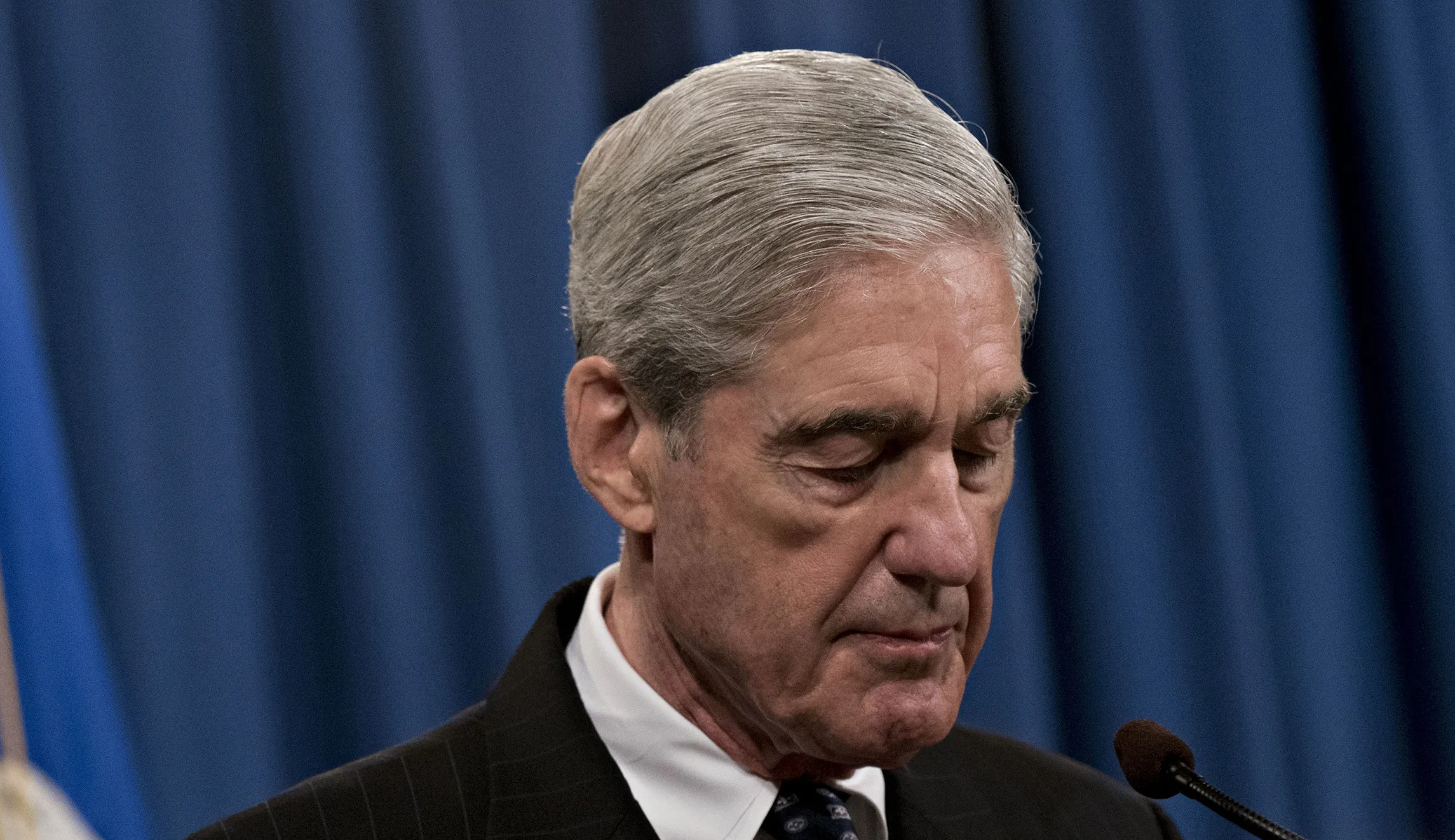
Robert Mueller showed a deft, appropriate touch

Of all the challenges Robert Mueller faced in his investigation, the toughest one was the decision he had to make on obstruction of justice. Despite the critics, he made it well.

In contrast with the topic of conspiracy with Russian interests, this was always the subject that put President Trump himself at risk. This was why Mueller was appointed in the first place — because the investigation involved the president, and the top brass of the Justice Department was situationally compromised, thus necessitating a special counsel.

Mueller had a dilemma. On the one hand, he had an opinion from the department’s Office of Legal Counsel, or OLC, that sitting presidents cannot be indicted. That opinion lacks the force of law, but it still governs the conduct of department prosecutors.

Mueller was tasked with reporting his findings to the attorney general and recommending whether or not to charge anyone else with a crime. Ordinarily, a “yes or no” recommendation on criminal prosecution would have made the most sense. But on the other hand, in this unusual situation where the subject of the investigation is the president, an indictment is not going to be an option.

So, how do you square that circle? Well, if you’re Mueller, you gather all the facts and provide analysis of how “obstruction” laws might come into play. But you stop short of making an actual recommendation. Your report belongs to the attorney general; if he thinks the OLC rule doesn’t apply here, then he, as the head of the department, can decide how to proceed.

This is not an abdication on Mueller’s part. It is an appropriate way to fulfill both obligations: making a full report of the facts and the law and avoiding a recommendation either way on an indictment of the president of the United States. The decision on how to proceed there was above his pay grade.

The question arises, though: What is Mueller’s obligation if a serious gray area exists? After all, the “don’t indict the president” rule doesn’t exist in a vacuum. There is a constitutionally prescribed impeachment process to ensure that not even the president is above the law. But that’s a power of Congress, and the special counsel is not a creature of Congress.

If you’re Mueller, you need to tell the attorney general if there is even reason for him to bother with the question of indicting a sitting president. If not, then you can tell him your investigation exonerated the president. But if you cannot exonerate the president — in other words, if there are disturbing indications that he may have obstructed justice, but you can’t conclude that yourself — then you should tell your boss exactly that. That way, he knows there is a sticky issue to consider.

Thus, if you tell the attorney general, in a report that is by law confidential unless the attorney general himself decides to release it, that the president has not been exonerated, you are not inverting the ordinary standard that says a prosecutor’s job is only to determine if guilt can be proved beyond reasonable doubt, rather than to prove someone’s innocence.

Again, this is not a normal situation; this is one where you believe you are precluded from determining guilt, but required to give as much information as you can, short of that determination, to the attorney general. That way, he can decide what to give, or not give, to Congress.

Mueller navigated an extremely narrow, perilous path. He laid out all the evidence for his boss that the president had at least waded into troubling waters.

Mueller did not recommend impeachment. But once his confidential report was made public, his “not exonerated” statement signals that difficult legal and constitutional issues are at stake and that only Congress can rightly handle them. Congress can handle them in any number of ways short of impeachment. But that is Congress’ job to figure out.

Mueller met those responsibilities according to his best understanding of how to resolve two apparently conflicting dictates. That doesn’t mean he put a thumb on the scales or committed a political hit job.

Rather, he exquisitely and profoundly acted according to the spirit and intent of the Constitution and well within its letter by publicly acknowledging a gap in the Constitution’s joints that only Congress, as the people’s delegates, can decide how to fill.

Mueller can sleep well at night, no matter how many ignorant armies of pundits blast him. He deserves thanks that he will never get, but his conscience is clear.

Related Content
