

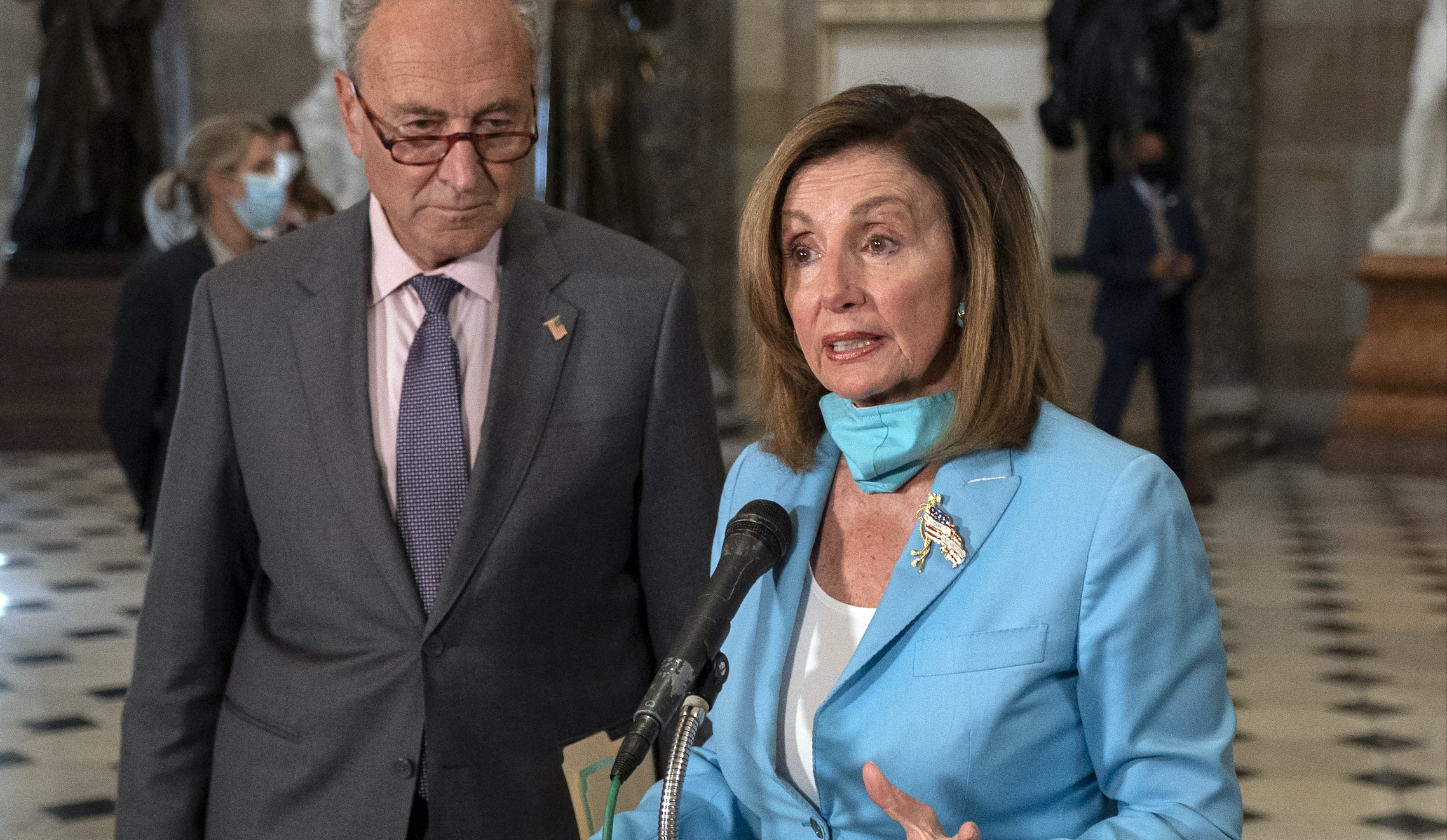
Speaker Nancy Pelosi predicted the slimmed-down House Democratic majority will nonetheless gain power with Joe Biden in the White House.
But so far, Republican Senate Majority Leader Mitch McConnell isn’t budging on his refusal to consider Pelosi’s massive coronavirus aid bill, even with Biden’s presidency looming.
Recommended Stories


“Whether you’re in the minority or majority, if the president is of your party, you have more power,” Pelosi said Friday at a post-election press conference.
Pelosi said “Mitch McConnell is going to find out … not having Donald Trump in the White House is going to change his leverage, and that dynamic.”
Republicans predict the opposite result.
Senate Republican leaders said they hope House Democrats will moderate their agenda after Republicans flipped 10 of their seats in the election.
“Hopefully Democrats will decide that they want to work with us now that it’s been made clear that what they were trying to put forward is not what the American people want to see happen here,” Senate Majority Whip John Thune, a South Dakota Republican, said.
The House returns Monday for a post-election “lame-duck” session that will test the leverage of both parties as they attempt to pass a new round of federal aid that responds to the coronavirus crisis.
Months of talks between Democrats and the Trump administration failed to produce a deal, even though both parties agree on essential parts of a package, such as money for testing and treatment, school and daycare funding, and more loans for small businesses. They are likely to agree on new stimulus checks and an extension of enhanced federal unemployment benefits, although Democrats want $600 per week while the GOP is seeking a smaller amount to eliminate work disincentives.
While he stayed clear of the failed talks between the Trump administration and Pelosi, McConnell, a Kentucky Republican, could end up playing a more active role in the negotiations now that Biden has been declared the winner of the presidential election.
But McConnell remains determined to take up a measure that is far more narrow and targeted than Pelosi’s proposal, which would cost between $2 trillion and $3.7 trillion.
Democrats are now promoting a bill the House passed in May that would provide $3.4 trillion in aid, including “hazard pay” for workers, a bailout of the financially troubled U.S. Post Office, and $500 billion for state and local governments.
McConnell dug in on the GOP position for a smaller measure, citing strong economic growth in the last quarter, a lowering unemployment rate, and the announcement of a vaccine developed by Pfizer that is more than 90% effective.
Senate Republicans have twice voted nearly unanimously for a $500 billion measure, but Democrats called the measure “emaciated” and blocked it.
“We need to think about, if we’re going to come up with a bipartisan package here, what size is appropriate,” McConnell said this week. “It seems to me that snag that hung us up for months is still there.”
Lawmakers have only a few weeks to craft a deal or else coronavirus aid will likely have to wait until January when Biden is sworn in, and the majority of the Senate is determined.
Republicans are poised to hang onto the majority unless Democrats flip two historically red Georgia Senate seats in a rare double-runoff election on Jan. 5.
If that happens, Democrats will indeed have leverage by controlling Congress and the White House, but Republicans will be able to block Senate bills through the filibuster, which means any Biden-authored coronavirus aid bill will have to satisfy at least nine Senate Republicans.
Most Republicans will vote against any coronavirus spending bill that costs more than $1 trillion and are staunchly opposed to a provision in the Democratic bill that would provide nearly $500 billion dollars to state, local, and tribal governments.
“I don’t think the current situation demands a multi-trillion dollar package,” McConnell said this week.
Senate Minority Leader Chuck Schumer said Biden’s win has indeed given Democrats more leverage, even as control of the Senate remains undecided.
The New York Democrat said voters defeated Trump largely because they rejected his handling of the coronavirus.
“That was an overwhelming referendum by the American people, so yes, we think there has been change, it should move things in our direction,” Schumer said.
