

House Republicans are trying for force consideration of a bill aimed at cracking down on entities that seek harm Israel economically through Boycott, Divestment, Sanctions, a movement that supports the end of Israel as a Jewish state.
Top House Republicans on Wednesday talked up the measure, H.R. 336, the Strengthening America’s Security in the Middle East Act of 2019. Among other provisions, it would block state and local governments from adopting laws to divest public funds from entities that boycott Israel.
Recommended Stories



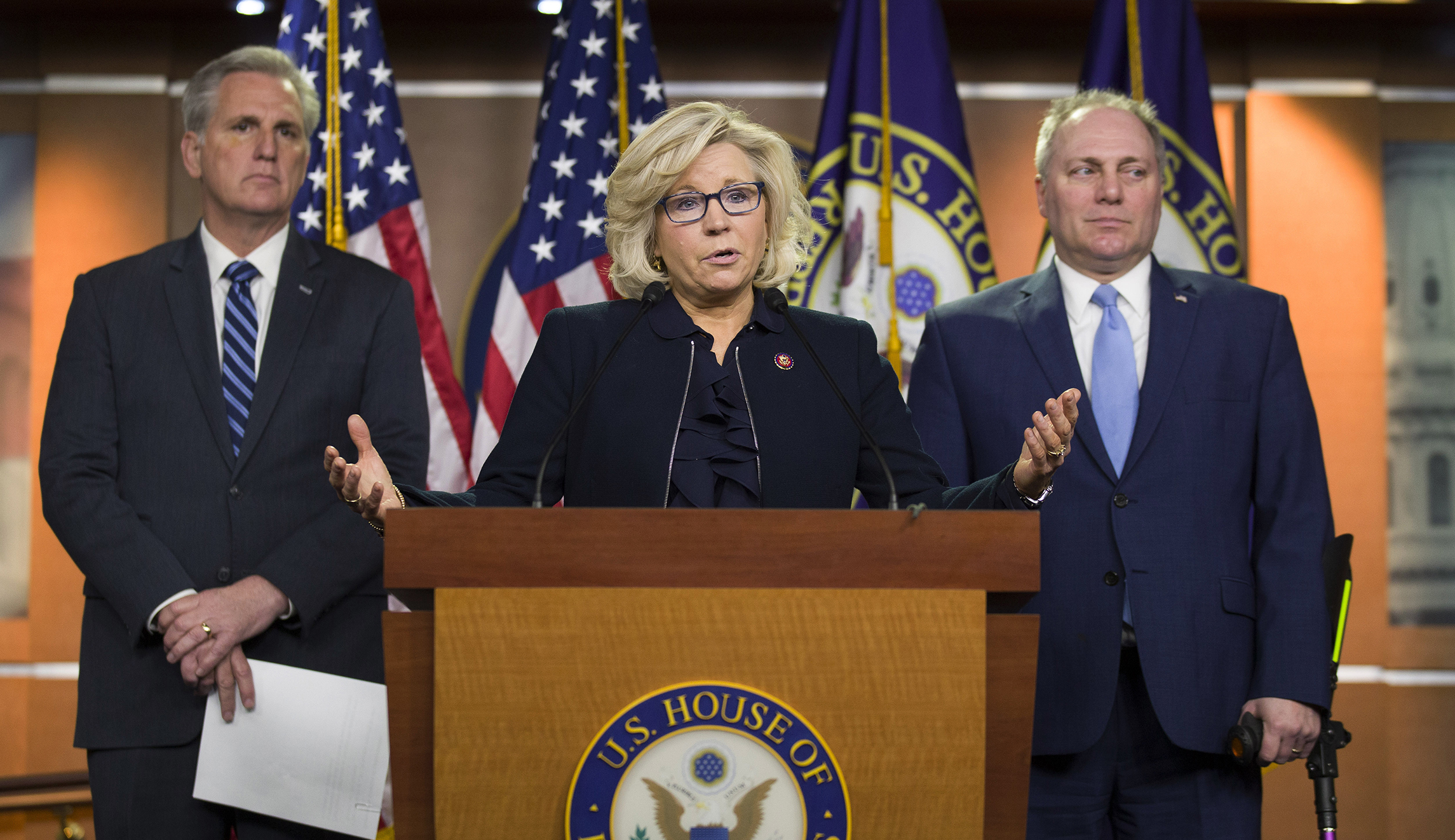
House Minority Leader Kevin McCarthy, R-Calif., House Minority Whip Steve Scalise, R-La., and House Republican Conference Chairwoman Liz Cheney, R-Wyo., on Wednesday all expressed support for the measure — but then slipped out of the press conference ahead of reporters’ questions, due to what a House GOP aide called scheduling conflicts. The move caught journalists by surprise, though several other House Republicans stayed behind to discuss the proposal, including Rep. Brian Mast, Fla., House Foreign Affairs ranking member Michael McCaul, Texas, and Rep. Lee Zeldin, N.Y.
The BDS measure comes as House Democratic leaders grapple with how to deal with two openly anti-Israel representatives in their ranks, first-term Reps. Ilhan Omar, Minn., and Rashida Tlaib, Mich., who are also the first two Muslim female House members.
Tlaib drew waves of criticism over the weekend after saying in a podcast interview her Palestinian ancestors provided a “safe haven” for Jews during the Holocaust. In reality, before, during and after the mass killings in Europe, Palestinian Arab leaders in what is now Israel vehemently fought the creation of a Jewish state there and frequently launched terror attacks against Jewish residents.
McCaul and Zeldin on Wednesday said while the BDS movement is not a new phenomenon, it has been reenergized with Omar and Tlaib’s election to Congress.
“I think it amplifies a sort of a disease, if you will, that’s not just in the United States, but it’s also in Europe, and it’s anti-Semitic,” McCaul said. “I think, unfortunately, they represent this movement that we’re seeing out there.”
Zeldin told reporters the religion shared by Omar and Tlaib and nothing to do criticism of them.
“Notice no reference at all to race, religion, or gender,” he said. “This is about words, policies, that we have an issue with. Yet the immediate response if you have a problem with something that they say, ‘Rashida Tlaib says that you’re an Islamophobe and a racist idiot.'”
Republican lawmakers face long odds in forcing a vote on the discharge petition. If it can attract 218 signatures — a majority in the 435-member chamber — House Democratic leaders must bring it up for a vote. Twenty-one House Democrats would have to sign on. But signing a discharge petition is widely considered an act of disloyalty to party leadership, likely to ensure the wrath of Speaker Nancy Pelosi, D-Calif., and her lieutenants.
The Senate passed a similar bill, S. 1, 77 to 23 in February with assistance from Democratic senators.
