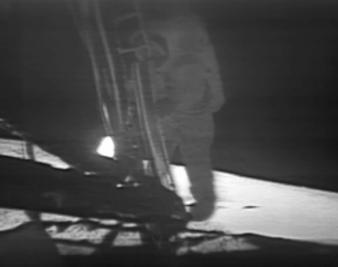
The passing of Neil Armstrong is a sad occasion in the history of our nation. But it is also a reminder of one of the most glorious achievements in American history and in the whole history of humanity. Moreover, it’s a reminder of an era when the efforts of brave astronauts and brilliant engineers were spearheaded by a president with high horizons and an apt appreciation of American (and human) greatness.
Alas, President Obama is no JFK. As I wrote two years ago when the Obama administration decided to scrap funding for voyages to the moon and Mars:
Now, unless Congress rejects the president’s recommendations, the next people to see that view will likely be the Chinese.
Mitt Romney would do well to pledge to reverse this rather visible aspect of American decline. To do so would certainly be consistent with Armstrong’s hopes. In the obituary written on his behalf, the New York Times says:
Last September, Mr. Armstrong testified to a House committee that NASA ‘must find ways of restoring hope and confidence to a confused and disconsolate work force.’
Forty-three years have now elapsed since Armstrong, and hence humanity, first set foot on the moon. Amazingly, the country that sent him there is not currently capable of sending anyone else on a similar voyage–at least not in short order–and many of its fiscal and social problems now appear almost impossible to solve.
Yet the Apollo program remains a source of inspiration and an antidote to pessimism. Andrew Smith, the author of the wonderful book Moondust, sums up Armstrong’s thoughts, which are surely applicable to the moment at hand: “Armstrong hopes that Apollo 11 shows how seemingly impossible problems may be overcome if the will is there.”