
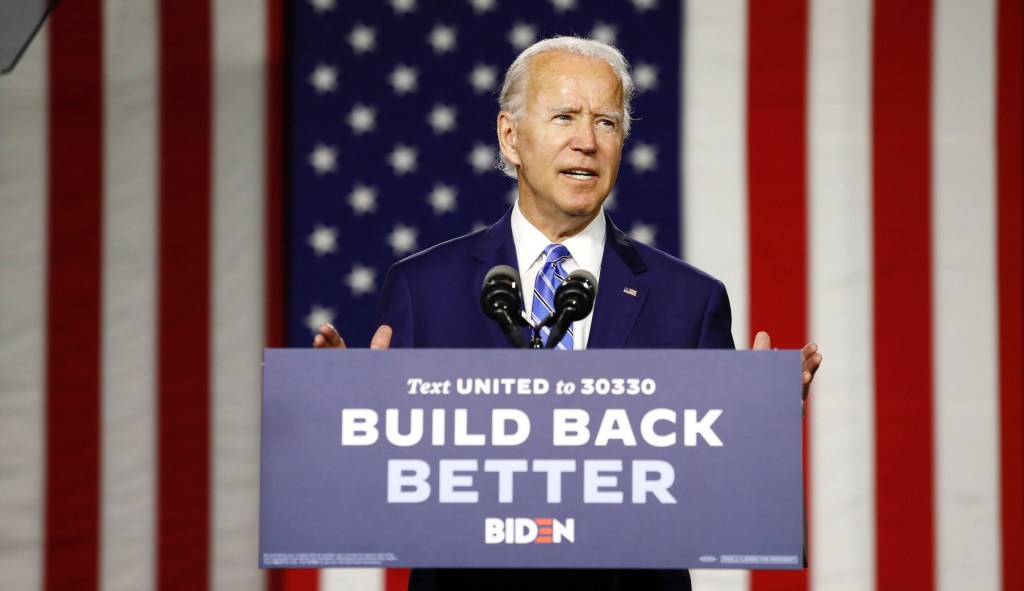
BIDEN AGENDA DEAD, DEAD, DEAD. What remains of President Joe Biden’s agenda died quietly on Sunday, barely noticed by a media consumed with Ukraine, Joe Rogan, and why Stacey Abrams didn’t wear a mask in a Twitter photo.
The precise moment of death came at 9:13 a.m. EST, when Democratic Sen. Joe Manchin appeared on CNN’s State of the Union program. Host Jake Tapper asked about Build Back Better, the massive spending program often referred to as the “centerpiece” of the Biden agenda, which stalled in the Senate late last year after Manchin refused to sign on. (Fellow Democratic Sen. Kyrsten Sinema also had reservations.)
Real journalism.Trusted by millions.
Unlimited access to in-depth reporting, expert analysis, and the stories that shape our country.
Already a member? Log in
“Build Back Better — is it dead?” asked Tapper. “Is there any opportunity for it to come back with your support?”
Subscribe today to the Washington Examiner magazine that will keep you up to date with what’s going on in Washington. SUBSCRIBE NOW: Just $1.00 an issue!
“Well, the Build Back Better, as it has been presented over, what, the last seven, eight, nine months — that bill no longer will exist, OK?” answered Manchin. For a moment, Manchin left the door open to considering “parts” of the bill but then delivered the fatal blow: Democrats could not rush the bill through the Senate, Manchin said, cutting corners to short-cut the committee process and keep Republicans from taking part.
“My biggest concern, and my biggest opposition — it did not go through the process,” Manchin said. Republicans “should have at least the opportunity to have input. It should have gone through the committee. These are major changes. It is going to change society as we know it. And those changes, there should be a hearing. There should be a markup. And then you’re going to have a better product, whether your friends on the other side vote for it or not. But they have to have input.”
That was it. Democrats do not control a majority of seats in the Senate. The only way they hoped to get Build Back Better through a 50-50 Senate was to bypass what is called “regular order” and push it forward without any GOP input. Once Manchin did not agree to that, Build Back Better was doomed.
It’s hard to overstate the ambitions Democrats once had for the bill. Yes, they passed a $1.9 trillion “COVID relief” bill that covered much more than COVID relief. And yes, they passed a $1.2 trillion bipartisan infrastructure bill that covered the usual roads and bridges but also stretched the traditional definition of “infrastructure.”
But Build Back Better would fulfill the progressive dreams that animated many Democratic activists during the 2020 campaign. A New York Times analysis last September said the bill “would touch virtually every American’s life, from conception to aged infirmity.” And indeed, it would have done just that, through expanded Medicaid, paid family and medical leave, child care subsidies, universal pre-K, school nutrition, guaranteed free community college, expanded child tax credits, climate measures, worker training, expanded Medicare with dental, hearing, and vision coverage, home healthcare, and more — all paid for by higher taxes and deficit spending.
The bill, Democrats liked to say, would be “transformative.” But again: Democrats do not control a majority of seats in the Senate. With united Republican opposition, they proposed to go through all sorts of maneuvers to push Build Back Better through the Senate without broad support. Then Manchin and some others questioned whether people really wanted their lives transformed through a series of parliamentary schemes.
So the bill sputtered to a halt in December. After its collapse, on Dec. 20, Majority Leader Chuck Schumer wrote an angry “dear colleague” letter in which he specifically blamed Manchin for the situation and vowed to force every senator to vote, up or down, on the bill in early 2022.
“Senators should be aware that the Senate will, in fact, consider the Build Back Better Act, very early in the new year so that every member of this body has the opportunity to make their position known on the Senate floor, not just television,” Schumer wrote, in a clear reference to Manchin’s fondness for the cameras. “We will keep voting on it until we get something done.”
It sounded tough, but in the end, Schumer backed down. New Year’s came and went with no Senate vote on Build Back Better. There still hasn’t been one, nor will there be one in the weeks and months ahead. As that became painfully clear, Schumer turned his attention to trying to use parliamentary maneuvers to push through a Democratic voting procedures bill and failed at that, too. The reason: Sorry to be a broken record, but Democrats do not control a majority of seats in the Senate.
Then came Manchin’s pronouncement Sunday. Build Back Better is over, and with it the “centerpiece” of the Biden agenda.
Now, it is an election year, and the president has resolved to travel the country trying to convince people that he has already done great things for them. “I’m going to get out of this place more often,” Biden said at his Jan. 19 news conference, referring to the White House and Washington. “I’m going to go out and talk to the public. I’m going to do public fora. I’m going to interface with them. I’m going to make the case of what we’ve already done, why it’s important, and what we’ll do if — what will happen if they support what else I want to do.”
When a politician, stymied by Congress, says he is going to go to the public and emphasize what he has accomplished, that’s a pretty good sign he won’t be getting anything more done. And of course, if Democrats lose control of either House or Senate in November, there will be no partisan Biden legislative agenda at all. He can make progress if Democrats are willing to work with Republicans, but not otherwise. To go it alone, Democrats will have to keep their majority in the House and actually win a majority of seats in the Senate.
But that’s in the future. Now, in a brief moment on Sunday, Manchin issued the death pronouncement on what remains of the Biden agenda. There were bold, progressive dreams. There were promises of action. There were hopes of “transformation.” And now they are dead, dead, dead.
For a deeper dive into many of the topics covered in the Daily Memo, please listen to my podcast, The Byron York Show — available on the Ricochet Audio Network and everywhere else podcasts can be found. You can use this link to subscribe.