
Don’t defend Iran, you’ll only look dumb

It’s legitimate to criticize President Trump’s Iran policy and the Sunni-Arab monarchies. It’s very foolish to make those criticisms while also sympathizing with Iran’s leaders.

Put simply, Iran’s Supreme Leader Ayatollah Khamenei is an ardent American enemy. He is responsible for ongoing terrorism and extraordinary human rights abuses, and he deserves no sympathy.

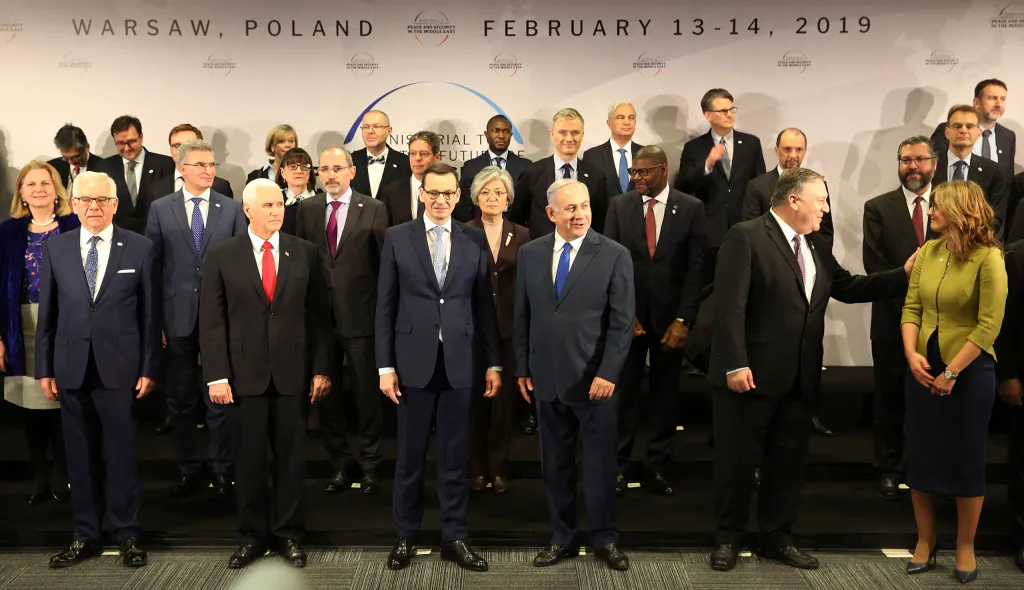
Guardian columnist Simon Tisdall disagrees. Criticizing the summit on Iran hosted in Poland this week, Tisdall says America’s focus is skewed away from what matters. For the United States, Tisdall claims, “It matters not, apparently, that Palestine, Yemen, Idlib, gross misgovernance and human rights abuses in Egypt, Saudi Arabia, and Sudan, and a host of other problems are significantly more inimical to long-term Middle East stability than is beleaguered, battered Iran.”

This is silliness. But it’s also ironic, in that Iran is the primary problem on each of the issues that Tisdall lists! Iran fuels terrorism and bad governance in the Palestinian territories. It uses Yemen as a launchpad for ballistic missile attacks on Saudi Arabian cities. It blocks aid from getting to Yemeni civilians, yes, Saudi Arabia also carries blame here. Iran’s Revolutionary Guard and militias will play a leading role in the coming slaughter of Sunni civilians in Idlib. And at home, Iran’s repression is a dark masterpiece of “misgovernance and human rights abuses.” Iran also poses a whole range of “other problems.” Consider Iran’s deliberate undermining of democracy in Baghdad and Beirut. Or Iran’s truly global penchant for directing and outsourcing terrorism against activists, diplomats, and plain old civilians.

These realities don’t simply mock Tisdall’s argument, they prove his knowledge is nonexistent.

Tisdall’s argument has at least one positive: its biases are obvious rather than obscured. He collectively describes Sunni-Arab leaders as “panjandrums” and “unreasoning foes” of Iran, Tisdall does not explain what a reasonable foe of Iran would look like. Doing so he ignores important political reforms underway in these nations. Tisdall laments Israeli efforts to defeat Iranian long-range missile forces in southern Syria, but ignores the fact that those weapons are designed to smash into Israeli apartment blocks. And with simple ignorance and a dash of orientalism, Tisdall not-so-helpfully explains that “Iraq’s Shia leadership and political parties, with close ties to Iran, are understandably alarmed” by Trump’s intention of boosting U.S. forces in Iraq. It’s true that Iraqi politicians are aggravated by Trump’s recent statement here, but to collectivize Iraqi Shia party politics is to ignore the great nuances, disagreements, and power jockeying that defines them.

Yes, there are obvious and legitimate reasons to criticize Trump and U.S. allies in the Middle East. But the idea that Iran is somehow a bystander to Middle Eastern chaos and misery is patently false. Iran is the party most responsible for that chaos.

Related Content