
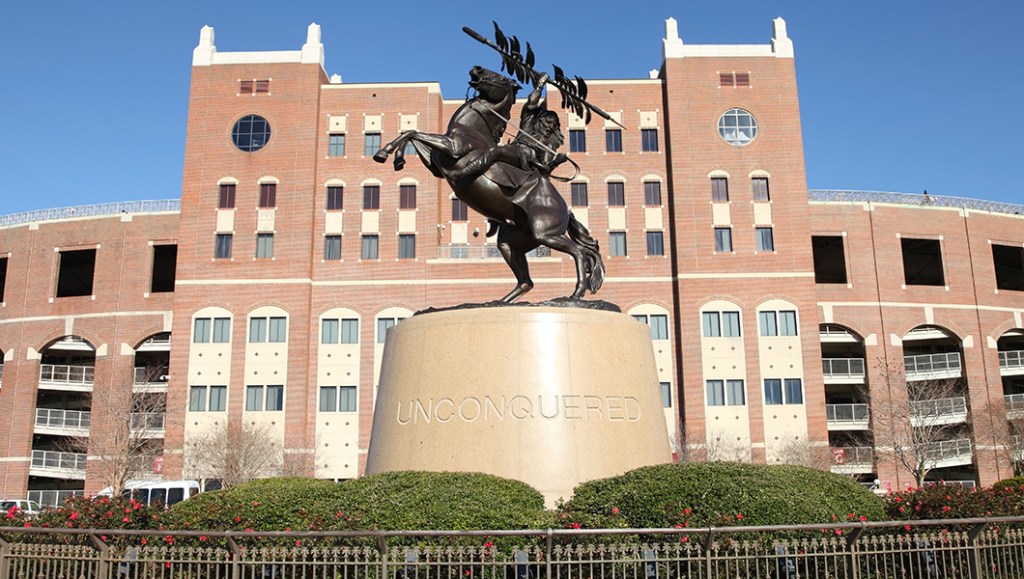
A taxpayer-subsidized public university in Florida is offering approximately 30 students the opportunity to live in a community that is dedicated to addressing topics related to social justice.
According to the Florida State University website, the Social Justice Living-Learning Community, or SJLLC, will be open to FSU students from all academic disciplines who “desire to engage in meaningful, intentional, and open discussion on many societal issues.”
Recommended Stories



Throughout their time living in the SJLLC, “SoJusters” will seek to participate in diverse discussions that breach a wide array of progressive topics. The community is especially designed for students who are willing to engage in dialogue on topics including “race, ethnicity, gender, sexual orientation, class, religion, ability, citizenship, political ideology, and other identities.”
In addition to having meaningful conversations about topics related to social justice, the university makes it clear that students will be expected to act on what they’ve learned by developing and implementing projects and initiatives related to social justice. “SoJusters” will also attend various university events that are put on by the “SoJust community.”
FSU is not the first school to design such living-learning communities. Last May, the University of Colorado-Boulder made the decision to open a “social justice living environment,” in which they segregated students into different categories based on sexual identity/orientation, races, and diversity views. The college turned the Hallett Hall dormitory on campus into three separate sections for specific groups of students, “one for LGBTQQIP2SAA students, another for black and trans-black students, and a third for people who are excited about diversity.”
Shockingly, the University of Florida offers a black-only dorm called the Black Cultural Living Learning Community. UF refers to the Black Cultural Living Learning Community as “a counterspace grounded in the Black experience for students to live, learn, and lead together in a multicultural environment,” noting that participants will have opportunities to “cultivate relationships with Black UF alumni, government officials, industry leaders, and local business owners.”
Currently, the in-state cost of attendance at Florida State University stands at $18,332, while out-of-state students pay roughly $33,499 in tuition, fees, and room and board annually.