

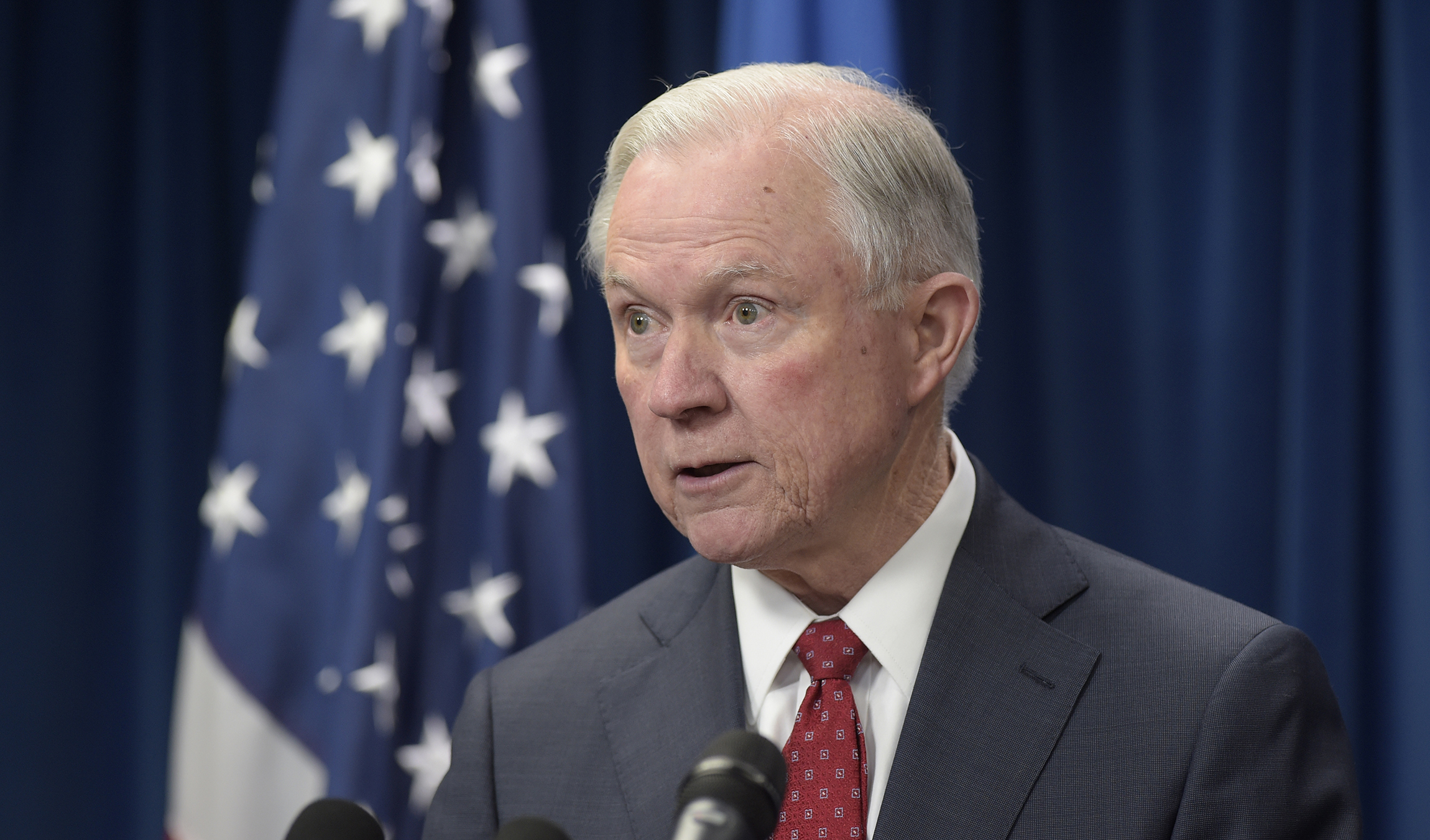
A fresh volley of perjury claims against Attorney General Jeff Sessions have been tossed around by Democrats in the days following testimony by former FBI Director James Comey, in which he reportedly told senators about the possibility of yet another undisclosed meeting between Sessions and a Russian envoy.
Sen. Al Franken, D-Minn., floated the prospect of perjury Friday during an interview on MSNBC.
Recommended Stories


“I think that he did not answer truthfully under oath,” Franken said, responding to the question of whether Sessions is fit to run the Justice Department after the latest allegations that there may be a third undisclosed meeting last year between Sessions, then a senator, and Russian ambassador to the United States Sergei Kislyak. It was already reported that congressional investigators were looking into a third meeting that possibly took place at the Mayflower Hotel in Washington, D.C.
A day earlier, after Comey testified both publicly and behind closed doors to the Senate Intelligence Committee about his private conversations with President Trump, Sen. Richard Blumenthal, D-Conn., also raised the possibility of perjury.
“I can’t confirm what may have been provided in a classified setting, but with a third meeting, even without it, what we have is a pattern of contacts with the Russians by [former national security adviser Michael] Flynn, by Sessions, by [Jared] Kushner — secret and then concealed,” Blumenthal said on CNN. It “could be perjury,” he added.
So far, the Justice Department is saying Sessions didn’t have another encounter with a Russian official at the Mayflower. “The then-Senator did not have any private or side conversations with any Russian officials at the Mayflower Hotel,” a Justice Department spokeswoman said in a statement, according to the L.A. Times.
Sessions came under fire in March when it was reported that he had two meetings with Kislyak during the campaign, which contradicted statements in his January confirmation hearing. He later recused himself from any investigations involving Russia but raised eyebrows when he got involved in the decision to fire Comey, whose agency was running an investigation into Russian interference in the 2016 campaign and possible ties to Trump’s campaign.
In a news conference to announce his recusal, Sessions remarked on his statement during his confirmation hearing that he did not have any communications with Russian officials during the 2016 campaign, during which he also advised Trump’s campaign.
Sessions defended himself, saying he was answering in a manner that was “honest and correct as I understood it at the time.” His answer came in response to a question from Franken about whether he knew of any contact between Trump campaign officials and the Russians. That question, he said, “struck me very hard, and that’s what I focused my answer on.”
“In retrospect, I should have slowed down and said I did meet one Russian official a couple times, and that would be the ambassador,” Sessions added. The Justice Department said he would also submit amended testimony.
Despite the mea culpa, the revelation of the first two undisclosed meetings sparked the initial round of calls for investigations into Sessions and concerns about whether he committed perjury. Senate Minority Leader Chuck Schumer, D-N.Y., even went as far as to call on Sessions to resign.
Franken and fellow Democrat Sen. Patrick Leahy issued a joint statement alleging that Sessions “provided false testimony” and sent a “private letter” to then-FBI Director Comey asking for an investigation into the “fact Sessions had met other times with Russians,” including the third possible meeting on April 26, 2016, at the Mayflower Hotel. Meanwhile, Democrats on the House Judiciary Committee sent a letter to Comey and U.S. Attorney’s Office for Washington, D.C. asking for a criminal investigation into Sessions.
The American Civil Liberties Union sent a letter to the Senate Judiciary Committee to look into possible perjury. However, Franken said this week the Judiciary Committee chairman, Sen. Chuck Grassley, doesn’t feel inclined to bring Sessions back in for testimony.
Rep. Keith Ellison, D-Minn., who is vice chair of the Democratic National Committee, also sent a tweet in early March directed at Sessions: “Perjury is a felony and may be punishable by prison for up to five years.”
On Saturday it was reported Sessions would forgo a hearing with the Senate Appropriations Committee in order to testify before the Senate Intelligence Committee on Tuesday to in order to respond to Comey’s claims. It’s not clear if that hearing will be in a public setting.
