

Thirteen House Republicans joined Democrats to vote in favor of the $1.2 trillion Infrastructure Investment and Jobs Act late Friday night, sending the legislation to President Joe Biden’s desk nearly three months after it passed in the Senate.
At the same time, six liberal House Democrats voted against the bill, making good on a longtime pledge that they would vote against the legislation unless there was also a vote on Democrats’ sweeping reconciliation social spending bill that started at $3.5 trillion but has been scaled back to $1.75 trillion.
Recommended Stories


The Democrats’ slim majority in the House meant the vote would have failed if all Republicans had voted against the bill and the six Democrats voted against it.
PELOSI PLAYS CHICKEN WITH DEMOCRATS IN BID TO PASS BIDEN’S STALLED INFRASTRUCTURE BILL
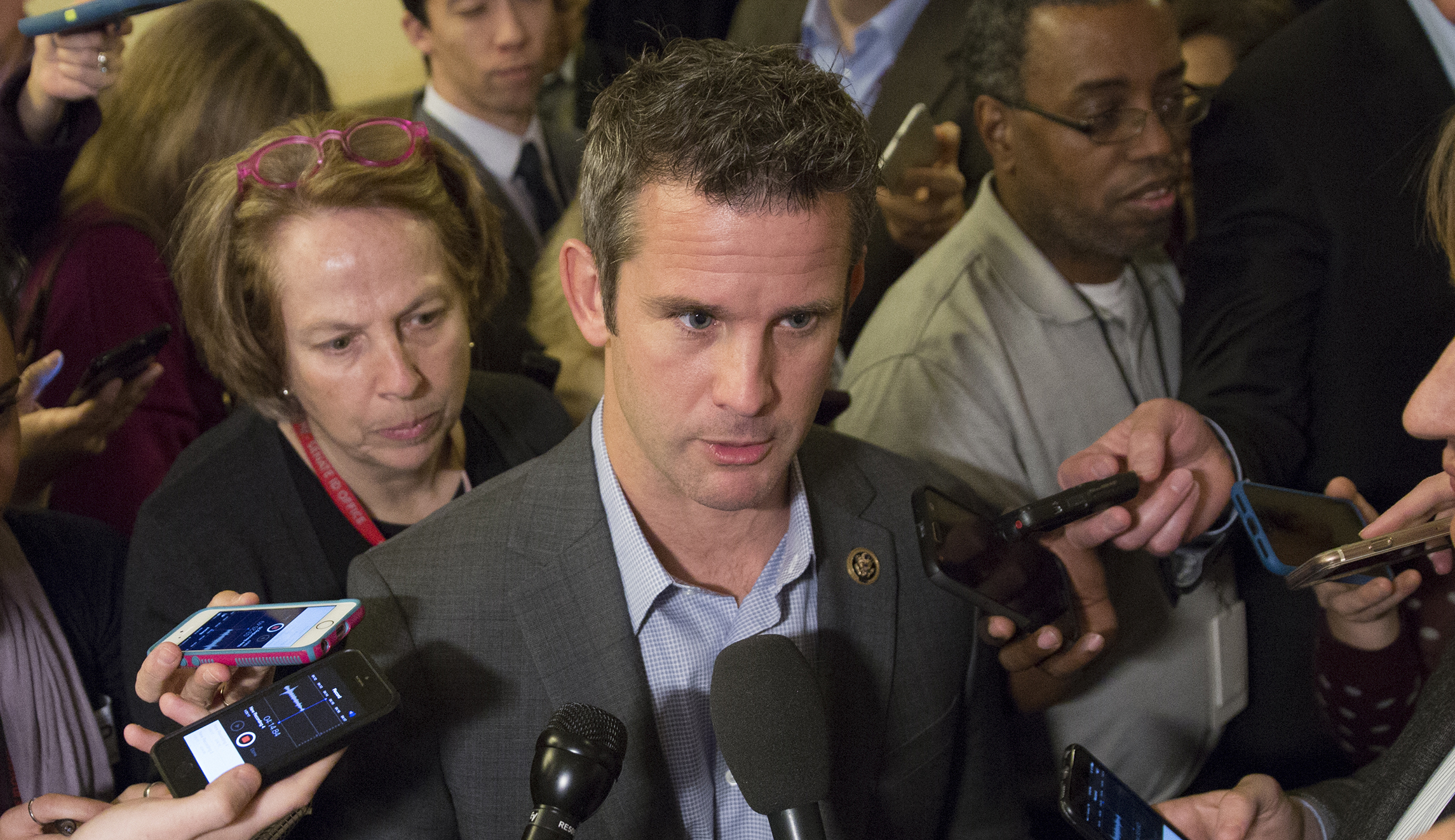
The 13 House Republicans who voted in favor of the bill are:
- Nebraska Rep. Don Bacon.
- Pennsylvania Rep. Brian Fitzpatrick.
- New York Rep. Andrew Garbarino.
- Ohio Rep. Anthony Gonzalez.
- New York Rep. John Katko.
- Illinois Rep. Adam Kinzinger.
- New York Rep. Nicole Malliotakis.
- West Virginia Rep. David McKinley.
- New York Rep. Tom Reed.
- New Jersey Rep. Chris Smith.
- Michigan Rep. Fred Upton.
- New Jersey Rep. Jeff Van Drew.
- Alaska Rep. Don Young.
The six House Democrats who voted against the bill are:
- Missouri Rep. Cori Bush.
- New York Rep. Jamaal Bowman.
- Massachusetts Rep. Ayanna Pressley.
- Michigan Rep. Rashida Tlaib.
- New York Rep. Alexandria Ocasio-Cortez.
- Minnesota Rep. Ilhan Omar.
All six Democratic defectors are often described as being part of the far-left “squad.”
The infrastructure bill was crafted by a bipartisan group of senators and passed in the Senate in August with support from 19 Republicans.
In the House, though, leadership opted to whip votes against the infrastructure bill, arguing that it was linked to Democrats’ go-it-alone sweeping budget reconciliation bill. That was a win for conservatives in the Freedom Caucus and Republican Study Committee, who had called on leadership to do so.
Despite the pressure from the top, a handful of House Republicans said publicly that they planned to buck leadership and vote in favor of the infrastructure bill. They supported the plan and disagreed that the bill was tied to the reconciliation bill.
Some of those Republicans, though, changed their minds after planned votes on the infrastructure bill were delayed twice while House liberals refused to vote in favor of the infrastructure bill.
Members of the Congressional Progressive Caucus had long said they would vote against the infrastructure bill until the Senate held a vote on the Build Back Better reconciliation bill. They hope key Democratic holdouts Sens. Joe Manchin of West Virginia and Sen. Kyrsten Sinema of Arizona will come around to support the bill in the evenly divided upper chamber.
Meanwhile, centrist House Democrats pushed for an immediate vote on the infrastructure bill but did not get it.
On Friday morning, after months of delays, House Democrats appeared to have reached an agreement: They would vote for both the infrastructure bill and a House version of the reconciliation bill that was still likely to be changed in its final form in the Senate.
But a handful of Democratic moderates foiled that plan when they said they would not vote for the Build Back Better bill until it was evaluated by the Congressional Budget Office, which could take weeks.
Democratic leadership came up with a plan to hold a procedural rule vote advancing the Build Back Better bill along with a vote passing the infrastructure bill, delaying passage of the sweeping $1.75 trillion legislation.
That was not acceptable to liberals. An hourslong House Progressive Caucus meeting ensued with President Joe Biden calling in to urge a vote on both the rule and the infrastructure bill.
CLICK HERE TO READ MORE FROM THE WASHINGTON EXAMINER
The Congressional Progressive Caucus negotiated a statement from five centrist Democrats agreeing to vote for the Build Back Better bill as it is currently written after the Congressional Budget Office evaluated it, with a final vote no later than the week of Nov. 15. That was enough to get the progressive caucus to officially support a Friday “yes” vote on both the rule for the reconciliation spending bill and the infrastructure bill.
But it was not enough of an assurance for the six Democrats who voted against the infrastructure bill
