

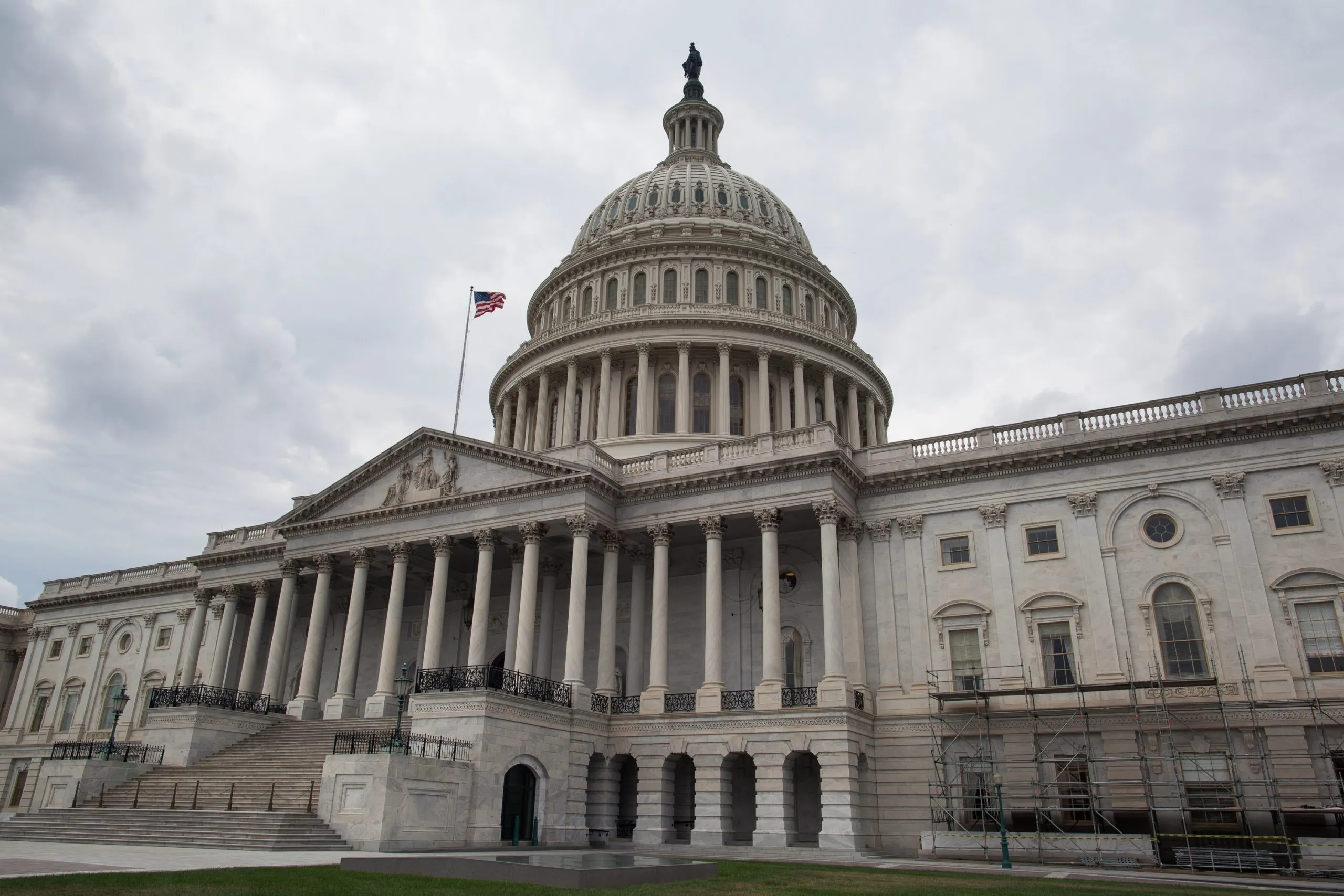
Congress is poised to return for a rare post-Christmas session next week to take up President Trump’s likely veto of a critical defense spending and policy measure.
Trump has pledged to veto the National Defense Authorization Act, which sets funding levels and policy for the Defense Department for the coming year.
Recommended Stories



The House plans to return on Dec. 28 to consider the veto, and if lawmakers vote to override it, the Senate will be back the next day to take up the veto.
“In the event that the president has vetoed the bill and the House has voted to override the veto, the Senate would have the opportunity to process the veto override at that time,” McConnell said in a middle-of-the-night floor announcement that followed passage of the massive spending bill.
Trump objects to the bill for several reasons, but mainly because it excludes language he is seeking to punish social media giants for perceived biases against him and other conservatives. Trump wanted lawmakers to include a provision in the bill stripping out a lawsuit shield Big Tech has enjoyed for more than two decades.
While Trump has prevailed on a half-dozen vetoes during his presidency, he’s likely to lose this fight.
Both chambers passed the measure with veto-proof majorities, although some GOP House members plan to uphold Trump’s veto, including Minority Leader Kevin McCarthy of California and the 40 members of the House Freedom Caucus.
On Monday, the House and Senate wrapped up legislation for the year, passing a $2.4 trillion measure that provides coronavirus aid and funds the government through fiscal 2021.
Republicans have tried to convince Trump to back off his veto threat, particularly in the wake of the massive Russian hack into critical government operations. The bill includes money to address cybersecurity and revives the role of a cyber “czar” to oversee the effort.
McConnell issued another plea to Trump on Tuesday morning to allow the measure to become law.
“I hope the president will not veto this bill,” McConnell said, “which redoubles our commitment to modernization, advances cutting-edge capabilities, and equips our military with the tools and resources they need to compete with our great power adversaries on land, on sea, in the air, and in cyberspace.”
Senators had hoped to return on Jan. 3 to take up the veto override ahead of the 117th session, which convenes at noon that day. But Sen. Rand Paul, a Kentucky Republican who sides with Trump, was prepared to block the plan, forcing Republican leaders to schedule the Dec. 29 session.
Republicans largely agree with Trump that the lawsuit shield, Section 230 of the Communications Decency Act, should be removed or revised. But GOP lawmakers say the changes should be tackled in separate legislation and should not be used to slow the critical defense measure.
Trump last week promised to veto the bill, which he tweeted “will make China very unhappy. They love it. Must have Section 230 termination, protect our National Monuments and allow for removal of military from far away, and very unappreciative, lands. Thank you!”
