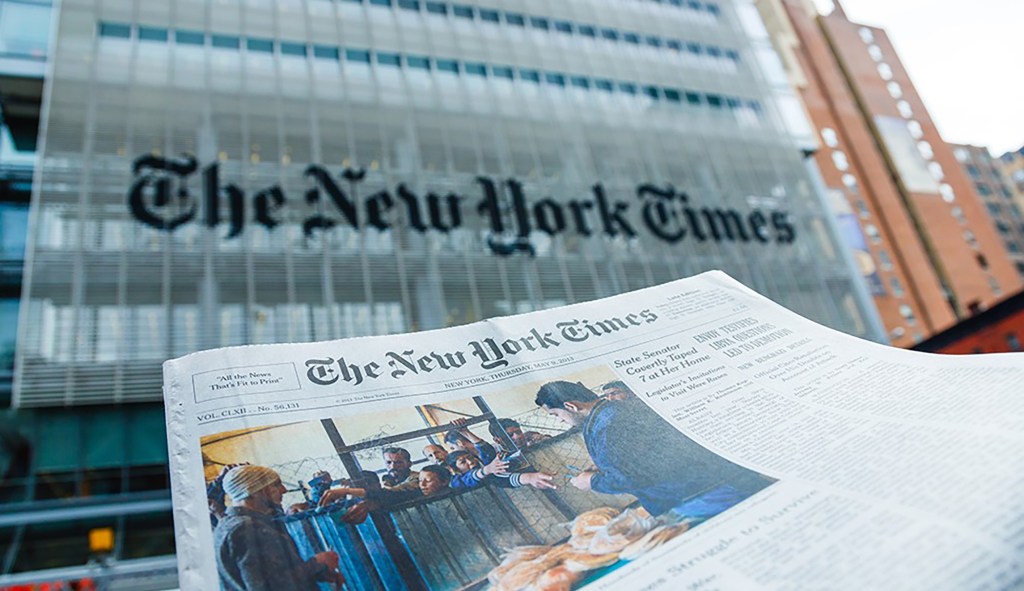
The New York Times thinks religious freedom has gone too far

Recently, the New York Times published an opinion piece about religious liberty and it made a stir. Headlined “We are taking religious freedom too far,” the piece made waves not because of the subject matter, but because of how straightforward author Margaret Renkl was about stripping Americans of one of their most fundamental rights.

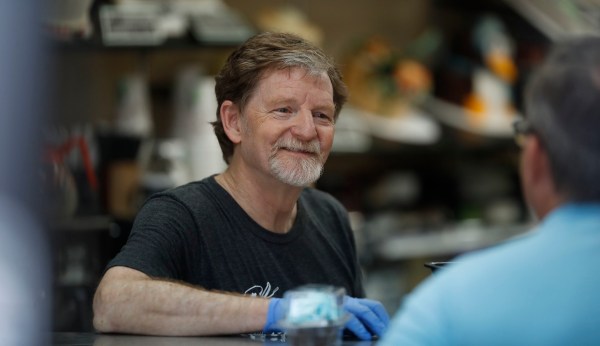
In the piece, Renkl rattles off a number of examples that show people are being discriminatory, even engaging in behaviors that hurt or kill other people, on account of them exercising their God-given, constitutionally protected, religious freedom. She writes of a bakery owner in Tennessee who, much like Jack Phillips, was unable to provide a wedding cake to a couple once he learned the pair getting married were lesbians. He claimed doing so would have violated his beliefs. Renkl claims “Conservative Christians are forever trying to inject their personal religious beliefs into the public sphere.” She rants:
It would be almost funny if it weren’t so unfair. It’s illegal for a store owner to discriminate against customers because they happen to belong to a group against which the shopkeeper harbors a personal prejudice. It’s illegal for a racist to open a restaurant that serves only white people. Prejudice cloaked in the robes of religious faith should follow the same precedent.

This is a grave misunderstanding of the legal and historical context of religious freedom. Puritans traveled to America to freely practice religion without the grip of a tyrannical king telling them who they could worship and how. America is rooted in Judeo-Christian beliefs. This faith is structured around a set of principles, not prejudice, just like all religions are. Religion is the exercise of a specific set of ideas, based on faith, that guides how a person lives and behaves. It’s been this way for centuries. Christianity has been labeled a lot of things, but it wasn’t called “prejudice” or “discriminatory” until progressives started to conflate equality with entitlement and pushed for their rights to supersede the rights of a religious person.

Renkl’s primary beef is with people who refuse to vaccinate their children because of their religious beliefs. While it’s true many “anti-vaxxers” are religious, this is an entirely different scenario from her previous example about baking a wedding cake for a lesbian wedding ceremony. The Supreme Court has already said that the federal government may limit religious freedom when it needs to protect others and has a compelling interest to do so. Jim Crow laws were deemed unconstitutional and the government interfered because they reinforced discrimination of the entire African-American community.

While many states have not yet stepped in to revoke the religious exemption, I wouldn’t be surprised if a few of them did and maintained their legal authority to do this. Requiring “anti-vaxxers” to abide by certain guidelines, so they don’t infect others, would be a “compelling interest” of the government.

Lathan Watts, director of legal communications for the First Liberty Institute, told me:

Renkl seems to think that the ‘free exercise’ clause of the First Amendment exists exclusively in the minds of the faithful. The word ‘exercise’ always implies and requires action—but in this instance, so crucial to the American way of life, she suggests it only means belief. If all that was required of me to have six-pack abs was to believe in my mind and heart that I do, I would look more like the original Thor instead of Thor Lebowski from Endgame. This line of thinking would be funny if it weren’t so dangerous.

Renkl is right to be frustrated, outraged even, over the growing number of people putting children at risk because they’re refusing to vaccinate their children due to their religious beliefs. However, this is not the same issue as people who don’t serve wedding cakes to gay couples due to their religious beliefs, nor should they be conflated as such.

Religious people in America don’t have a “pass” like she suggests in her conclusion, to treat people however they want under the guise of faith. If anything, cases like Masterpiece Cakeshop v. Colorado Civil Rights Commission show the government and progressives alike enjoy taunting people of devout faith with claims of equality when really they’re looking for entitlement.

Religious liberty hasn’t gone too far. If anything, everybody else has gone too far the other direction, trying to push faith out of public life as much as possible.

[Also read: US prays daily more than any rich nation, ‘religious freedom’ credited]

Nicole Russell (@russell_nm) is a contributor to the Washington Examiner’s Beltway Confidential blog. She is a journalist who previously worked in Republican politics in Minnesota.

Related Content