We’re about to witness a political first. When 20 Democratic presidential hopefuls take the stage in Miami tonight and tomorrow night, it will be the largest number of candidates to ever participate in a party’s presidential debate. The field is so big that the debates must be stretched over two nights to accommodate all the candidates.
When Democrats debate one another, drama always waits in the wings — so it’s worth looking at how we got here. Democratic presidential debates are actually a relatively recent phenomenon.
It all started in 1956. Gov. Adlai Stevenson, D-Ill., and Sen. Estes Kefauver, D-Tenn., met in Miami for a televised debate ahead of Florida’s Democratic primary. Both candidates sounded stiffly presidential as they answered a moderator’s questions. Stevenson was the party’s nominee in 1952 and would be again in ’56 — and was soundly trounced in the general election by the likeable Dwight Eisenhower both times.
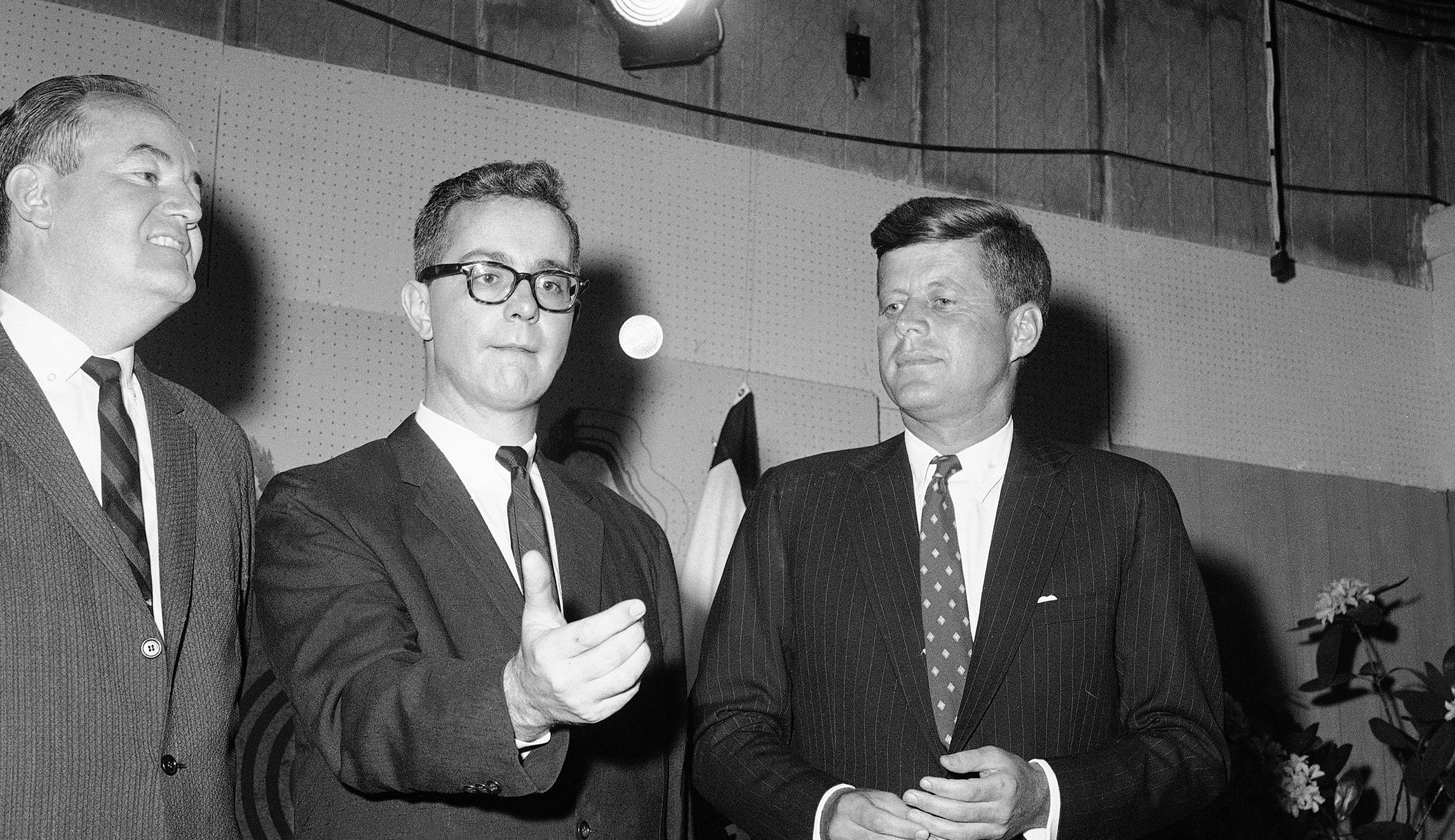
In 1960, Sen. John F. Kennedy, D-Mass., faced challenger Sen. Hubert Humphrey, D-Minn., in a debate just before the West Virginia primary. Winning there was crucial to Kennedy’s chances, as a victory in the very poor, very Protestant Appalachian state would show party bosses (who still controlled blocks of convention delegates) that the rich, Catholic New Englander could compete nationally. JFK won, boosting his prospects.
There was also a de-facto debate at the Democratic National Convention before presidential balloting began. Kennedy and late entrant Sen. Lyndon Johnson, D-Texas, addressed a joint meeting of the Massachusetts and Texas delegations. Johnson gave an impassioned stump speech, while JFK breezed in for a talk that was short on policy and long on personal charm. The rest, as they say, is history.
In 1968, Kennedy’s brother, Sen. Robert Kennedy, D-N.Y., appeared on ABC’s “Issues and Answers” with rival Sen. Eugene McCarthy, D-Minn., a few days ahead of the California primary. Notice a trend? Campaigns preferred all-or-nothing encounters just before major primaries when voters’ attention was white hot. Largely considered a draw, Kennedy carried the state.
The Democrats’ first debate in the 1972 cycle was two days before New Hampshire’s first-in-the-nation primary. And it significantly affected the outcome. Front-runner Sen. Edmund Muskie, D-Maine, was expected to blow away competitors Sens. George McGovern and Vance Hartke, Los Angeles Mayor Sam Yorty, and political gadfly Edward T. Coll. Muskie’s performance was cautiously ho-hum. He won with less than 50%, squelching his presidential aspirations while creating an opening for second place finisher and eventual nominee McGovern (who went on to lose 49 states to Richard Nixon that November).
When 1976 rolled around, Democrats were still reeling from the McGovern debacle. They began with no clear front-runner. Obscure former Gov. Jimmy Carter took advantage of the disarray by inventing the outsider candidacy, differentiating himself from Sens. Birch Bayh, Fred Harris, Henry “Scoop” Jackson, Congressman Mo Udall, and former Gov. Milton Shapp. There were two later debates; but by then Carter was well on the way to victory.
By 1980, Carter was an incumbent president with badly submerged poll numbers and a serious challenger in Sen. Edward Kennedy, D-Mass. Yet no matter how loudly Kennedy demanded a debate, Carter resisted. He won the nomination, then went on to lose 44 states to Ronald Reagan that fall.
Four years later, Reagan looked like political roadkill heading into his own reelection bid. Perhaps the most significant Democrat debate ever was held at New Hampshire’s Dartmouth College on January 15, 1984. Former Vice President Walter “Fritz” Mondale was thought to have such a cinch on the nomination a Newsweek magazine cover asked, “Can anyone stop Fritz?”
The “anyone” quickly shaped up to be Sen. Gary Hart, Colo. When they were joined by Sens. Alan Cranston, John Glenn, and Fritz Hollings, former senator and previous nominee McGovern, Gov. Reuben Askew, and Rev. Jesse Jackson, the fire was directed at Hart. Mondale attacked Hart’s self-described “new ideas” as lacking substance and likening it to the catch phrase in a popular Wendy’s TV commercial: “When I hear your ‘new ideas’ I’m reminded of that ad, ‘Where’s the beef?’” The audience howled in laughter, Mondale beamed, Hart looked like he’d been gobsmacked, and his campaign never regained momentum. Mondale emerged victorious at the Democrats’ convention that summer — and went down in flames in one of greatest election defeats ever, by losing 49 states.
In 1988, Democrats switched to a new strategy. They scrapped staging high-stakes debates on the eve of major contests. This time they held the first of several debates on July 1, 1987, a full year before the convention and six months ahead of the first primaries and caucuses. They’ve stuck with that early approach ever since.
One thing hasn’t changed. While the 2020 Democratic National Convention is still 13 months off, the stakes remain high for the current candidates. A slip of the tongue could doom them to obscurity. Likewise, a breakout performance could shoot them to the head of the pack. So while the timing is different these days, the high-stakes drama remains the same.
J. Mark Powell (@JMarkPowell) is a contributor to the Washington Examiner’s Beltway Confidential blog. He is a former broadcast journalist and government communicator. His weekly offbeat look at our forgotten past, “Holy Cow! History,” can be read at jmarkpowell.com.
