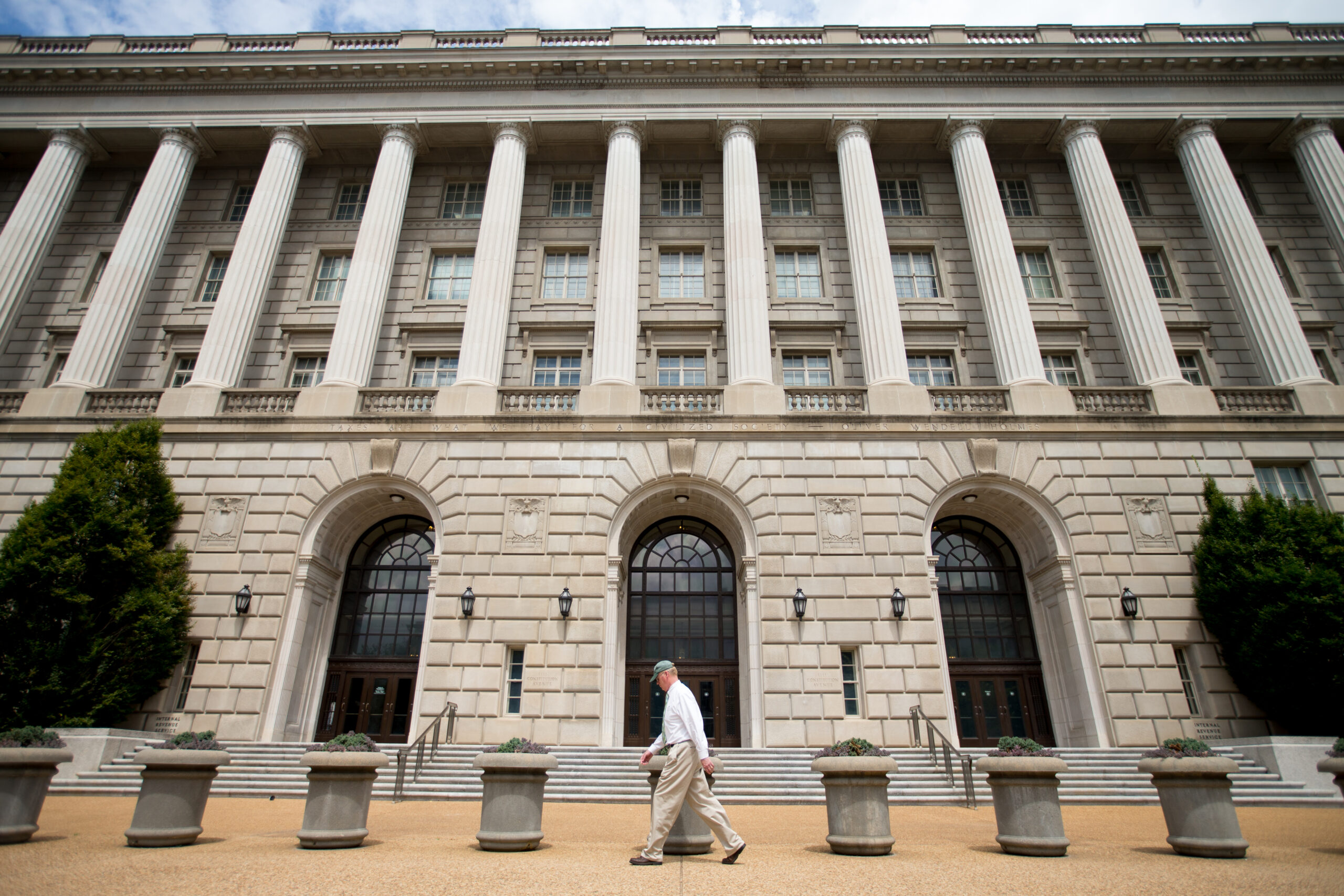
The comeuppance and reforms the IRS needs

In November, the Pew Research Center asked the public for their opinions of 17 federal agencies and departments. Just two were viewed unfavorably by a majority of respondents: the Department of Veterans Affairs and the Internal Revenue Service.

The former has long been plagued for scandal because it has sloughed of its proper duties and left military veterans to die without care. But the public has even less confidence in the latter agency, the IRS, which a March 2015 poll found was trusted by fewer than one in every three people.

It’s easy to see why people hate it. The incoherent tax system is riddled with loopholes, distortions and opportunities for fraud. Most sensible people dislike paying their taxes, not so much because they don’t want to fulfill their constitutional obligation but because they dread the complicated process of navigating the 70,000-page code that governs it. Businesses spend an average of 87 hours a year paying their taxes.

Beyond the complexity and inefficiency of the tax system, the IRS has betrayed the country and people it is supposed to serve. In 2014 it was caught abusing its power repeatedly, indeed systematically, by delaying and denying applications for tax-exempt status from hundreds of conservative groups. It’s worth pausing to to ponder the implications of that; the federal tax agency, possessed of awesome powers that can easily ruin people, persecuted a category of organization based on their opinions and political activities. Last spring, the IRS also came under fire for spending millions of dollars on office furniture, polling, market research, a stair climber and stuffed animals, even as it was petitioning Congress for more money.

Last week retribution for these came a step closer to the IRS. A federal judge in Ohio certified a class action lawsuit against it, brought by conservative groups that had had applications for tax-exempt delayed or denied between 2010 and 2013. The lawsuit was filed by NorCal Tea Party Patriots not long after it was discovered that the conservative groups had been targeted for extra scrutiny. More than 200 groups joined the suit.

Portions of the lawsuit were dismissed in 2014. But other parts went forward, including the claim that the IRS violated the First Amendment by retaliating against conservative groups because of their viewpoints. Another claim alleges that the IRS violated the law by failing to protect confidential information on tax returns.

Then on Jan. 13, the Government Accountability Office (GAO) released two reports saying the IRS may still be targeting people for audit “based on an organization’s religious, educational, political, or other views.” The reports found, among other things, that the IRS was inconsistent in its documentation of how it selects groups to audit. This makes it more likely that tax laws are applied discriminatively and unfairly.

Some conservatives, including four Republican presidential candidates, propose abolishing the IRS. That idea may be impractical, attractive though it sounds. The federal government will always need a tax collector. Radical simplification of the tax code is desrable not least because it would reduce the size of the tax-collection bureaucracy, and thus the opportunities and incidence of abuse by officialdom. There also needs to be reform to prevent the IRS from discriminating against people or groups based on their ideology and to give groups denied tax-exempt status recourse to appeal decisions against them. Another reform would prevent the agency from rehiring employees who have been fired for misconduct such as fraud and falsification of documents, a change that was proposed by Republicans in the wake of the discovery a year ago that the agency had rehired hundreds of such workers.

The IRS’ stated mission is to “provide America’s taxpayers top quality service by helping them understand and meet their tax responsibilities and enforce the law with integrity and fairness to all.” In recent years, the the agency has not lived up to any part of that mission. It will take a new president, and a renewed commitment to reforming the agency, for that to change.

Related Content
