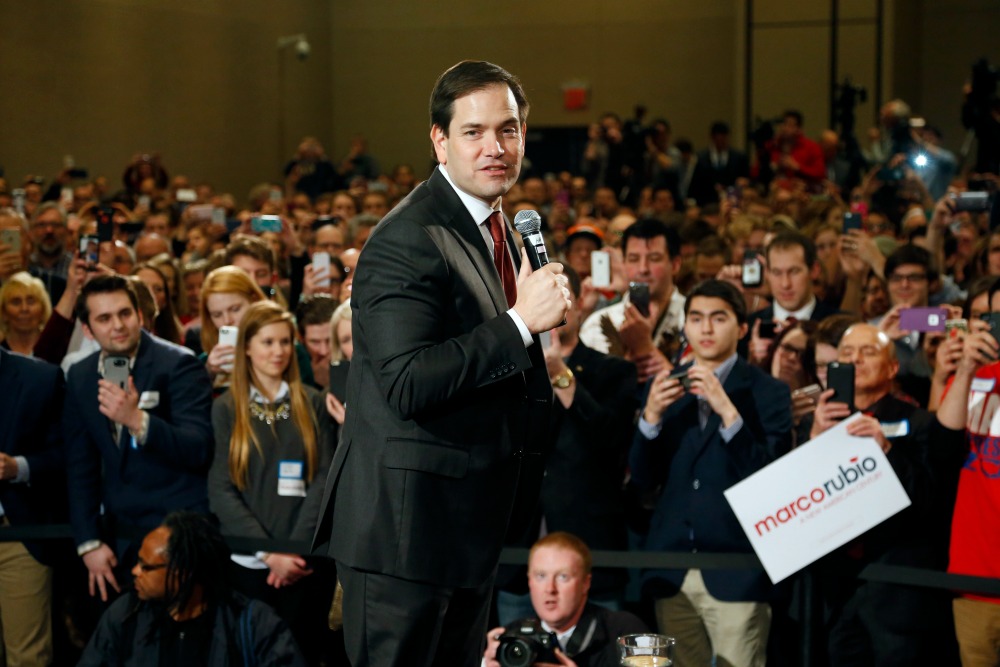
Despite Nevada loss, things looking up for Rubio

The Nevada Republican caucuses are over, and Donald Trump is the winner. Here are a few brief thoughts:

Marco Rubio

Even though Marco Rubio came in second on Tuesday, things are looking up for him overall. Since Jeb Bush dropped out, the endorsements have been flooding in for Rubio. According to the methodology at FiveThirtyEight, Rubio now has more endorsements from current governors and members of Congress than Ronald Reagan and George H.W. Bush had when they won their contested primaries. Trump has none. In every past election cycle, the candidate with the most major endorsements has won.

The betting markets at Betfair.com and PredictWise both give Rubio better than a 40 percent chance of winning the GOP nomination. Just 10 days ago, he was closer to 20 percent. Furthermore, just because Trump leads national polls at this point doesn’t mean he’s a lock. On this day in 2012, Rick Santorum still led national polls by an average of five percentage points. That’s a much smaller gap than Rubio faces now, but it still shows that the person leading national polls now won’t necessarily win.

Trump

Donald Trump’s win in Nevada shouldn’t be seen as a sign of likely success nationwide. Nevada is a distinctive state with a unique caucus process. Caucuses have low turnout, drawing a certain kind of political activist who feels strongly enough to put up with long lines on a Tuesday night.

It’s not exactly shocking that Nevadans voted for the casino magnate. Twelve of the 20 biggest employers in Nevada are casinos. More than one in four Nevada workers are in the leisure and hospitality industry. It seems natural that they would support Donald Trump. As president, he stands to gain financially from any legislative changes that help casinos. Those same changes could help casinos workers and boost Nevada’s economy.

What’s next?

If someone is going to stop Trump, he needs to start racking up delegates on March 1, Super Tuesday. Nearly one in three of the Republican delegates will be decided that day. Candidates can still afford not to win as many delegates as Trump that day, as long as momentum shifts in their favor.

On the other hand, if Trump sweeps every state on Super Tuesday, it would be significantly more difficult to stop him. If Trump keeps winning at his current rate, he’ll win 70 percent of the delegates on Super Tuesday and be more than 40 percent of the way to clinching the nomination. That makes a tough hill to climb for everyone else, especially with all the winner-take-all states coming soon. Recent polling has been scant in many of the Super Tuesday states, so it’ll be interesting to see where the chips fall when the results are finalized.

Jason Russell is a commentary writer for the Washington Examiner.

Related Content
