

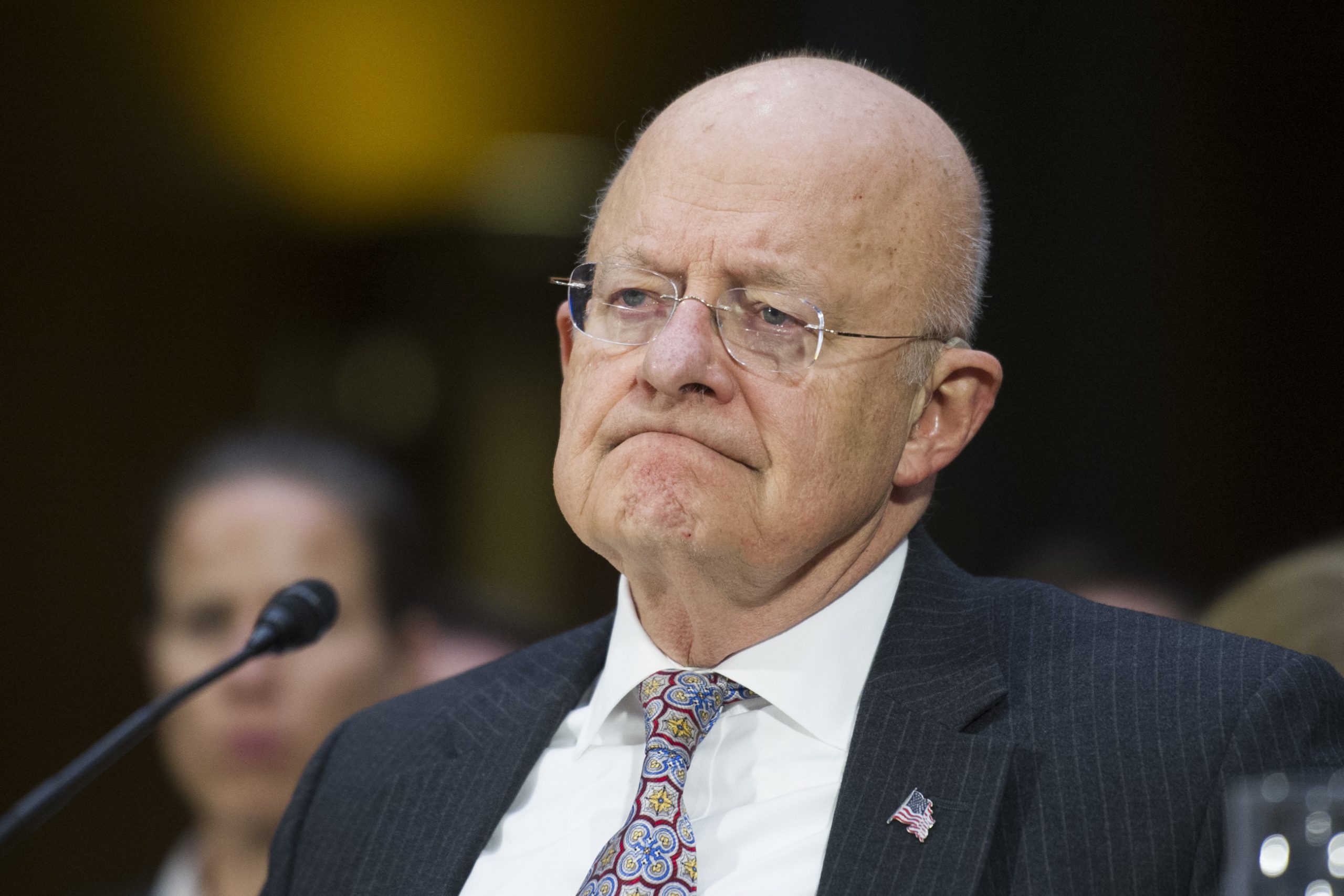
James Clapper, the former director of national intelligence, shared some choice words about the “credibility” of the House Intelligence Committee after it released findings from its upcoming report on its year-long Russia investigation, some of which contradicted a January 2017 U.S. intelligence community report.
“The credibility of the committee is basically about zero,” Clapper told CNN’s Anderson Cooper on Wednesday, adding, “because they are so partisan.”
Recommended Stories


The only time the panel is “effective” is when its members act in a “bipartisan” manner, Clapper continued.
“The credibility of the committee is basically about zero, because they are so partisan.” Former Director of National Intelligence James Clapper on Republican members of the House Intel Committee concluding that Russia didn’t meddle in the 2016 election. https://t.co/n6r45uOb7M
— Anderson Cooper 360° (@AC360) March 15, 2018
Clapper, who is now a CNN contributor, served as DNI up until President Trump’s inauguration. But before he departed, earlier that month his office declassified an assessment, coordinated by the CIA, NSA and FBI, focusing on Russian interference in the 2016 campaign.
The House Intelligence Committee, in their summary released Monday, agreed with the assessment that the Russians did, in fact, try to interfere — the findings cite “Russian cyberattacks on U.S. political institutions in 2015-2016 and their use of social media to sow discord.” However, the committee disagreed with the judgment that Russian President Vladimir Putin specifically tried to undermine Hillary Clinton and help Trump win the election. The committee’s findings say investigators came to “concurrence with the Intelligence Community Assessment’s judgments, except with respect to Putin’s supposed preference for candidate Trump.” The committee’s findings also concluded there was no collusion between the Trump campaign and the Kremlin, an issue which is still being examined by special counsel Robert Mueller.
Democratic members of the committee railed against the Republican majority for ending the investigation “prematurely,” and even some key Republicans, including Rep. Trey Gowdy, R-S.C., have backed away from the probe’s conclusion on Putin. The discord this week is nothing new, however, as throughout the year-long Russia investigation both parties have repeatedly clashed on how the probe was being handled.
Clapper was brought on speak on CNN to respond to House Intel member Chris Stewart who defended the panel’s findings, saying he read the “raw intelligence” and concluded “the CIA just got it wrong.”
In his response, Clapper said he disagreed with Stewart and also noted that it’s unclear whether Stewart also sought data from the NSA and FBI, which were also involved in the U.S. intelligence community assessment.
Clapper has also faced questions about his credibility after he admitted to giving “clearly erroneous” testimony about mass surveillance in March 2013 and offered differing explanations for why. Just this week, Clapper appeared to clear the five-year window in which he could be charged for allegedly lying to Congress.
