

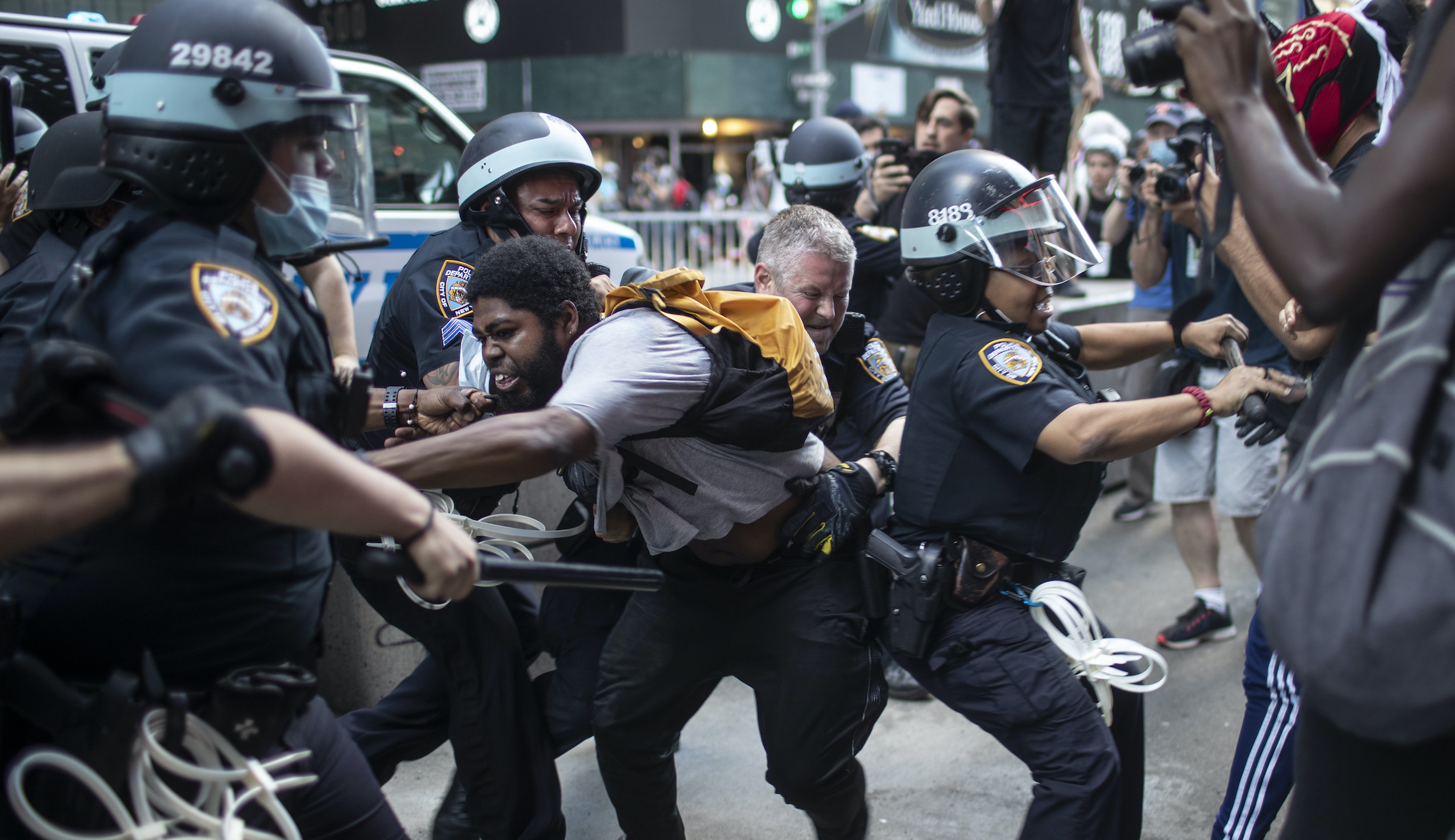
Pennsylvania academic researchers said Thursday the epidemic of “lawful but awful” police killings across America won’t change until legislators address the inherent inequities of use of force doctrine baked into officer training and state and federal laws.
“Force gets used too often against people in this commonwealth,” said David Harris, a Sally Ann Semenko Endowed Chair at the University of Pittsburgh School of Law. “There is every reason to believe that use of force is underreported by citizens because when they have an incident to report, they don’t trust the process.”
Recommended Stories



Pennsylvania academic researchers said Thursday the epidemic of “lawful but awful” police killings across America won’t change until legislators address the inherent inequities of use of force doctrine baked into officer training and state and federal laws.
“Force gets used too often against people in this commonwealth,” said David Harris, a Sally Ann Semenko Endowed Chair at the University of Pittsburgh School of Law. “There is every reason to believe that use of force is underreported by citizens because when they have an incident to report, they don’t trust the process.”
“Those proceedings ask whether the officer’s actions were legally justifiable or permissible under law enforcement policy,” he said. “That retrospective approach does not reach the question of whether the incident could have been avoided, and how to prevent future incidents.”
Heaton and Harris both encouraged senators to move pending bills that create a database of police misconduct and refine how and when officers use deadly force against civilians. But a new technique – called an event review – could help illuminate the psychological reasons behind many of these fatal interactions.
“Much as a quarterback might look at game film after throwing an interception to figure out what went wrong and how to redesign the failed play, the event review would seek to understand precisely what was driving the moment-by-moment decisions of participants so as to improve future performance,” Heaton said.
For example, he said, a team of experts could review the shooting death of a mentally ill individual that would lead to the development of specific police protocols to follow when similar encounters occur in the future.
“When a system generates undesirable events, all stakeholders should come together to investigate those events in a nonpunitive manner, understand why events unfolded as they did, and determine how they could have been avoided,” Heaton said. “Such insights become the basis for recommendations for system change to prevent the next error.”
Similar event reviews spawned safety protocols like mandated carseats for children or surgical checklists “that have saved thousands of lives,” Heaton added.
Harris called the event review “a great idea” and encouraged lawmakers to act rather than just talk.
“The greatest gap in trust is with our African American communities, and we also know without any doubt that use of force happens more often in those communities,” he said. “We have to change our laws here in the state in Pennsylvania on the use of force, because that will change how use of force is used by police departments. It will not make anyone unsafe.”
