

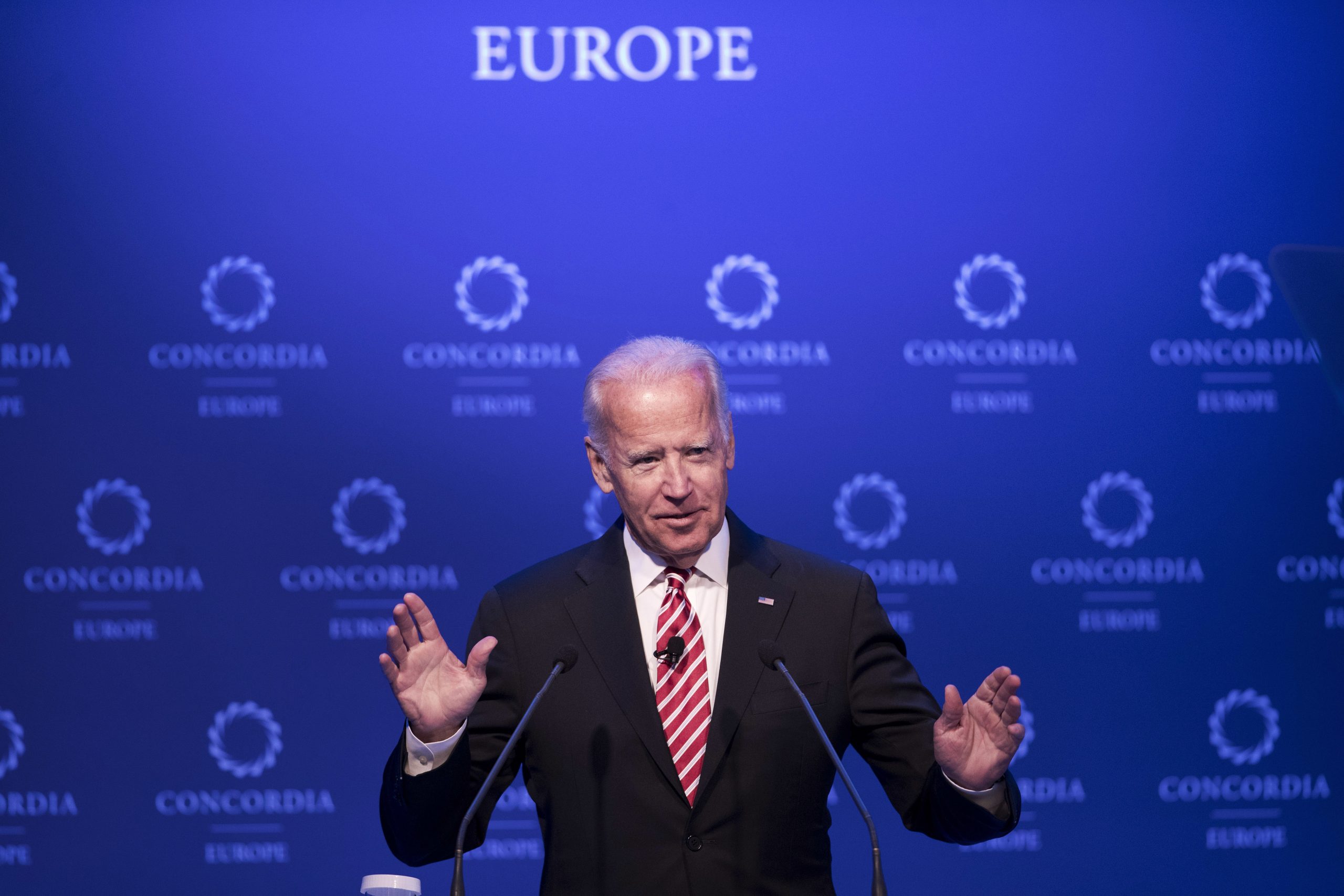
President Joe Biden is aware voters no longer approve of his handling of the economy and that rising inflation is the biggest reason they have lost confidence in him.
That is why his Council of Economic Advisers published a report last week to argue borrowing and spending another $3.5 trillion wouldn’t make our growing inflation crisis worse.
Recommended Stories


“The share of a family’s budget spent on any particular category of goods or services reflects a combination of factors that are both within and outside its control,” the report noted. “For example, the share a family spends on childcare could increase because the price charged by their childcare provider increases, because a family has a second child needing care, or because a family member loses their job and must accept a lower-paying job after displacement.”
Some categories of spending “have risen noticeably faster” than others, the report went on to explain. This includes childcare prices, which are up 210% between 1990 and 2019 — much faster than the 143% rise in the median family income over the same period.
Prices for services such as childcare rise faster than other categories because “human services like childcare are often more limited in their potential to see enhanced productivity (caregivers cannot watch children any ‘faster’ over the same number of set hours per day,” the report reads.
Bringing this back to Biden’s $3.5 trillion spending plan, the report claims that since the legislation includes universal preschool, working families would actually see their cost of living go down even as the price of everything else goes up.
But can the federal government just flip a switch and make universal pre-K free? Who is going to provide these services without demanding any sort of wage or compensation? And where will the capacity for all these extra pre-K spots come from?
The report doesn’t say, and it can’t.
We do know one of the big reasons why the price of childcare has risen so fast in recent years is because of all the new regulations government now requires for its provision. The Atlantic’s Jordan Weissmann reports:
Governing magazine’s Ryan Bourne adds:
So, does Biden’s pre-K plan include deregulating the industry to lower costs? Nope. Quite the contrary:
So, Biden’s plan to lower the cost of pre-K for working families is to subsidize demand through more federal spending and then restrict supply by increasing the regulatory costs of providing pre-K.
Have you ever wondered why college tuition and housing prices have risen faster than almost anything else in the U.S. economy, including childcare? It’s because the government has stimulated demand for these things through subsidies while simultaneously restricting supply through regulation.
This is Biden’s solution for childcare, too.
Instead of making working families’ lives more affordable, Biden’s $3.5 trillion spending plan will only make it worse.
