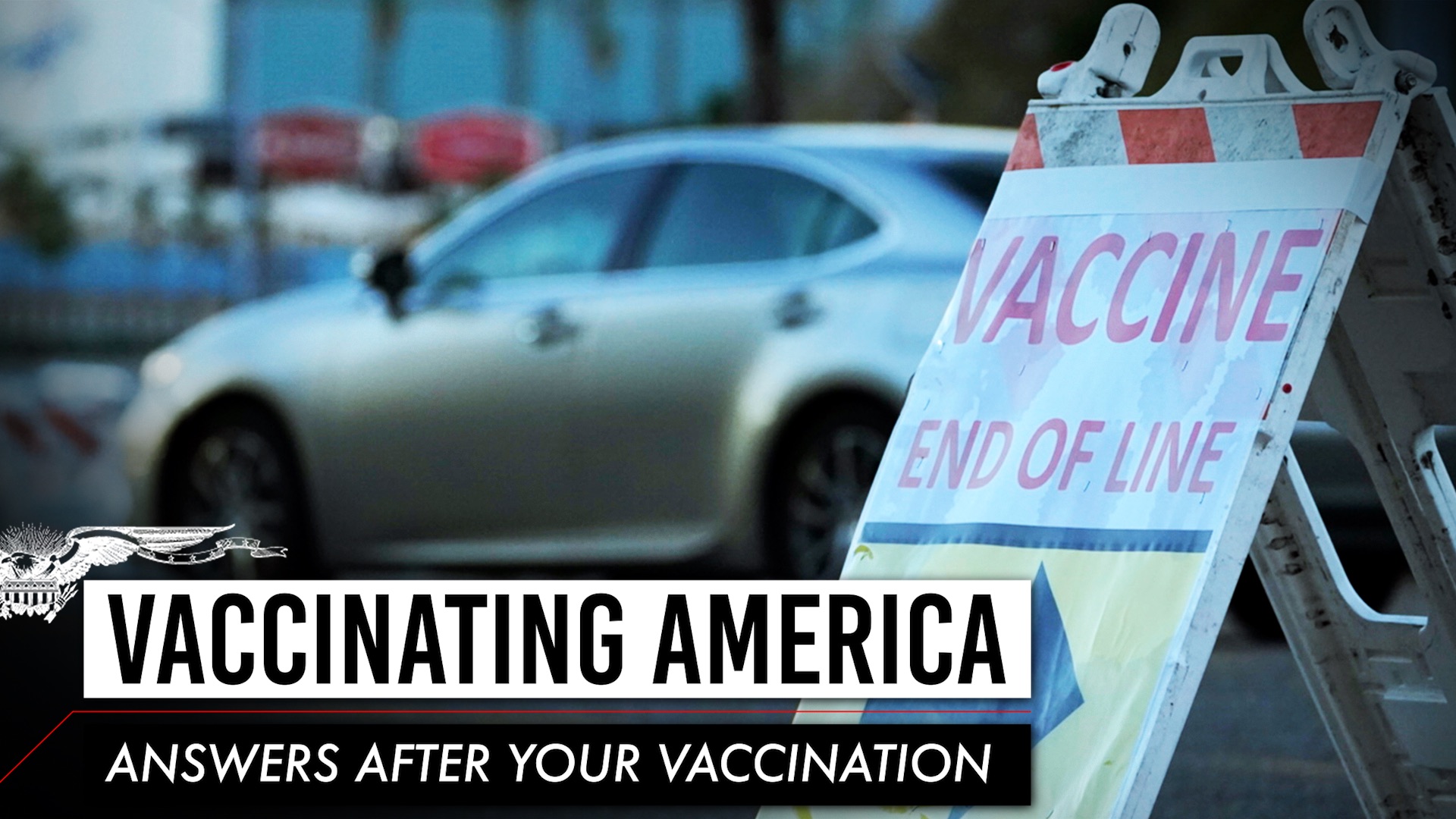
With a giant snowstorm blanketing the Northeast, the pace of vaccination has slowed somewhat, but the good news is more than 32.2 million doses have been administered in the United States thus far. The Centers for Disease Control and Prevention says 5.9 million Americans have received a second dose. And, at the present pace of 1.3 million needle sticks a day, the U.S. is well above the target of 1 million vaccinations per day.
Now, a third vaccine, by Johnson and Johnson, is available, and while it shows only a 72% efficacy, it has advantages.
Dr. Anthony Fauci, Director of the National Institute of Allergy and Infectious Diseases, said, “From a practical standpoint, from what you want to do to keep people out of the hospital and prevent death. This is value added. Number one, it’s a single dose, much more convenient. It doesn’t require a very stringent cold chain, you can just keep it in a refrigerator.”
Now the question turns to: Can you return to a normal life after getting the vaccine? Johns Hopkins University answers no, saying, “If you are among the estimated 5% to 10% of people for whom the vaccine is not effective, you could still catch and spread the coronavirus.”
That means:
- Continue wearing a mask.
- Maintain social distancing.
- Avoid crowds and poorly ventilated areas.
- Wash hands often.
And if you’ve already had the coronavirus? The CDC still advises you to still get a vaccination, saying, “Because this virus is new, we don’t know how long natural immunity might last. Current evidence suggests that getting the virus again is uncommon.”
But it cautions more data is needed. The need for prompt vaccination is critical, as new mutations are spreading, such as the one in South Africa, which is becoming the dominant strain in that country.
Fauci adds, “When we were communicating with our many scientific and public health colleagues in South Africa, they were telling us over the phone, something strange is going on right now. We have people who were infected several months ago, who now with this new strain are getting reinfected, which is telling you that the immune response induced to the first infection wasn’t good enough to prevent the second infection.”
A vaccination appears to be the best defense against stopping those new strains.
