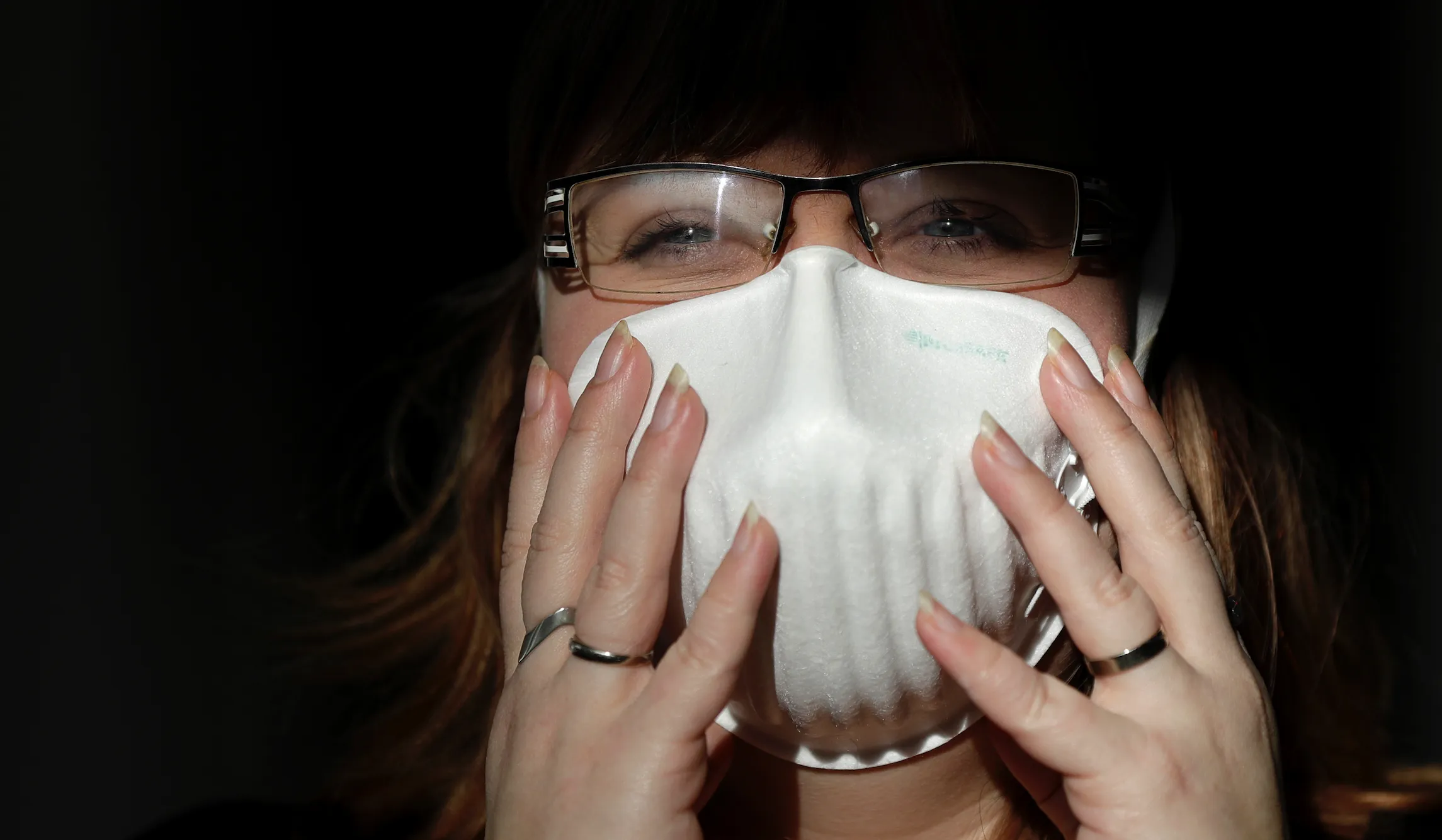
Yes, you should wear a mask

3M has ramped up its surge capacity to produce 1 billion N95 masks by the end of this year. Small businesses across the country are repurposing their factories for mask production as well. So we may finally see a deluge of masks on the market after a critical dearth at the beginning of the coronavirus crisis.

Although medical professionals need all protective gear before anyone else, we need to talk about everyone else. Note, for example, that widespread mask use in South Korea and Japan does not seem to have hurt anyone.

Despite the repeated assertions of the World Health Organization and the surgeon general, we all should be wearing masks. Perhaps it’s only marginally effective at preventing the transmission of the coronavirus. But the margins will matter when we decide how soon to reopen the nation for business.

We already know that masks inhibit those infected with coronavirus from spreading it. Although N95 masks, which ought to be allocated first and foremost to healthcare providers, are most effective, studies clearly show that other sorts of masks do mitigate the risk of transmission.

Cambridge University studied the efficacy of various materials against Bacillus atrophaeus, which is about 10 times the size of the coronavirus, and bacteriophage MS2, which is around one-fifth of its size. Even against the latter, surgical masks were 90% effective, tea towels were 72% effective, and cotton T-shirts were 50% effective.

“Improvised homemade face masks may be used to help protect those who could potentially, for example, be at occupational risk from close or frequent contact with symptomatic patients,” the researchers concluded.

So contrary to WHO’s and the surgeon general’s claims, masks actually do prevent the uninfected from contracting the coronavirus. It stands to reason — if nothing else, a mask will likely prevent you from touching your face so often.

The surgeon general made clear his motivation for discouraging mask use: to prevent the plebeians from buying them. But the science shows that there’s some benefit and certainly nothing to lose from wearing masks. Instead of outright misrepresenting the science, health authorities should have encouraged the masses to make and wear their own face masks.

It’s obvious that a homemade face mask doesn’t work as well as a surgical or N95 mask, but it’s better than nothing and doesn’t deplete the nation of vital resources for the workers on the front lines of the virus. Although individuals should continue to abide by shelter-in-place and social distancing mandates, a homemade mask would ameliorate the transmission rate during necessary trips to the grocery store or pharmacy, and as Japan and South Korea have anecdotally indicated, masks can contribute to a quicker reopening of normal social and business functions without provoking further pandemic outbreaks.

All you need is an old shirt, a needle, thread, and a guide like this. It might help, and it definitely won’t hurt.

“WHO currently recommends that people should wear face masks if they have respiratory symptoms or if they are caring for somebody with symptoms,” wrote researchers at the Lancet. “Perhaps it would also be rational to recommend that people in quarantine wear face masks if they need to leave home for any reason, to prevent potential asymptomatic or presymptomatic transmission.”

So take matters into your own hands, and make your own mask.

Related Content
