
The debt ceiling fight in Congress this week has exposed a deep rift in the Republican Party between veteran GOP leaders eyeing how to survive the next election and conservative newcomers fighting for significant budget cuts regardless of the political costs. Senate Minority Leader Mitch McConnell, R-Ky., ripped the intraparty fissure wide open Tuesday when he announced a plan that would give President Obama the authority to raise the debt ceiling by $2.5 trillion without making budget cuts.
Under McConnell’s plan, the president’s request would be broken into three segments, each of which would be subject to a resolution of disapproval by the House and Senate that he could easily override with a veto.
Recommended Stories
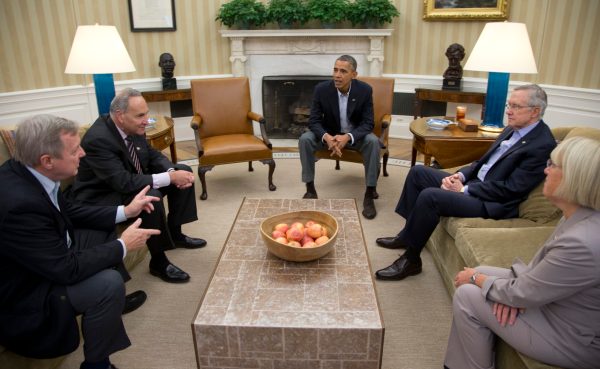

House Republicans reacted with fury, denouncing the plan. The House GOP is stacked heavily with Tea Party-endorsed freshmen and fiscal conservatives who won or retained their seats by promising to put a serious dent in government spending. McConnell, they said, has undermined their chances of striking a deal with Democrats to raise the debt ceiling in exchange for making trillions of dollars in spending cuts.
Senate GOP newcomers have also declined to back McConnell, lead by their Tea Party mentor, Sen. Jim DeMint, R-S.C.
Speaker John Boehner, R-Ohio, who has been under pressure from his rank and file to push for a deal with big spending cuts, is, like McConnell, eager to find a way to raise the debt ceiling by an Aug. 2 deadline set by the Treasury Department. Democrats are insisting on tax increases as part of the deal and with a compromise nowhere in sight, Boehner said he understood why McConnell offered the plan.
Chris Edwards, director of tax policy studies at the Cato Institute, said the priority for both Boehner and McConnell is to get a deal passed, no matter what.
“But House and Senate freshmen, they actually want to make spending cuts,” Edwards said. “That’s the divide.”
As a five-term senator, McConnell watched in 1995 as his party lost seats in Congress after then-Speaker Newt Gingrich, R-Ga., stood firm against President Clinton on budget cuts, resulting in a government shutdown. Voters blamed Republicans for the closure, Gingrich was forced to step down and Clinton easily won re-election.
McConnell said Wednesday that he didn’t want the same scenario to play out for the GOP if a deal is not reached by the deadline. President Obama has warned he may not be able to mail out $23 billion in Social Security checks on Aug. 3.
“I refuse to help Barack Obama get re-elected by marching Republicans into a position where we have co-ownership of a bad economy,” McConnell said on the Laura Ingraham radio program.
While GOP presidential candidate Gingrich announced his opposition to McConnell’s plan, McConnell said failing to raise the debt limit, “is no better an idea now than it was for Newt Gingrich in 1995.”
McConnell’s strategy will also force vulnerable Senate Democrats from swing states to take three uncomfortable votes on raising the debt ceiling between now and the 2012 election, a move that could help the GOP win the four seats they need to take over the majority in the Senate.
McConnell’s move has gotten some support from conservative bloggers, and the Wall Street Journal editorial pages praised it as a way to force Obama “to take ownership of any debt ceiling increase.” Sen. John McCain, R-Ariz., another longtime member, announced his support of McConnell’s plan.