

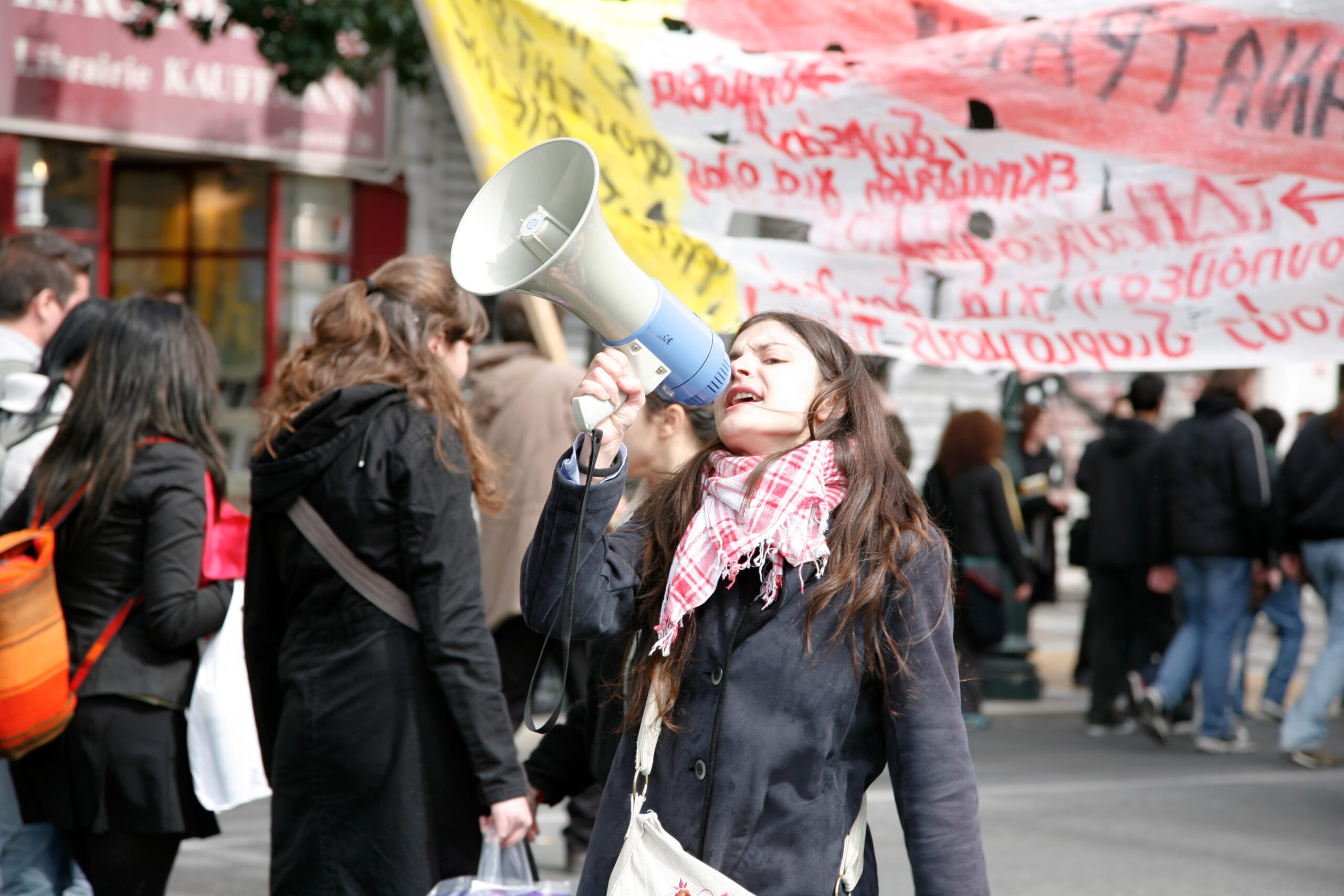
President Trump seems pretty serious about protecting the First Amendment. In his March 2 speech at CPAC, he announced his plan to sign an executive order protecting free speech on college campuses.
Promoting free speech at universities is a laudable goal. But using a top-down approach to force colleges to either protect free speech or risk losing federal research grants isn’t the way to address the problem.
Stay informed.Stay ahead.
Join Washington Examiner for unlimited access to the news, analysis, and commentary that matter most.
Already a member? Log in
“If they want our dollars, and we give it to them by the billions, they’ve got to allow people like Hayden and many great young people, and old people, to speak,” Trump told the CPAC crowd.
Trump was referring to the story of Hayden Williams, a Leadership Institute field organizer who was attempting to recruit members for conservative clubs at the University of California Berkeley when software engineer Zachary Greenberg punched him in the face. The incident was caught on camera and sparked a new discussion over free speech and tolerance on campuses. Neither Williams nor Greenberg are current students at Berkeley.
Still, Williams has praised Trump’s plan to use an executive order, calling it a “big step in the right direction.”
Trump used the Berkeley incident as proof that conservatives are being physically attacked on campus, but the reality is more complex than simply a war against conservatives in college. Really, the free speech rights of all students and faculty members are threatened at universities. Speakers on the Left and the Right have been on the other end of disinvitation campaigns, from Women’s March organizer Linda Sarsour to Charles Murray, a controversial conservative political scientist.
Then there are the times in which students have attempted to use the heckler’s veto to prevent an event from carrying on. In October 2017, student protesters shouted down Claire Guthrie Gastanaga, executive director of the American Civil Liberties Union in Virginia, at the College of William & Mary. A speech from Christina Hoff Sommers, a feminist scholar, was derailed by protesters at Lewis & Clark Law School in March 2018.
But not everyone is convinced that an executive order forcing universities to protect this kind of free speech is a good idea. Robert Zimmerman, the president of the University of Chicago, has been an outspoken proponent of defending free speech on campuses for years. In 2015, Zimmerman helped create the Chicago Principles, a set of guiding principles advocating a commitment to free speech on universities.
Yet even Zimmerman expressed concern over Trump’s proposal.
“This opens the door to any number of troubling policies over time that the federal government, whatever the political party involved, might adopt on such matters,” Zimmerman told the Associated Press. “It makes the government, with all its power and authority, a party to defining the very nature of discussion on campus.”
Tying federal research money to free speech rights on college campuses may seem like a good idea, but Zimmerman is right that the federal government shouldn’t be getting involved in the matter. Without a draft order, it’s difficult to say how the government will determine what situations merit revoking federal funds. When the government is involved in providing a solution, there is always the risk of the cure being worse than the disease, but time will tell what the executive order actually looks like in action.
That said, Trump’s approach to ensuring universities respect free speech through executive order won’t necessarily make campuses a bastion of First Amendment rights. While plenty of universities have run afoul of free speech by enacting onerous speech codes, the problem runs deeper than just which rules administrators enforce. Students and faculty have often taken it upon themselves to dismantle the culture of free speech on campuses.
An executive order threatening to revoke federal funding may force universities to drop speech codes and permit a variety of speakers on campus, but there’s no guarantee the student body or faculty will embrace this newfound freedom. If universities are to become institutions where free speech flourishes, then a grassroots movement is necessary to build a culture that respects the First Amendment — and no executive order can do that.
Lindsay Marchello (@LynnMarch007) is an associate editor with The Carolina Journal and a contributor with Young Voices.
