The Senate passed a stopgap funding bill 74-20 that will keep federal government operations running until Dec. 20.
The measure, which the House passed Tuesday, now heads to the White House and President Trump, who is expected to sign it.
Recommended Stories
The bill is the second stopgap measure, or continuing resolution, that Congress has authored in place of full fiscal 2020 spending bills, which are stalled due to partisan differences in the Senate.
A bipartisan group of Senate and House leaders has been meeting in an effort to secure a long-term funding deal ahead of the new deadline that will now come five days before Christmas.
“I hope the passage of the continuing resolution will be the first step down the bipartisan path that leads to a successful agreement by the end of the year,” Minority Leader Senate Minority Leader Chuck Schumer said Thursday.
Senators rejected an amendment to the measure, proposed by Kentucky Sen. Rand Paul, which would have slashed 2020 federal spending by 1%.
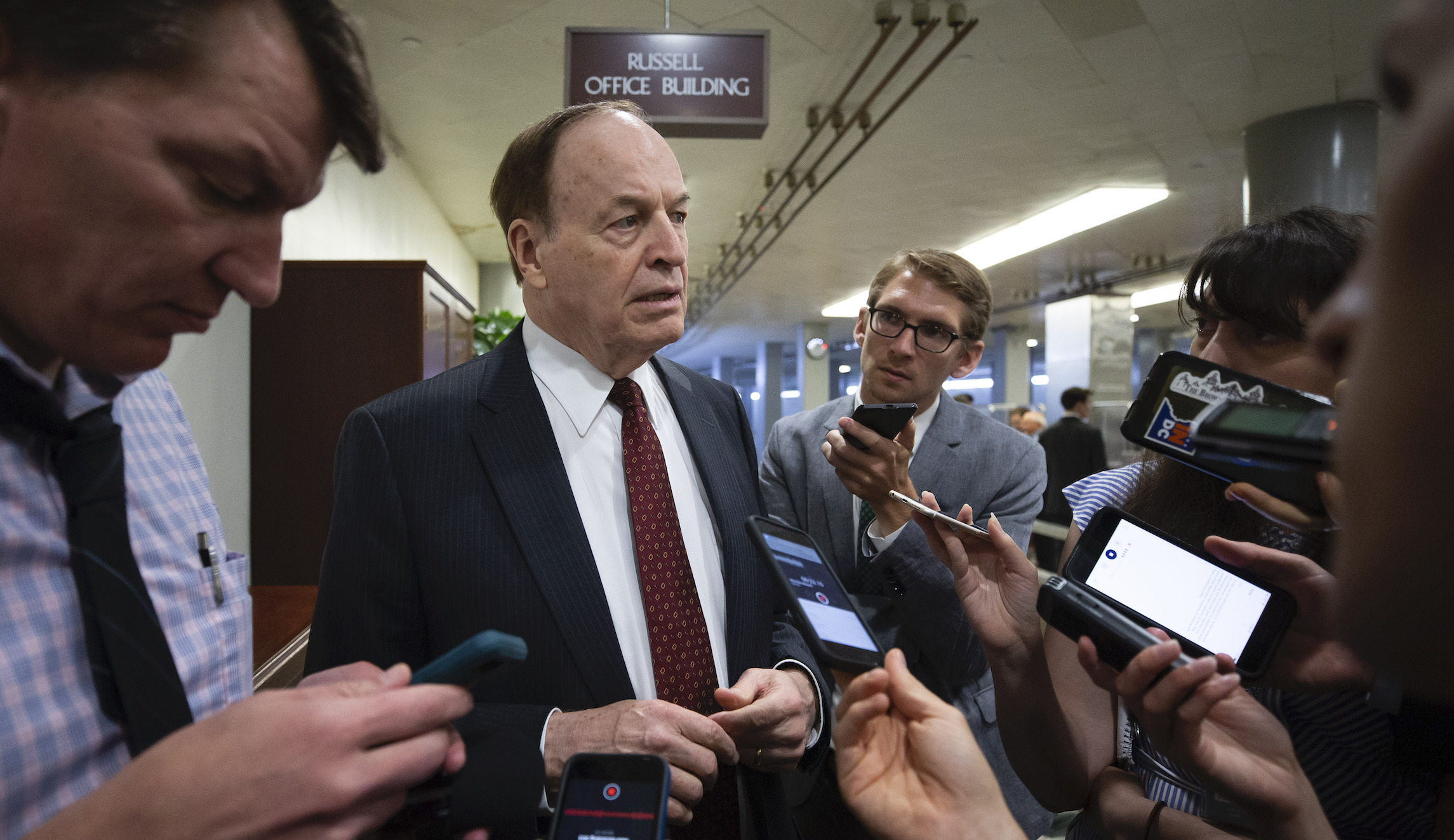
Senate Appropriations Committee Chairman Richard Shelby led the opposition to the Paul amendment.
“This would be extremely harmful to our agencies, especially our military,” said the Alabama Republican.
The House, run by Democrats, is working with Senate Democrats and Republicans to settle differences on fiscal 2020 spending bills so that the two chambers can work out an overall compromise.
The impasse centers on the Senate GOP’s decision to dedicate 2020 government funding to the construction of a southern border wall, a top priority for Trump that Democrats oppose.
Democrats want to start over on allocating money for each of the 12 federal spending bills to reduce or eliminate the wall funding.
Top bipartisan negotiators in the House and Senate are hoping to reach a deal by Wednesday, but so far, there is no accord.
Schumer, on Thursday, said Trump should not be involved in the negotiations, which, he said, “prevents his party, the Republicans, from coming to a fair agreement.”
Senate Majority Leader Mitch McConnell, a Kentucky Republican, said on Tuesday, “These talks must continue because it is vital that we work in good-faith to fund important priorities for the coming year.”
If lawmakers can’t reach a deal this week, the new stopgap measure leaves only a few weeks to work something out when lawmakers return from a week-long recess that is scheduled to begin Thursday.
Lawmakers acknowledge they may end up passing 11 of the 12 spending bills, leaving out the Homeland Security spending bill, which includes the disputed wall funding.
Shelby has also warned the impasse may force Congress to pass a year-long continuing resolution, which would fund the government at 2019 levels.
But Rep. Tom Cole, a top appropriator, said he thinks the two parties can work out a deal on the full dozen bills.
“I’m actually somewhat optimistic that in the next 30 days, we can get that job done and get out of this cycle of continuing resolutions and actually have a fully functioning government with 12 appropriations bills,” said the Oklahoma Republican.
Democrats blamed McConnell, who they say is holding up not only spending bills but hundreds of House-passed measures, although that is common when the chambers have opposing majorities.
The House passed spending measures earlier this year, but they do not comport with a bipartisan deal on spending caps and are far out of line with what the GOP would accept.
“The Senate majority leader should be sued for malpractice for his inaction,” House Rules Committee Chairman Jim McGovern said.
