
On October 11, Secretary of State Condoleezza Rice and Defense Secretary Donald Rumsfeld spoke–and it became clear just how bad things are. Interviewed by the San Francisco Chronicle‘s Debra Saunders, Rice praised the U.N. Security Council for “a good year”:
Recommended Stories
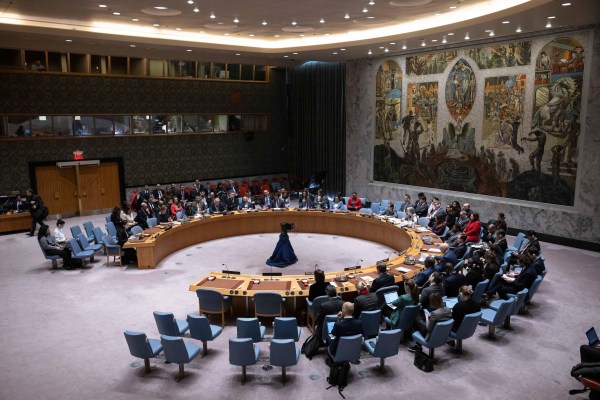
So we are. But we’re not doing better in the real world. Each of these resolutions (except possibly Lebanon) has been ineffectual. None has stopped bad behavior or punished the guilty. North Korea is crossing “red lines” with virtual impunity. Iran’s nuclear program is chugging ahead. Hezbollah retains its arms. Sudan is committing genocide. All the activity in the Security Council can’t mask our weakness. And the rogue states aren’t fooled. It’s been a “good year”–except we’re losing and dangers are increasing.
Later that day, Rumsfeld spoke at the Pentagon:
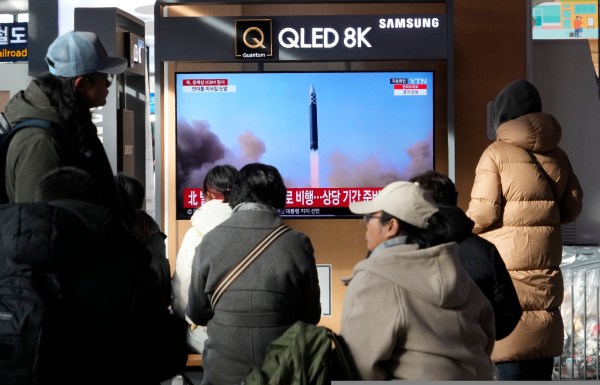
In recent days, the world’s been concerned as North Korea announced a test of its nuclear capability, having previously announced that they had nuclear weapons. And we’ve also seen Iran continue with its nuclear program over the objections of much of the international community. Seeing Iran and North Korea on a path towards nuclear weapons brings up several issues of concern.
First, those nations are known proliferators. They’ve proliferated to other nation-states as well as to non-nation entities. We recently saw an example of the latter in the case of Iran supplying Hezbollah.
Second, their programs point to increasing risks of lethal weapons possibly ending up in the hands of non-state entities, folks that, unlike a nation, tend not to be deterred the way a nation-state would because they don’t have to worry about protecting real estate, population, and leadership.
Another concern is that as a result of these trends, it’s possible at least that some other nations in the world might decide that they can no longer avoid developing their own nuclear weapons. If this trend continues, there would be an increase in the number of countries with nuclear weapons, not just Iran and Korea, but possibly others. The nuclear threshold as a result would be lower in the years ahead.
Rumsfeld is gloomier than Rice. His is a somber picture. But on the sixth anniversary of the attack on the USS Cole, what are we doing about these threats and trends? Here is the rest of Rumsfeld’s statement:
So the lesson Rumsfeld takes from the USS Cole, and all that’s happened since, is this: We’re dependent on “the inter national community,” and we need to cooperate with others.
The difference between the Bush administration and its Democratic critics now amounts to six-party talks or two-party talks with North Korea–as if talking would stop Kim Jong Il. It turns on direct or indirect negotiations with Ahmadinejad–as if he were willing to negotiate away his nuclear program. With the exception of Bush’s commendable steadfastness in Iraq–combined, how ever, with debilitating stubbornness on troop levels and strategy–and his support for Israel, Bush’s foreign policy is now Clintonian in its combination of weakness and wishful thinking. The result in the 1990s was fecklessness and failure in Rwanda and Afghanistan and North Korea and the Middle East. The price will be even greater today.
Bush has two more years. Whatever happens in November’s elections, the country cannot afford his all-U.N.-all-the-time defensive crouch. It is not too late to increase the size of the military; to work with Japan, rather than kowtowing to China, on North Korea; to institute an interdiction regime around that country; to act with a coalition of the willing to bomb airfields and aircraft assisting genocide in Sudan; to help the democrats in and near Russia; to insist on real sanctions and pressure on Iran, backed by the threat of force; and generally to stop huffing and puffing about what is unacceptable and intolerable–only to then accept the unacceptable and tolerate the intolerable. But it is getting late.
–William Kristol