
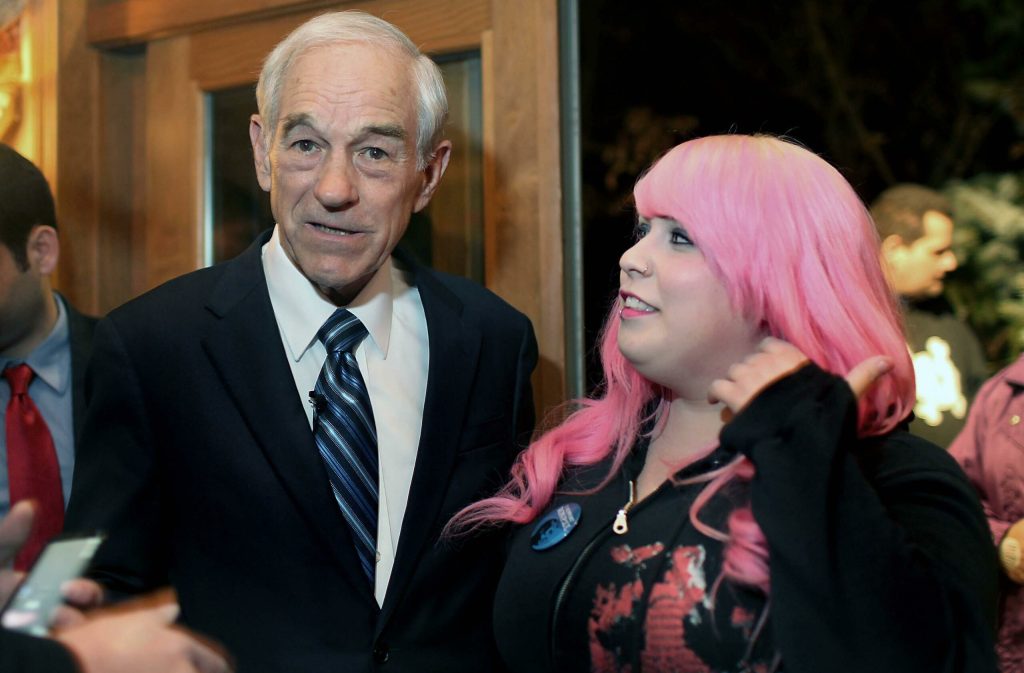
Ron Paul, the Texas congressman whose libertarian views have won him one of the most loyal followings of any Republican presidential candidate, ranks near the top of the polls in Iowa and New Hampshire.
With enthusiastic campaign organizations in both early voting states, Paul appears poised to make a strong second-place showing in either contest if not an outright victory should the race’s national front-runner, Mitt Romney, should falter.
Yet, political experts say that despite that strong showing and dedicated following, Paul’s campaign may not get much further.
Paul’s supporters bristle that their candidate is getting less media attention than his opponents, despite poll numbers that put him firmly in the top tier in New Hampshire and Iowa, arguably the two most critical contests of the primary season.
A Suffolk University poll of likely New Hampshire primary voters released this week showed Paul and former House Speaker Newt Gingrich tied for second, behind only Romney.
Paul ranks second among Iowa Republican voters as well, according to a recent Iowa State University poll, behind only Herman Cain.
Despite significant support, however, Paul still struggles to be taken seriously as a viable contender for the White House and often scores below other candidates when Republican voters are asked who can beat President Obama in November 2012.
“It’s a fascinating phenomenon,” Suffolk University Research Center Director David Paleologos told The Washington Examiner. “You have this candidate who, unlike all the other candidates excluding front-runner Mitt Romney, is much more fluid on both the upside and downside. Then you’ve got Ron Paul.”
Paleologos said Paul’s 14 percent of support in the polls has shown no attrition. Voters who like Paul are very loyal to him.
“People may not be drawn to Ron Paul in droves, but they are not defecting, either,” Paleologos said.
Political experts note that Paul has been unable to expand his support among Republican voters.
Part of Paul’s problem was evidenced Tuesday night during a candidate debate over foreign policy, when Paul expressed views that, unlike his positions on domestic issues, are further out of step with the mainstream of his party, like his call to drastically slash defense spending.
“Republican generally like his fiscal policies, but when he gets into the foreign policy stuff, that is where he parts company with the majority of Republicans,” University of Iowa political science professor Timothy Hagle told The Examiner.
Paul supports a hands-off approach in dealing with Israel and other foreign nations and does not believe the United States should try to block Iran from developing a nuclear bomb. He supports zeroing out sending financial aid abroad.
“Why do we have this automatic commitment that we’re going to send our kids and send our money endlessly to Israel?” Paul argued during the debate. “I think they’re quite capable of taking care of themselves.”
Such statements, Hagle said, “don’t make Republicans happy.”
But Paul’s foreign policy viewpoint engenders deep loyalty among his followers.
Gary Franchi, who chairs a political action committee dedicated to raising money for Paul’s campaign, said he believes Paul’s chances of winning the primary are being deliberately underestimated by the media who favor more mainstream candidates. There’s evidence he’s right. At another candidate debate this month, CBS News allotted Paul just 89 seconds to speak.
“There is a disconnect between the media and the people themselves,” Franchi said.
With enthusiastic campaign organizations in both early voting states, Paul appears poised to make a strong second-place showing in either contest if not an outright victory should the race’s national front-runner, Mitt Romney, should falter.
Yet, political experts say that despite that strong showing and dedicated following, Paul’s campaign may not get much further.
Paul’s supporters bristle that their candidate is getting less media attention than his opponents, despite poll numbers that put him firmly in the top tier in New Hampshire and Iowa, arguably the two most critical contests of the primary season.
A Suffolk University poll of likely New Hampshire primary voters released this week showed Paul and former House Speaker Newt Gingrich tied for second, behind only Romney.
Paul ranks second among Iowa Republican voters as well, according to a recent Iowa State University poll, behind only Herman Cain.
Despite significant support, however, Paul still struggles to be taken seriously as a viable contender for the White House and often scores below other candidates when Republican voters are asked who can beat President Obama in November 2012.
“It’s a fascinating phenomenon,” Suffolk University Research Center Director David Paleologos told The Washington Examiner. “You have this candidate who, unlike all the other candidates excluding front-runner Mitt Romney, is much more fluid on both the upside and downside. Then you’ve got Ron Paul.”
Paleologos said Paul’s 14 percent of support in the polls has shown no attrition. Voters who like Paul are very loyal to him.
“People may not be drawn to Ron Paul in droves, but they are not defecting, either,” Paleologos said.
Political experts note that Paul has been unable to expand his support among Republican voters.
Part of Paul’s problem was evidenced Tuesday night during a candidate debate over foreign policy, when Paul expressed views that, unlike his positions on domestic issues, are further out of step with the mainstream of his party, like his call to drastically slash defense spending.
“Republican generally like his fiscal policies, but when he gets into the foreign policy stuff, that is where he parts company with the majority of Republicans,” University of Iowa political science professor Timothy Hagle told The Examiner.
Paul supports a hands-off approach in dealing with Israel and other foreign nations and does not believe the United States should try to block Iran from developing a nuclear bomb. He supports zeroing out sending financial aid abroad.
“Why do we have this automatic commitment that we’re going to send our kids and send our money endlessly to Israel?” Paul argued during the debate. “I think they’re quite capable of taking care of themselves.”
Such statements, Hagle said, “don’t make Republicans happy.”
But Paul’s foreign policy viewpoint engenders deep loyalty among his followers.
Gary Franchi, who chairs a political action committee dedicated to raising money for Paul’s campaign, said he believes Paul’s chances of winning the primary are being deliberately underestimated by the media who favor more mainstream candidates. There’s evidence he’s right. At another candidate debate this month, CBS News allotted Paul just 89 seconds to speak.
“There is a disconnect between the media and the people themselves,” Franchi said.
