

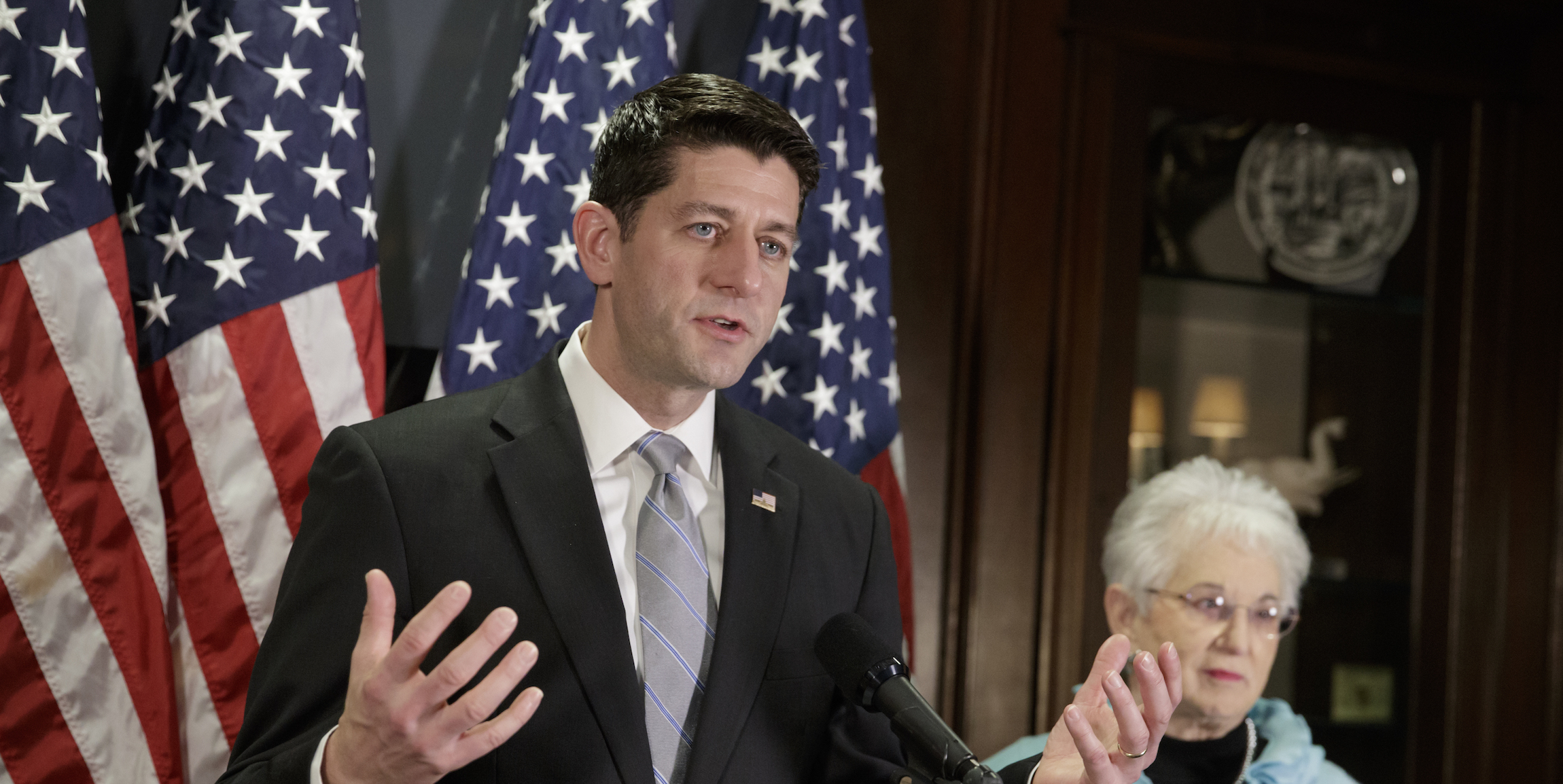
House Speaker Paul Ryan offered congressional condolences to India following the murder of an immigrant in Kansas during a meeting with the nation’s top diplomat.
“I expressed the House’s condolences on the death of Srinivas Kuchibhotla, who was senselessly murdered last week in Kansas,” Ryan said following a meeting with Indian Foreign Secretary Subrahmanyam Jaishankar. “Our peoples must continue to stand together.”
Recommended Stories


Two Indian engineers working in Kansas were shot last week, one fatally, by a man who thought they were Iranian and reportedly told them to “get out of my country.” The shooting, which is being investigated as a hate crime, provoked anger in India and accusations that President Trump’s immigration policies had provided a motivation for the crime.
“Trump is spreading hate,” a prominent South Indian actor tweeted, per the Telegraph, which added that “many Indians initially welcomed Trump’s election, seeing his calls to restrict Muslim immigration as support for their Hindu-majority country.”
Trump’s spokeswoman denounced the shooting as “an act of racially-motivated hatred” on Tuesday. “I want to reiterate the president condemns these or any other racially or religiously motivated attacks in the strongest terms,” White House spokeswoman Sarah Huckabee said. “They have no place in our country.”
India looms as an increasingly important partner for the United States in the Asia-Pacific region. “China’s rise has created a strong incentive for countries with a stake in Asia to increase their cooperation with the US, as well as with one another, to ensure that they can stand up to China’s political, military, and economic might,” Council on Foreign Relations president Richard Haass wrote in 2016.
That was a focus of Ryan’s meeting with Jaishankar. “The relationship between the United States and India is rooted in shared values of democracy and freedom,” Ryan said in the Wednesday statement. “We had a great opportunity today to build on this critical partnership by discussing ways to enhance our economic and defense cooperation.”
