Twitter’s double standards prove its policies lack seriousness

Twitter’s guidelines are so subjective and so inconsistently enforced that I’m beginning to wonder whether conservatives wary of Big Tech’s autonomy have a point.

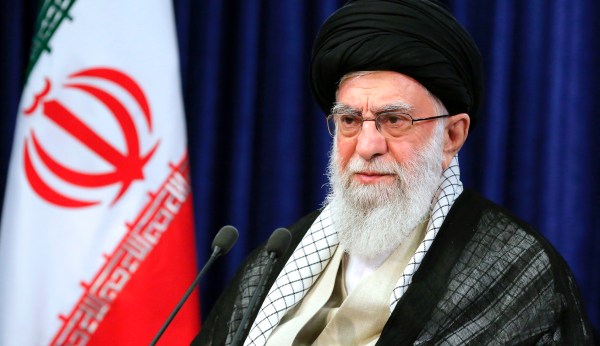
During a hearing before the Israeli Legislature on Wednesday, a Twitter spokeswoman defended the company’s decision not to remove tweets from Iran’s supreme leader in which he called for the “elimination” of Israel, or the “Zionist regime,” and refers to the Jewish nation as a “cancerous” place that will be “undoubtedly uprooted and destroyed.”

These tweets fall under Twitter’s protections for “commentary on political issues of the day,” according to Ylwa Pettersson, a spokeswoman for the company. Okay. But a tweet by President Trump last month in which he vowed to use “serious force” against protesters trying to create an “autonomous zone” in Washington was slapped with a “public interest notice” due to the “presence of a threat of harm against an identifiable group.”

Was Khamenei’s vow to “support and assist any group anywhere who opposes and fights the Zionist regime” not a threat of harm against an identifiable group? Was his call to “remove” Israel through “armed resistance” not serious enough for Twitter’s representatives?

This is a shameless double standard. But those seem to be common over at Twitter. The company removed a viral video this week in which a questionable licensed physician touted hydroxychloroquine, an anti-malarial drug, as a treatment for COVID-19. Such an argument was classified as “coronavirus misinformation” and was thus removed, according to Twitter.

Yet the social media giant has done very little to police Chinese Communist Party spokespeople waging a propaganda campaign on the website. In March, Foreign Ministry spokesman Zhao Lijian claimed the U.S. military brought the coronavirus to China, an obvious falsehood that should surely qualify as COVID-19 misinformation. Twitter, however, had very little to say about it.

Until Twitter starts taking its own policies seriously and enforcing them evenhandedly, it will become more and more difficult to defend the company against accusations of censorship. Because when literal threats of genocide are permitted but a rhetorical warning from the president is not, and when ideas questioning the status quo are prohibited but communist propaganda is allowed, something is clearly amiss.

Related Content