

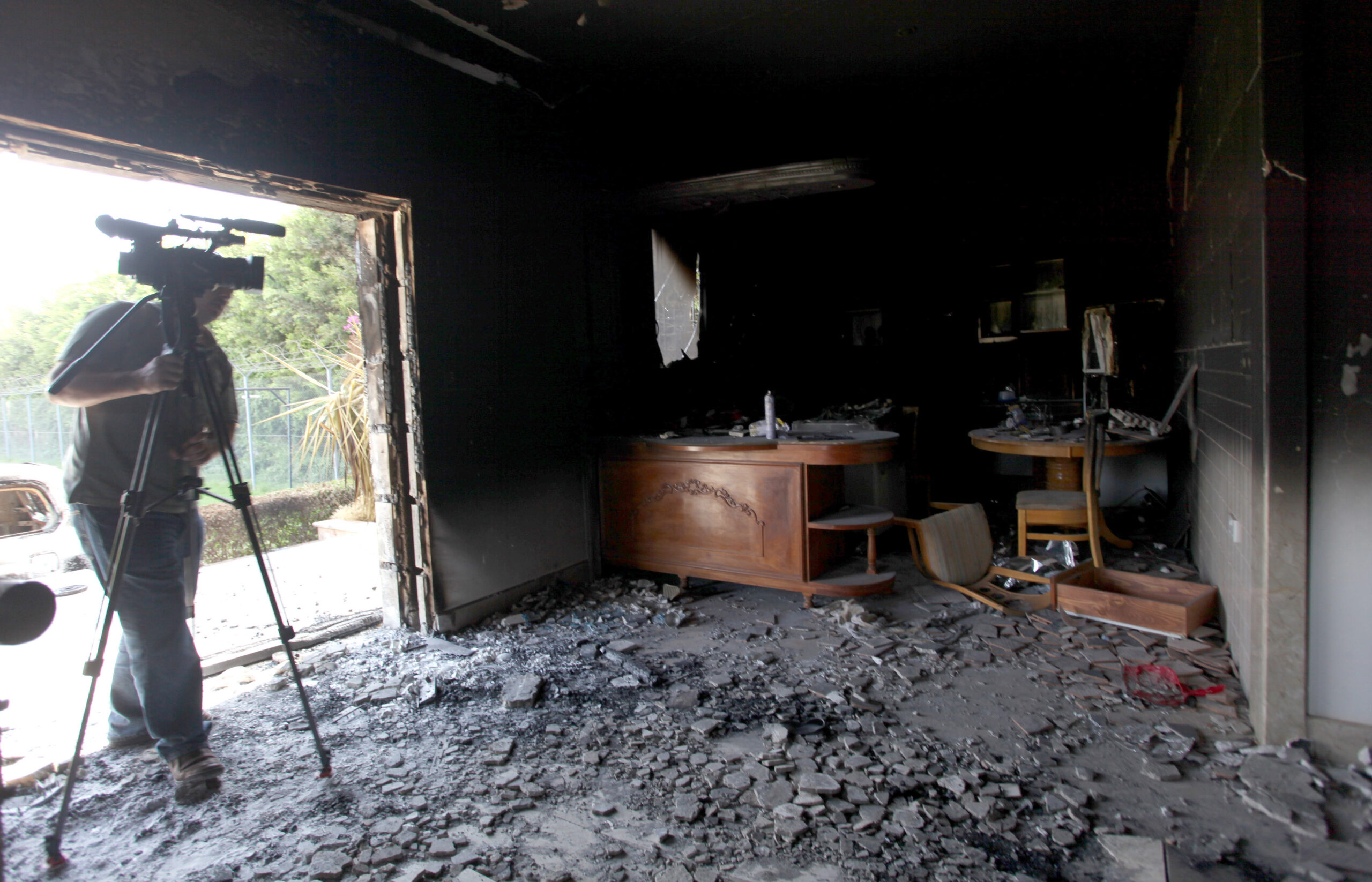
In a previous post, I wrote that even as the public learns details of what happened in the aftermath of the Sept. 11, 2012, terrorist attack on the American facility in Benghazi, the story of what the U.S. military did, and did not, do to aid Americans under attack remains classified. Key details about what manned and unmanned aircraft were in the region, the actions of various emergency response forces, and the deliberations of commanders from the ground up are a U.S. government secret. Pentagon officials have shared some of that information with House Armed Services Committee Chairman Buck McKeon and a few others, but only in classified briefings.
Some military experts have suggested the amount of classification is excessive, but the lid remains on. So, why is so much about Benghazi classified? A few days ago I ran a theory past a well-informed Capitol Hill source. The email I sent:
Recommended Stories


Corollary: Keeping Benghazi information classified is against the instincts of many Republicans, but they believe it is important not because they have any desire to provide cover for the president but because they were particularly appalled to discover just how disastrously ill-prepared the administration was. They also know that things could have been worse last September 11 — Cairo could have blown up, too — and are giving the administration the cover of secrecy (but not unlimited secrecy for an unlimited time) to give them room to fix the situation.
What came back was a two-part answer, part of which shot down my theory, and part of which supported it. First, some of the information that is classified is of a type that is always classified and would be classified whether Benghazi had happened or not. How many U.S. warplanes are in a given place at a given time? How long does it take for an American force to get from Point A to Point B? Where are particular weapons kept? All that is information the U.S. government does not want potential enemies to know. So, it is not as if there are reams of information that are specifically classified because they deal with Benghazi. Rather, such information is in a category that is usually classified.
The second part of the answer was very specific to Benghazi. Why wasn’t the U.S. government more prepared for what happened? For years now, the government has taken care to be especially ready for action on the anniversary of the Sept. 11, 2001, terrorist attacks. Did the Obama administration let down its guard on a particularly dangerous day?
The question is particularly important to Congress because on Sept. 10, 2012, the day before the Benghazi attack, the Obama White House released a statement claiming that the government would be particularly prepared for trouble the next day. Here is that Sept. 10 statement:
The statement suggests that the White House was focused on domestic security, but it also specifically mentioned security for “U.S. persons and facilities abroad.” That would certainly include U.S. facilities and diplomats in Libya. But we know that American forces in Libya, and apparently elsewhere in the region, were in fact ill-prepared to respond to the Benghazi attacks. So, what was the White House talking about when it said the president himself had taken part in special planning?
“Certainly there are questions raised by this White House statement,” says a GOP aide. The aide continued:
So why, indeed? The answer is classified. The bottom line is that detailed information about the military’s response to Benghazi is both routinely classified and evidence of how woefully unprepared we were in that difficult part of the world on that particular day. It’s an issue about which Armed Services Committee Chairman McKeon has been demanding information from the Pentagon. In a May 14 letter to Defense Secretary Chuck Hagel, McKeon said he wants to know more about
McKeon had a chance to ask the Pentagon questions about those very issues — and many others — during a May 22 briefing. The answers would tell the public much that needs to be known about the U.S. military response to Benghazi. So far, though, it’s all classified.
