

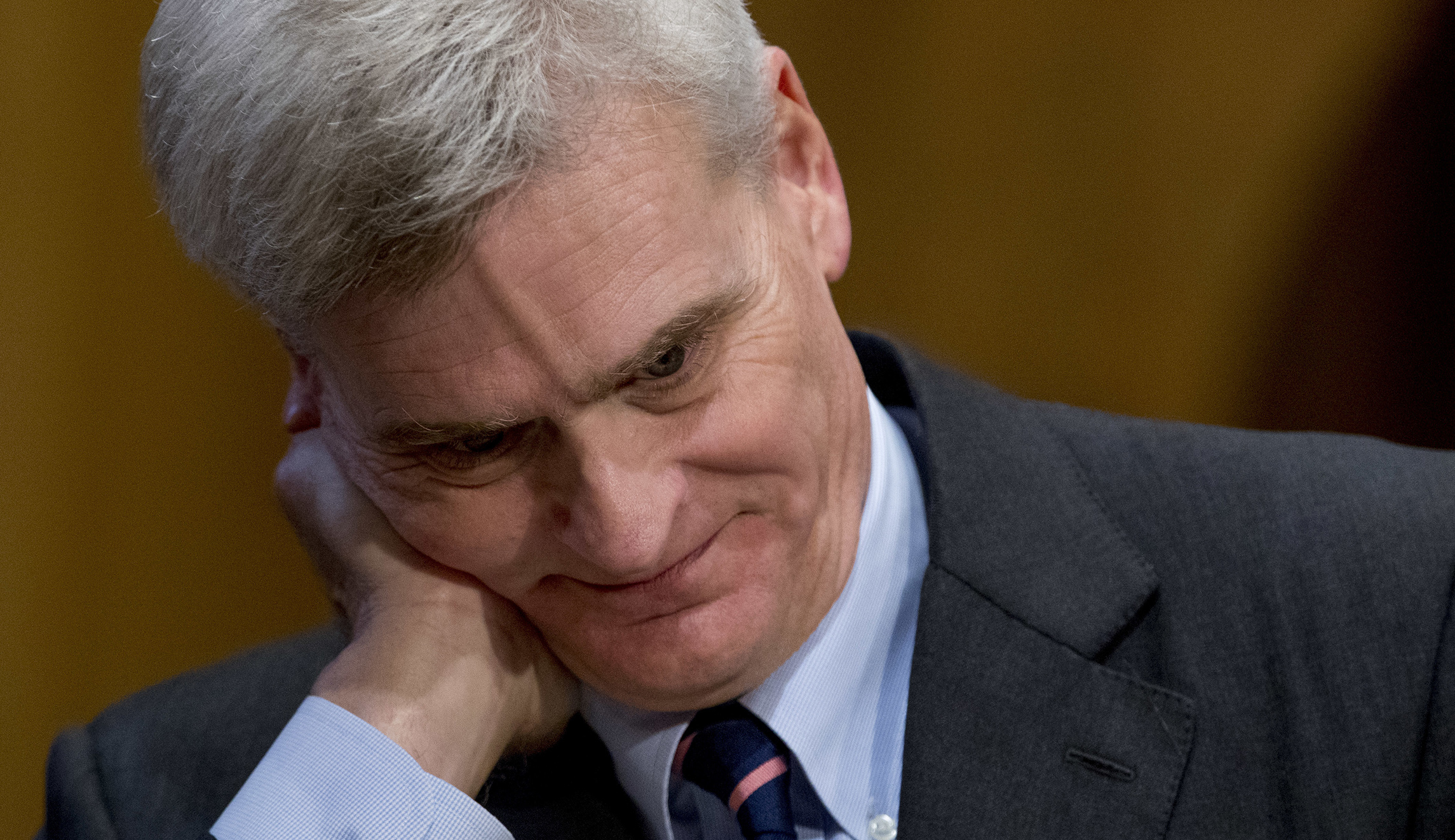
Sen. Bill Cassidy lamented the lack of time to sell his Obamacare overhaul bill, which died Tuesday because of a lack of Republican support.
The Louisiana Republican and Sen. Lindsey Graham, R-S.C., introduced the bill with two other senators less than two weeks ago. The GOP wanted to vote on it by the end of this week before the authority to pass it with only 51 votes expires, but that effort collapsed Tuesday after too many GOP senators defected.
Recommended Stories


Cassidy said he doesn’t think there was anything he could do over to win the support of the three GOP senators who defected, but wished he had more time to sell the bill.
“Time is the enemy,” he said. “Clearly we needed to have hearings that some people did not like the process so we needed to have hearings and we didn’t have time for those hearings.”
The Senate Finance Committee held the only hearing on the bill on Monday.
Senators had big concerns about the process used to advance the bill. Sen. John McCain, R-Ariz., said he was a “no” because the bill didn’t go through regular order that would include weeks of hearings and bipartisan participation.
Sens. Rand Paul, R-Ky., and Susan Collins, R-Maine, were the other senators to publicly oppose the bill, albeit for different reasons. Paul was upset the bill didn’t fully repeal Obamacare and Collins said it would cut too much of Medicaid, amid other concerns.
Sen. Lisa Murkowski, R-Alaska, a key holdout, blasted the quick process Tuesday, noting that a revised version of the bill was released Sunday night.
“The U.S. Senate cannot get the text of a bill on a Sunday night, then proceed to a vote just days later, with only one hearing — and especially not on an issue that is intensely personal to all of us,” she said in a statement.
Cassidy said he wanted more time to “socialize” the bill and fight what he described as mischaracterizations of what the bill did.
He said liberals wanted to mischaracterize that the bill was taking $1.2 trillion out of Medicaid, when in fact the plan would have taken Obamacare funding and given it to states.
“That misrepresentation does a poor service to public conversation and still something that people had to understand enough about to know it was absurd,” he said.
Sen. John Kennedy, R-La., said that he was disappointed about what had occurred and that he hadn’t had enough time to read the latest version of the legislation in order to commit to how he would vote on it.
“I may go home and put a bag over my head, and hide my head in a bag,” he said.
Like Murkowski, he expressed frustration with the process, saying that it had been led through a rushed, “top-down” strategy.
”Healthcare is difficult, it’s a very personal issue for most people and within our caucus, even though we are all Republicans, there is great disagreement about how we all ought to approach it,” he said.
The nonpartisan Congressional Budget Office didn’t have enough time to fully score the bill. On Monday, it released a preliminary estimate of an outdated version of the bill that found it would reduce the deficit by $133 billion.
However, it also found that the bill would cut Medicaid by $1 trillion through 2036, partly because of the bill’s plan to use per-person caps for Medicaid funding. The caps provide Medicaid funding to states based on the number of Medicaid beneficiaries.
The CBO also found that millions of people could lose comprehensive health coverage because of state waivers for Obamacare regulations.
Kimberly Leonard contributed to this report.
