Spending bills and legislation to boost advances in medicine appear to be among the few consensus items Congress will try to work on when lawmakers return after the Nov. 8 election.
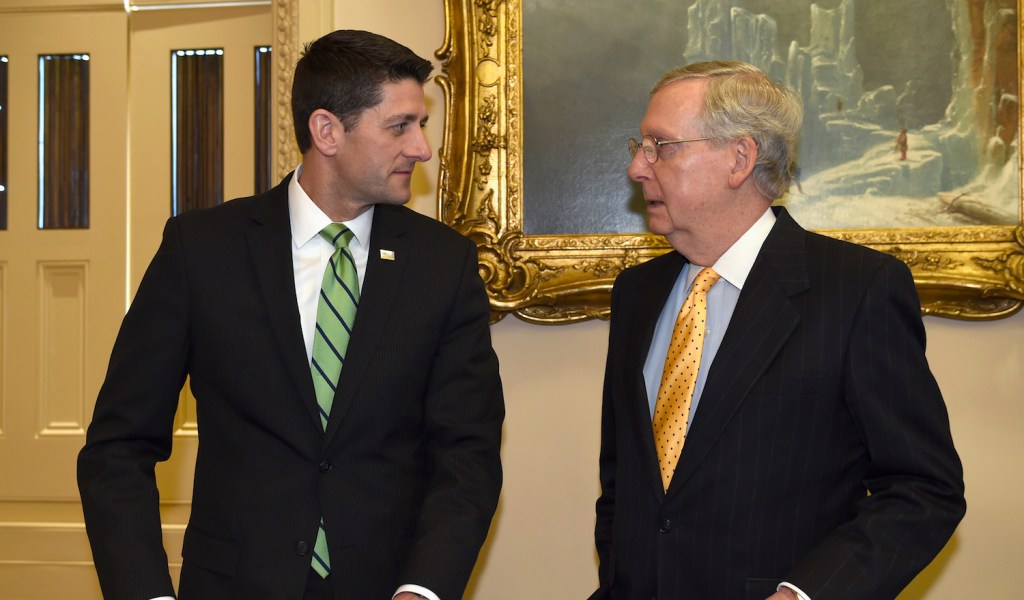
Senate Majority Leader Mitch McConnell, R-Ky., and House Speaker Paul Ryan, R-Wis. both agreed lawmakers should try group together fiscal 2017 spending bills into packages they can pass as “minibuses,” rather than taking up one big “omnibus” spending bill.
But beyond spending legislation, not much else is likely to get done.
McConnell said it is unlikely the Senate will have time to consider a criminal justice reform measure, despite bipartisan support and a push from the House, where Ryan hopes to take up parts of the reform initiative in smaller bills.
“It’s very divisive in our conference,” McConnell said of the criminal justice legislation. “Whether we can take up something that controversial, with that limited time available, I doubt it.”
Ryan said he is “hoping we can make progress” in the House on criminal justice reform legislation and pointed to a mental health reform bill sponsored by Rep. Tim Murphy, R-Pa., which the House passed in July. But he agreed with McConnell that lawmakers aren’t ready to take up a bigger reform bill.
“We do know we have more work to do to talk to our members about the merits of criminal justice reform,” Ryan said, adding the leadership is going to “be communicating with them in the weeks ahead.”
Congress is slated to return to a lame-duck session the week of Nov. 14 and lawmakers will immediately begin working on yet another spending bill, having passed a measure Wednesday that funds the government only through Dec. 9.
“We think minibuses are the proper strategy,” Ryan told reporters Thursday. “We are not in favor of doing massive omnibuses.”
Aside from spending legislation, McConnell and Ryan said they want their respective chambers to take up the 21st Century Cures legislation, which aims to accelerate medical advances by easing some FDA restrictions and boosting funding to the National Institutes of Health, among other provisions.
McConnell said Thursday he believes this is a bill with a significant chance of becoming law because it incorporates proposals favored by President Obama, Vice President Joe Biden and Republicans and Democratic lawmakers.
The House passed a version of the bill earlier this year.
“There are a lot of us who are deeply invested in that, and I think that it will be a top priority in the Senate, as well as funding the government,” McConnell said when asked about the lame-duck agenda.
McConnell said the Trans-Pacific Partnership trade deal lacks enough support for consideration this year, despite a push from President Obama who hoped to see it become law before the end of his tenure. He said the TPP would fail if lawmakers voted on it this year.
“If we are going to have another discussion about trade, it would have to be led by whoever the next president is,” McConnell said.
McConnell said the limited schedule may also include a bill to protect the pensions of coal miners, as well as a deal with Democrats to extend tax breaks for green energy companies that has languished for months.