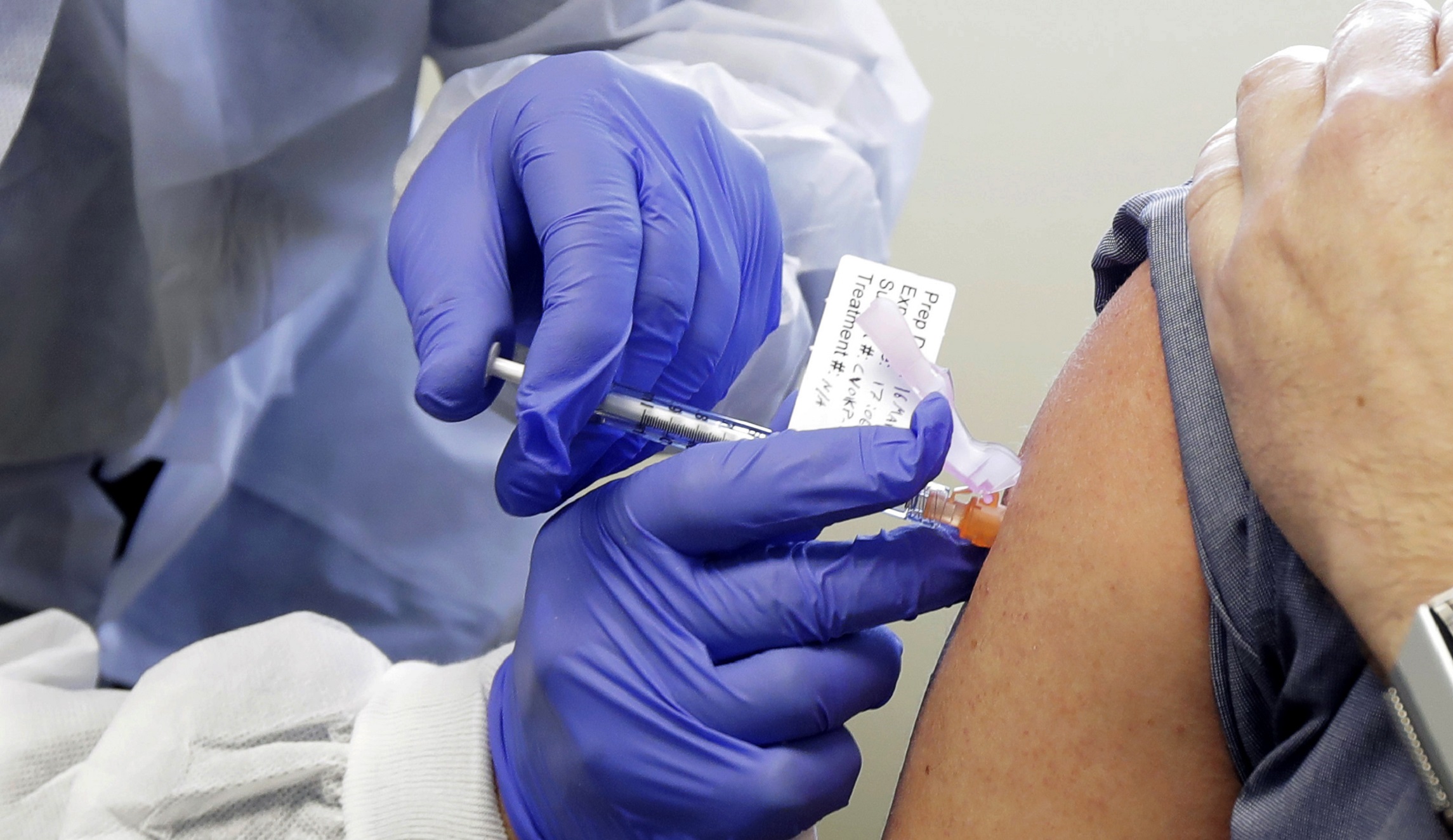
Operation Warp Speed coronavirus vaccine and therapeutics development officials say four potential coronavirus vaccines are progressing rapidly, thanks in part to testing in virus hot spots.
But they admitted that while therapeutics are also advancing quickly, doses may fall short of need.
“We feel very confident that by year end, we will have tens of millions of vaccines to put into American arms,” a senior administration official with the Department of Health and Human Services told journalists on Monday.
“Vaccine progress is occurring at warp speed pace, faster than any vaccine has been developed in history,” he said. “Therapeutics are even faster, and we believe we will have options for saving American lives as soon as early fall.”
But Dr. Janet Woodcock, director of the FDA’s center for drug evaluation and research, admitted that though investments and purchases for therapeutics are in the hundreds of thousands of doses, it is not yet known how many doses will be required.
“We’re trying to find that out very rapidly,” she said. “And hopefully [we can] figure out the lowest dose possible so we can have the most doses available quickly.”
For two of the vaccines, Phase 3 clinical trials are set to begin. For therapeutics, Woodcock said scores of testing sites have been set up in hot spot areas to gather data on viability rapidly.
Repurposed drugs such as antiviral remdesivir are showing promising results, while a nationwide campaign for convalescent plasma is encouraging recovered COVID-19 patients to donate blood in the 6-to-8-week window after symptoms show when they have the most antibodies.
“With so many people infected, we can speed enrollment, especially if we put up a lot of sites,” she said of drug testing. “We’re targeting outbreak areas.”
The multiagency OWS, headed by HHS and the Department of Defense, has already invested hundreds of millions of dollars to improve manufacturing capabilities for companies including AstraZeneca, Moderna, Johnson & Johnson, and Emergent BioSolutions to be able to scale up to the millions quickly.
Recently, OWS also announced a $450 million investment in a monoclonal antibody candidate made by Regeneron that would yield 70,000 to 300,000 treatment doses by the fall.
Vaccine investments made by the government between March and May include $456 million for a Johnson & Johnson candidate, $483 million for a Moderna candidate, and $1.2 billion for an AstraZeneca candidate with a purchase agreement to make available at least 300 million doses with delivery as early as October 2020.
Products are chosen based on early results, how far along they are, how fast they are moving, and if they can be scalable by early 2021.
Both officials said safety will not be sacrificed in the process. For that reason, a “portfolio approach” is being used to invest in several different candidates and strategies simultaneously.
When President Trump announced OWS’s launch alongside HHS Secretary Alex Azar and Defense Secretary Mark Esper at the White House on May 15, Trump promised 300 million vaccines by Jan. 1, 2021.
The Defense Department then clarified that the total of 300 million vaccines by year’s end was a “goal,” but in congressional testimony in June, Trump’s hand-picked OWS leader, U.S. Army Gen. Gus Perna, said the delivery of safe coronavirus vaccines on time and at scale was all but certain.
“What I thought was an aspirational goal 30 days ago when I was announced by the president, I have recently come to the conclusion that it is more and more likely to occur,” Perna told members of Congress on June 18.
The administration officials who spoke Monday said the current coronavirus outbreak is actually accelerating vaccine development.
“We need 30,000 persons in each of these clinical trials, and we need to conduct the clinical trial in areas where there are outbreaks,” said the HHS official. “Paradoxically, the current outbreaks may actually help us get a vaccine to protect people faster than if we had no outbreaks in the United States right now.”
