

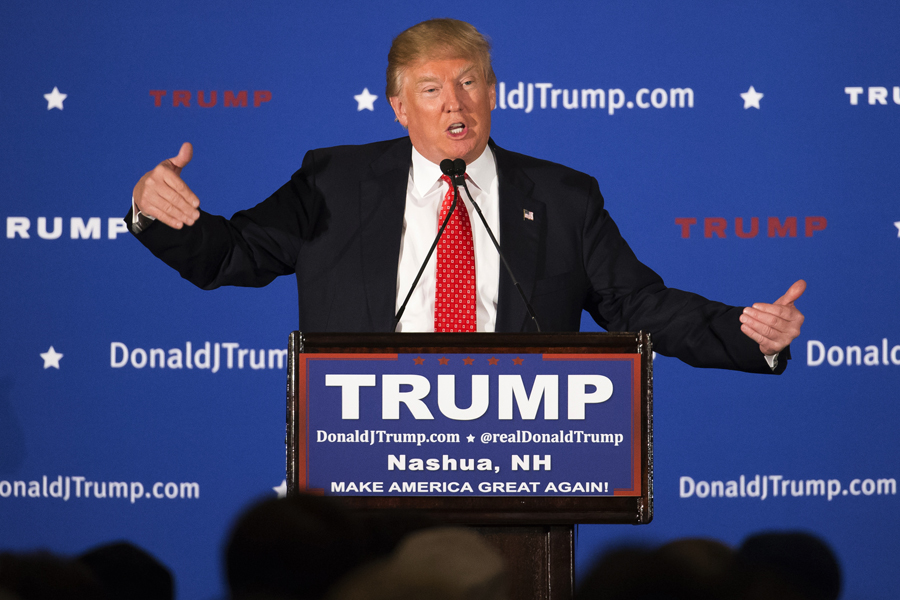
Donald Trump made mistakes in Iowa. Buoyed by a lead in the polls and huge attendance at his rallies, Trump under-invested in the nuts-and-bolts of voter turnout — old-fashioned voter contact plus high-tech data research — that turn poll advantages into victory.
Now, Trump is campaigning — at his own pace — in New Hampshire. He has a far bigger lead there than in Iowa — 21 points ahead of Ted Cruz, according to the RealClearPolitics average of polls. But even though New Hampshire is a primary, which demands less voter involvement than Iowa’s caucuses, Trump still has to turn his lead into an actual win next Tuesday.
Recommended Stories


The question is whether Trump is flexible enough to make the changes needed to win, not just in New Hampshire but beyond. Can he keep the parts of his campaign that work and change the parts that don’t?
Before anything else, Trump is a businessman. He made his fortune by selling things: apartments, hotel rooms, status, entertainment, himself. And when products don’t sell, or plans don’t go forward as hoped, he comes up with another way to achieve his goal.
That was perhaps the key point of Trump’s best-selling 1987 book, The Art of the Deal. In it, Trump described project after project, and few ended exactly the way he had planned in the beginning. His lesson: you have to be able to change course when you encounter obstacles. From the book:
I also protect myself by being flexible. I never get too attached to one deal or one approach. For starters, I keep a lot of balls in the air, because most deals fall out, no matter how promising they seem at first. In addition, once I’ve made a deal, I always come up with at least a half dozen approaches to making it work, because anything can happen, even to the best-laid plans.
Perhaps the best example I can give is the first deal I made in Manhattan. I got an option to purchase the Penn Central railyards at West 34th Street. My original proposal was to build middle-income housing on the site, with government financing. Unfortunately, the city began to have financial problems, and money for public housing suddenly dried up. I didn’t spend a lot of time feeling sorry for myself. Instead, I switched to my second option and began promoting the site as ideal for a convention center. I took two years of pushing and promoting, but ultimately the city did designate my site for the convention center — and that’s where it was built.
Of course, if they hadn’t chosen my site, I would have come up with a third approach.
Now Trump faces another changing situation. His campaign has big strengths, based mostly on Trump’s unique style. But it has weaknesses, too. One lesson from Iowa is that Trump’s unconventional candidacy can succeed wildly in getting people’s attention and taking him to the top of the polls, but that his personal charisma needs to be wedded to a more conventional underlying data and voter contact operation to win on election day.
Of course, such an operation cannot be built in the six days remaining before the New Hampshire primary. But even if Trump’s personal appeal wins the day in New Hampshire, he’ll still need to make changes. The question is whether he is still the agile, adaptable businessman he wrote about in The Art of the Deal.
