
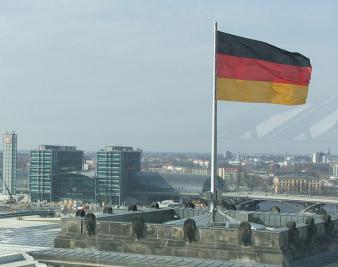
The last two months have been a giant Kopfschmerz for German chancellor Angela Merkel and her coalition government. On February 20, Social Democrats in Hamburg earned 48.3 percent of the vote, allowing them to govern with an absolute majority. (Merkel’s Christian Democrats, by comparison, garnered a measly 21.9 percent.) On March 1, Defense Minister Karl-Theodor zu Guttenberg, until then Germany’s most popular politician, resigned from his post after it became evident large portions of his doctoral thesis were plagiarized. (His decision to remove the title “Doktor” from his title was apparently not enough.) Then came the March 27 elections in Baden-Württemberg.
Long a conservative stronghold (and home to automotive giants Mercedes and Porsche), Baden-Württemberg will now be ruled by a coalition of Social Democrats and Greens, the latter who won a historic 24.2 percent. But now comes news that Foreign Minister Guido Westerwelle is stepping down both as chairman of the Free Democrats (the junior coalition partner) and as vice chancellor. Not that this should come as a surprise. Westerwelle has long been regarded as a lightweight despite heading the FDP for 10 years. One FDP senior statesman had no reservations when telling me the foreign minister “was doing a terrible job.” Another longtime member says “the party doesn’t want him,” explaining that Westerwelle would have done a better job as finance minister but fell for the trappings of the foreign ministry and because the position was held by his mentor, Hans-Dieter Genscher.
Real journalism.Trusted by millions.
Unlimited access to in-depth reporting, expert analysis, and the stories that shape our country.
Already a member? Log in