

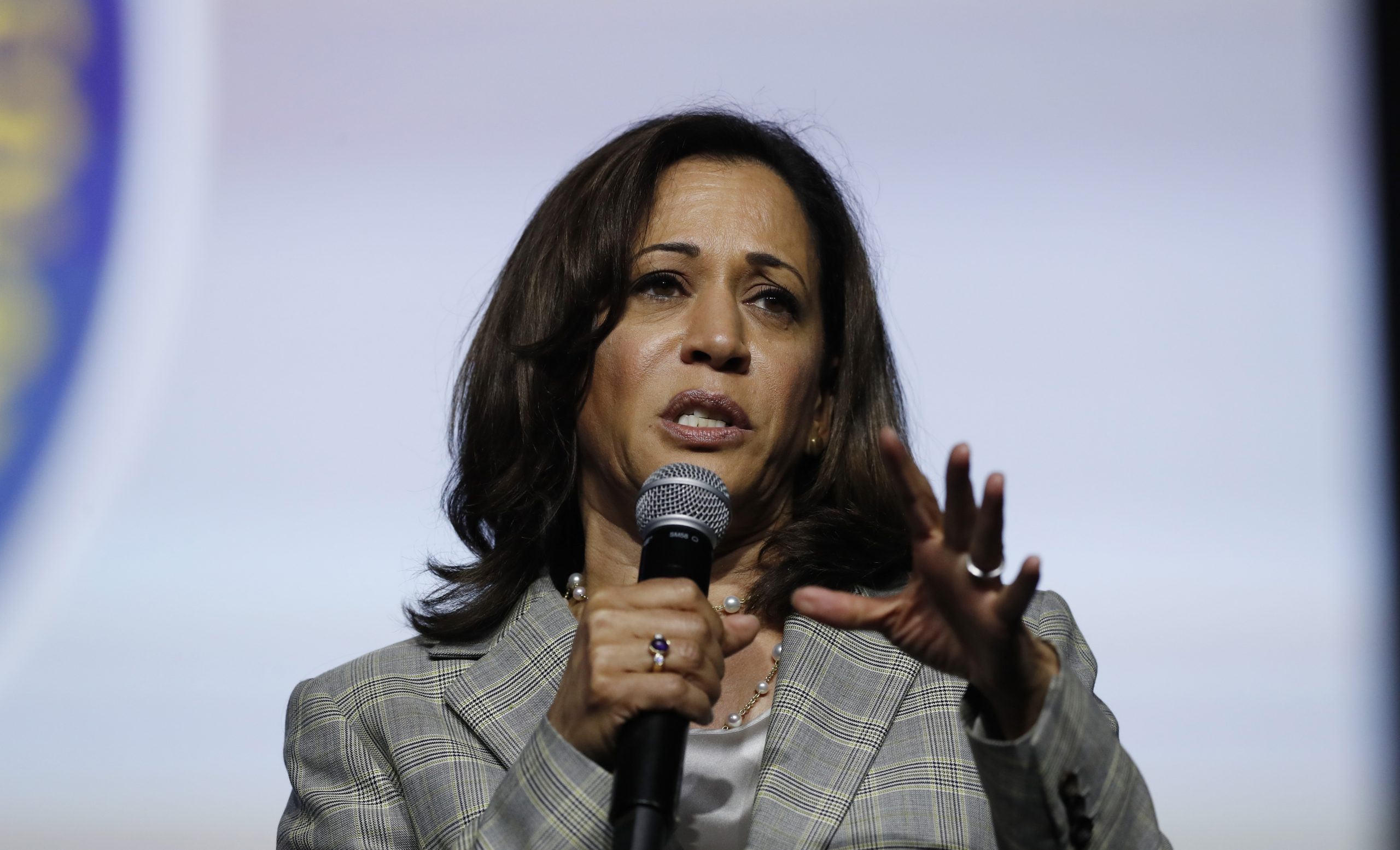
Sen. Kamala Harris caught hell this weekend after she announced what appeared to be a ridiculously specific plan for student loan debt forgiveness. As it turns out, her team was actually hyping a largely separate policy proposal aimed specifically at “reducing the opportunity gap” for black Americans.
But don’t blame social media for this particular misunderstanding. This one is on the senator.
Recommended Stories


“Yesterday I announced that, as president, I’ll establish a student loan debt forgiveness program for Pell Grant recipients who start a business that operates for three years in disadvantaged communities,” the rising 2020 Democratic candidate announced on Twitter.
Yesterday I announced that, as president, I’ll establish a student loan debt forgiveness program for Pell Grant recipients who start a business that operates for three years in disadvantaged communities. https://t.co/ldwuC9RiIE
— Kamala Harris (@KamalaHarris) July 28,2019
That is amazing. There are no fewer than four qualifiers in that tweet. To be eligible for what appears to be the Kamala Harris student loan debt forgiveness scheme, one must be:
– A Pell Grant recipient.
– A business owner.
– A business owner successfully operating a shop for at least three years.
– Operating in a disadvantaged community.
So, Harris’ plan would help, approximately, maybe a dozen, two dozen people? A bold plan, to say the least.
If you think this all sounds a bit ridiculous, you are not alone. Social media users torched the senator’s apparent proposal for hours after her tweet. The announcement was so poorly received, in fact, that a Twitter user even launched the “Oddly Specific Kamala Harris Policy Generator,” which created the following faux Harris proposal after I clicked “randomize”:
To get an idea of just how poorly the plan was received, consider that the senator’s Twitter account tweeted a series of clarifications later, “thanking” supporters and critics alike for their productive “feedback.”
“I want to thank everyone for your feedback and clarify some confusion. We have an opportunity gap in our country, and one thing we need to do is support Black entrepreneurs. I have a plan to do that on multiple fronts,” Harris account said.
It added, “Student loan relief for Pell Grant recipients is just one component of our plan to reduce the opportunity gap for Black entrepreneurs—along with $12 billion in direct capital. We can ensure Black entrepreneurs have a real shot at starting small businesses.”
The only other thing that her proposal page says about student loan debt forgiveness (apart from the very specific qualifications) is that “Participants can have up to $20,000 of debt forgiven and can defer all of their student loans, interest-free, during a business-formation period that can last for as many as three years.”
Okay, but what about a general student debt forgiveness plan? Or is this it? Is it all tied up in her opportunity gap policy proposal?
There are some real shades here of Harris’ recent approach to reforming healthcare in the United States. In January, after she launched her 2020 campaign, the senator said plainly in a CNN town hall event that she supported doing away with private insurance.
“Let’s eliminate all of that,” she said.
It was an exciting and bold declaration for the Democratic base, which responded by giving her its attention and interest. Of course, eliminating all private insurance is a terrible position for the general election, which is why Harris has already played several sides of this issue since announcing her candidacy. Most recently, she has rolled out her own version of so-called “Medicare for All,” which allows some private insurance while forcing most people into a government-run plan.
Like her approach to healthcare, Harris’ student debt forgiveness flub from this weekend can be summed up: Excite the base first, worry about the details later.
