

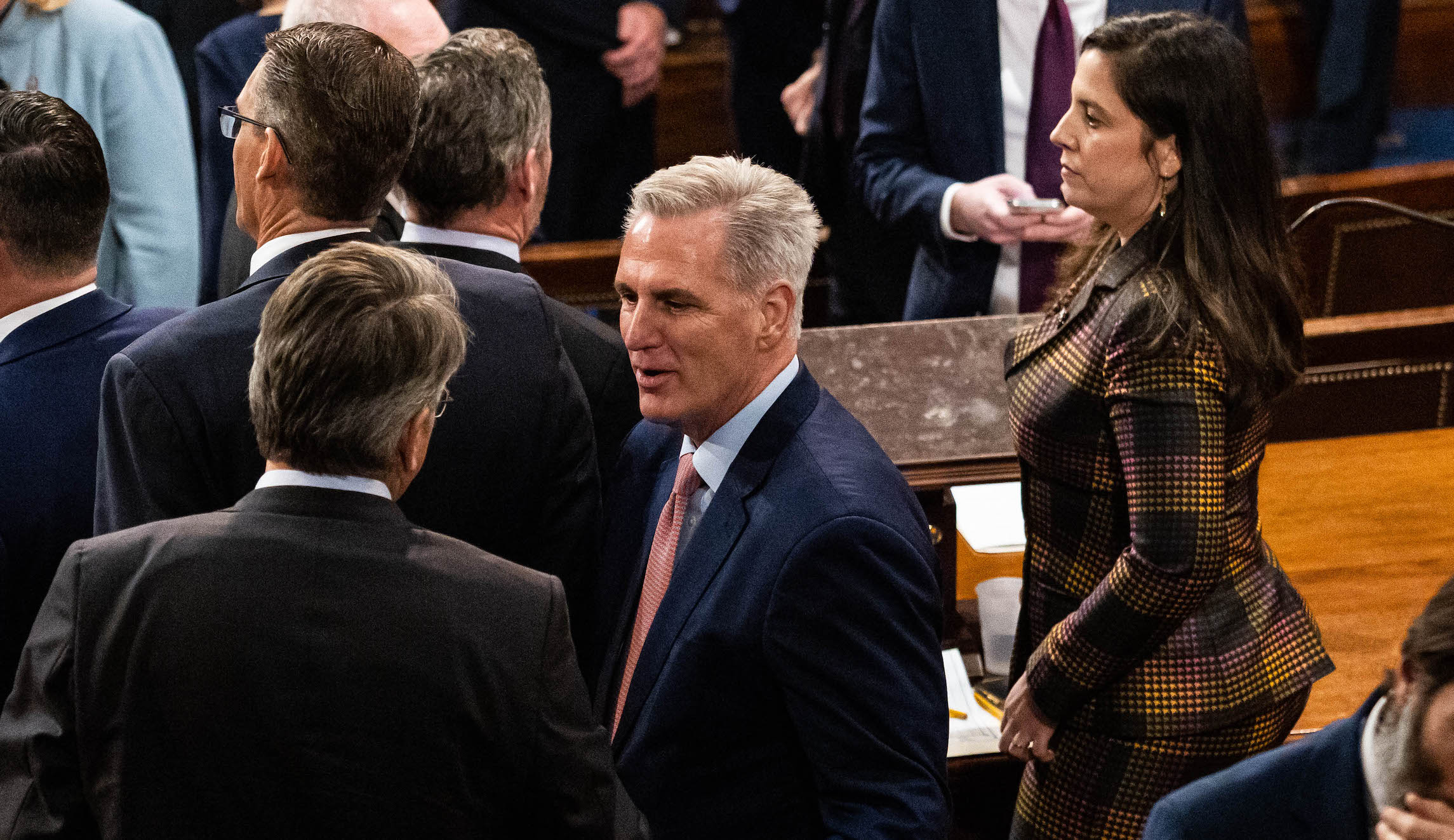
As House Minority Leader Kevin McCarthy’s speakership bid remains uncertain, lawmakers are preparing for a possibly lengthy process to elect their next speaker, a procedure that hasn’t been in play in almost a century.
To secure the gavel, McCarthy needs a majority of voting members, in this case, 218 lawmakers, to vote for him when his nomination goes before the entire House floor in January. The GOP is set to hold a 222-213 advantage in the House in the new year, meaning McCarthy can’t afford to lose more than four votes if he hopes to secure the speakership on the first go-around.
GOP PLANS FOR HOUSE COMMITTEE DELAYS AS MCCARTHY GRAPPLES WITH SPEAKER VOTE
The House is scheduled to hold its floor vote to elect its next speaker on Jan. 3, and McCarthy faces a growing opposition from within his own party.
At least five GOP lawmakers have publicly said they won’t back his speakership bid, including Reps. Andy Biggs (AZ), Matt Gaetz (FL), Bob Good (VA), Ralph Norman (SC), and Matt Rosendale (MT). More are expected to voice opposition to his speakership bid in the coming weeks, according to GOP lawmakers.
McCarthy’s chances of being elected speaker became even more uncertain after Biggs announced he would also vie for the leadership position. Biggs’s speakership bid paves the way for a messy floor fight that could last days, depending on how adamant the two Republicans are on digging in their heels.
If no candidate wins a majority of the votes cast during the roll call on Jan. 3, the House will repeat the process until a speaker is elected, according to House rules. Congress has not had to repeat a roll call vote to elect a House speaker since 1923 when it took nine ballots for Frederick Gillett to obtain the speakership.
It’s unclear how long the process may last if McCarthy can’t secure the majority in the first round of ballots, but the Republican leader has indicated he won’t back down on his bid until he wins the speaker position.
“At the end of the day, we’ll get there,” he told reporters in late November.
However, there is a way for McCarthy to skirt by without garnering the lucky number of 218.
To win the speakership, McCarthy only needs to win the majority of the votes cast from lawmakers on the floor, according to House rules. That means, if some lawmakers don’t show up for the vote, that majority number will be adjusted according to how many members of congress are present on the floor.
For example, John Boehner was elected speaker, despite Freedom Caucus opposition, with just 216 votes in 2015 when 25 members didn’t show up for the vote.
CLICK HERE TO READ MORE FROM THE WASHINGTON EXAMINER
Additionally, some lawmakers who are on the floor at the time of the vote could opt to vote “present,” meaning McCarthy’s opponents could still reject his bid while not jeopardizing his chance at becoming speaker.
However, things may not be that easy for the House minority leader. Of the five Republicans who have publicly come out against his speakership bid, each of them vowed that they won’t vote “present,” giving McCarthy a tougher battle to clinch the position.
